

Introduction |
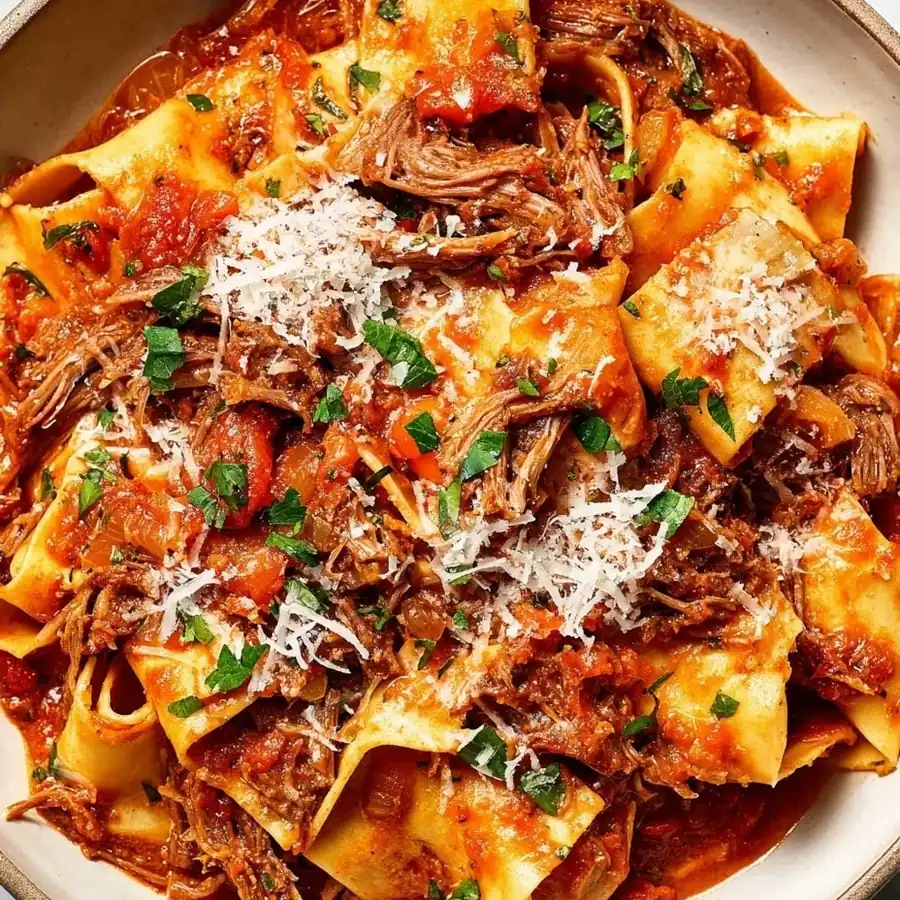
- ●●Moist, melt‑in‑your‑mouth pork cubes that develop deep umami flavor.
- ●●Rich tomato base with a subtle brightness from white wine and fresh herbs.
- ●●Pappardelle shares space with the sauce, picking up every nuance of seasoning.
- ●●Low‑maintenance: steam to cook the pasta while the ragù finishes on the stove.
- ●●Versatile—add mushrooms or a splash of balsamic for an extra depth of taste.
- ●●Lasting leftovers that taste even better the next day.
- ●●Parent‑friendly: the dish is hearty enough for kids yet sophisticated enough for evenings.
Essential Ingredients |
 Let’s Make it Together |
- Heat 2 tablespoons of olive oil in a heavy Dutch oven over medium‑high heat. Once shimmering, add the pork cubes in a single layer and brown on all sides, about 4–5 minutes. Remove and set aside.
- In the same pan, reduce heat to medium and add diced onion, carrot, and celery. Cook until softened and lightly caramelized, about 6 minutes, stirring occasionally.
- Introduce the minced garlic, cook for 30 seconds until fragrant, then pour in 1 cup of dry white wine to deglaze. Scrape the browned bits from the bottom of the pot.
- Return the pork to the pot along with 1 cup of stock, crushed tomatoes, tomato paste, oregano, thyme, and a bay leaf. Season with salt and pepper. Bring to a gentle simmer.
- Cover, reduce heat to low, and let the ragu cook for 1¾–2 hours, stirring every 20 minutes, until the pork is fall‑apart tender and the sauce has thickened.
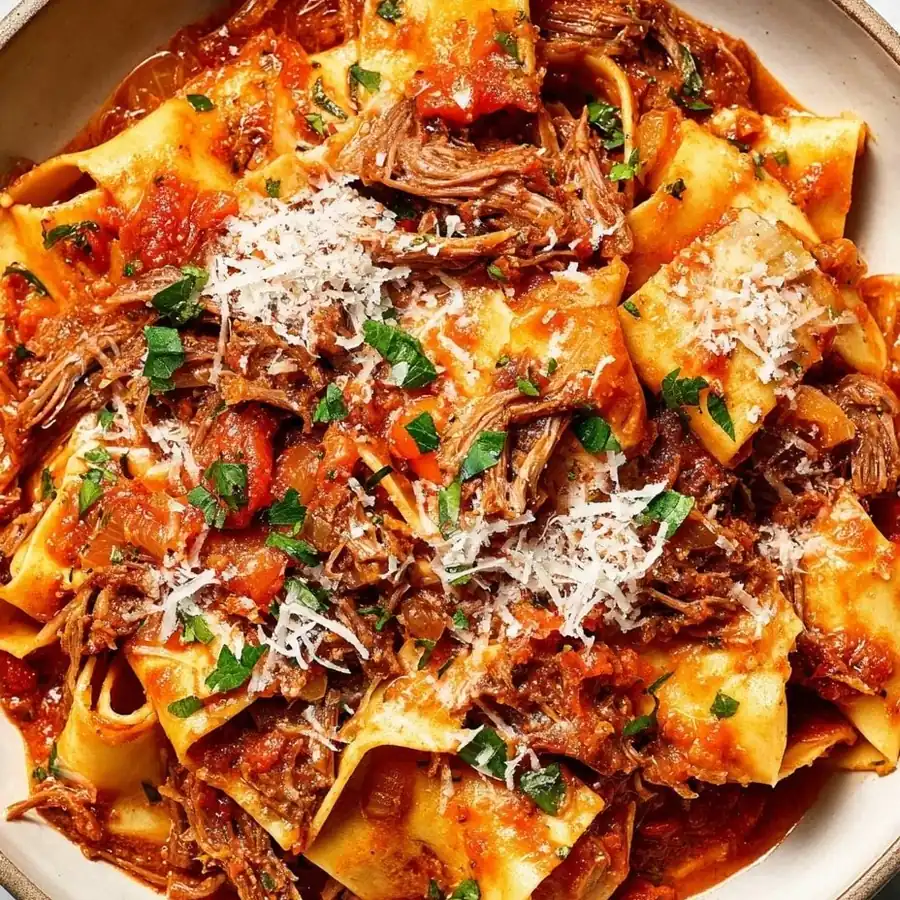
- While the ragù finishes, boil salted water and add pappardelle. Cook 1–2 minutes less than package instructions for al dente. Drain, reserving a cup of pasta water. Toss the pasta with the sauce, adding pasta water if needed to achieve a silky coat. Serve topped with fresh parsley and a sprinkle of grated Parmesan.
●Use a heavy‑bottomed pot to prevent scorching during the long simmer; the even heat distributes flavor without burning.
●Aged pork shoulder gives the slow braise richness—you can substitute pork butt half and half with equivalent tenderness.
●Always deglaze the pan with wine before adding the stock; this lifts the caramelized bits that are full of flavor.
●Let the pork rest for a few minutes after browning, which preserves juices for a moister bite.
●Simmering on a low flame preserves the texture of the pancetta; avoid high heat to prevent the sauce from splitting.
Perfecting the Cooking Process |
Add Your Touch |
Storing & Reheating |
●Pat the pork dry before browning; excess moisture causes steaming instead of searing, which limits browning aromatics.
●Add a pinch of sugar to counterbalance the tomato acidity if using very ripe tomatoes.
●Remove the bay leaf before plating, as it can be hard to bite and has a textured feel that may unsettle delicate diners.
●Mingle the sauce with pasta in a large, shallow skillet; this ensures every strand of ribbon gets a taste.
●Serve immediately with freshly grated Parmesan; the nutty finish elevates the dish for a dinner‑party wow factor.
FAQ |
- ●Q: Can I use pork loin instead of shoulder?A: Yes, but shoulder yields a richer, more tender result; use pork loin if you prefer a leaner cut, but adjust roast time accordingly.
- ●Q: How long can I store the ragu in the fridge?A: It stays good for up to 4 days; always reheat to 165°F (75°C) before eating.
- ●Q: What should I do if the sauce becomes too thick?A: Add a splash of stock, wine, or pasta water to reduce thickness and add moisture.
- ●Q: Can I use canned diced tomatoes instead of crushed?A: Yes, but crush them yourself to maintain a thicker sauce texture.
Hearty Braised Pork Ragu with Pappardelle: A Family-Favorite Comfort Dish
- Total Time: 2 hours 35 minutes
- Yield: 4 servings 1x
Description
A rustic braised pork ragu served over wide pappardelle ribbons, creating a comforting, savory dish that feels like home and host.
Ingredients
- 1 pound pork shoulder, cubed
- 2 tablespoons olive oil
- 1 onion, diced
- 2 carrots, diced
- 2 celery stalks, diced
- 3 cloves garlic, minced
- 1 cup dry white wine
- 1 cup beef or pork stock
- 1 (28 ounce) can crushed tomatoes
- 2 tablespoons tomato paste
- 1 teaspoon dried oregano
- 1 teaspoon dried thyme
- 1 bay leaf
- Salt and pepper to taste
- 1 pound pappardelle
Instructions
- Heat olive oil over medium‑high heat; brown pork cubes all sides.
- Add diced onion, carrot, celery; cook until slightly caramelized.
- Stir in minced garlic and deglaze with white wine.
- Return pork to pot; add stock, crushed tomatoes, tomato paste, oregano, thyme, bay leaf, salt, and pepper; bring to simmer.
- Cover and simmer low for 1½‑2 hours, or until pork is tender and sauce thickens.
- Cook pappardelle al dente; toss with sauce and add reserved pasta water if needed.
- Serve topped with fresh parsley and grated Parmesan.
- Prep Time: 20 minutes
- Cook Time: 2 hours 15 minutes
- Category: Dinner
- Method: Slow braising, simmering, sauté
- Cuisine: Italian
