

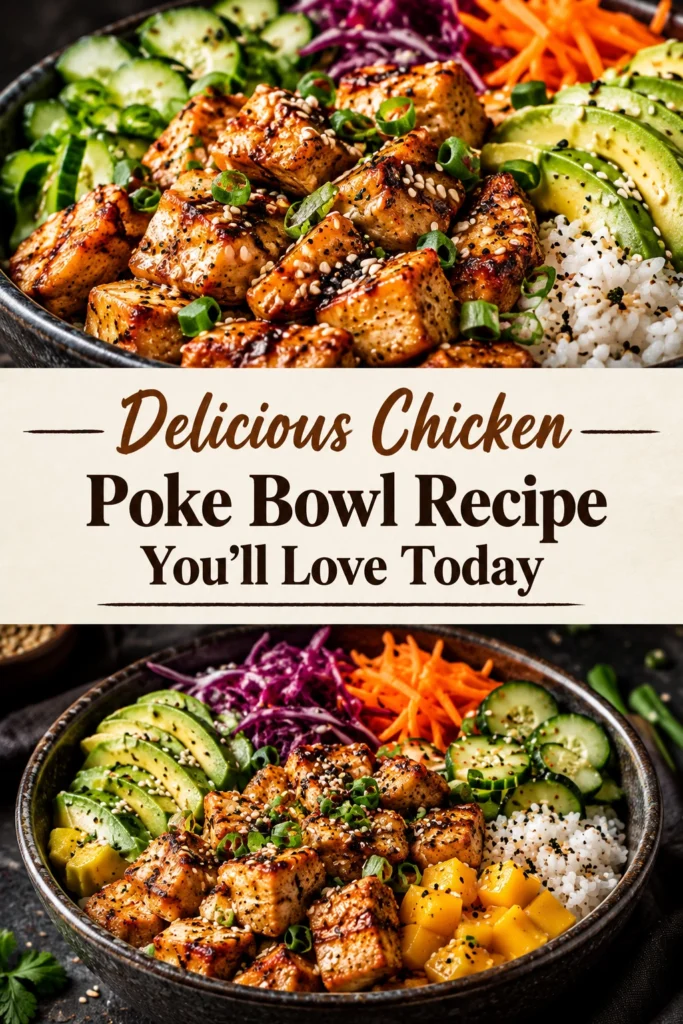
Salty soy sauce paired with the creamy richness of sliced avocado creates the foundation of this bowl. The contrast between the warm, marinated chicken and the cold, crisp vegetables makes every bite feel balanced.
A chicken poke bowl adapts the traditional Hawaiian raw fish dish into a cooked, protein-packed meal. It combines a base of seasoned rice with a variety of fresh toppings and a savory glaze.
Many people prefer this version because it offers a familiar protein while keeping the vibrant, clean flavors of a sushi bar. It avoids the cost and sourcing challenges of sushi-grade fish.
The cooked chicken provides a hearty, satisfying chew that pairs well with the snap of fresh cucumbers and radishes. The finished dish has a distinct, refreshing crunch from the raw toppings.
Anyone looking for a nutrient-dense lunch or a light dinner will find this approach useful. It is a great way to incorporate more raw vegetables into a daily diet without feeling like a side salad.
Preparation is straightforward and allows for a lot of customization based on what is available in the fridge. These steps will guide the process from marinating the meat to assembling the final bowls.
- ●Why You’ll Love This Recipe
- ●A Brief Background on the Flavor Profile
- ●Perfect For Healthy Meal Prep and Family Dinners
- ●Main Ingredient Spotlight: Chicken Breast
- ●Secondary Ingredient Spotlight: Sushi Rice
- ●Key Ingredients
- ●How to Make It
- ●Pro Tips
- ●Delicious Variations
- ●Best Ways to Serve
- ●Storage and Leftovers
- ●Frequently Asked Questions
- ●Why This Recipe Belongs in Your Weekly Rotation
- ●Final Thoughts
Combining the elements of a fresh salad with the satisfaction of a warm protein makes this a versatile choice for any day of the week.
- ●High protein content keeps you full longer than traditional veggie bowls.
- ●Customizable toppings allow for dietary adjustments.
- ●Minimal active cooking time once the marinating is done.
- ●Bright, acidic flavors cut through the richness of the avocado.
- ●Perfect for using up leftover vegetables in the crisper drawer.
- ●A great alternative to expensive takeout poke.
- ●Easily scalable for large groups or small solo meals.
- ●Provides a balanced mix of complex carbs, healthy fats, and lean protein.
The result is a colorful, vibrant meal that tastes as light as it looks while remaining deeply savory.
A Brief Background on the Flavor Profile |
The heart of this recipe lies in the balance of umami, sweetness, and acidity. The marinade uses soy sauce and ginger to infuse the chicken with a depth that mimics the seasoned fish found in traditional poke.
Texture plays a critical role here, blending the softness of steamed rice with the rigidity of raw carrots and cucumbers. This variety prevents the palate from becoming fatigued, which often happens with one-note meals.
Using chicken instead of tuna or salmon changes the temperature dynamic. The warm meat slightly softens the rice it touches, creating a pleasing contrast with the chilled toppings.
This approach brings a modern twist to a classic Hawaiian-Japanese fusion, making it accessible for those who are not fond of raw seafood.
Perfect For Healthy Meal Prep and Family Dinners |
The components of this bowl are ideal for Sunday meal prep. The rice can be cooked in a large batch, and the vegetables can be sliced and stored in airtight containers, making assembly a five-minute task during the work week.
Family dinners benefit from the “build-your-own” nature of the dish. Setting out the ingredients in separate bowls allows children or picky eaters to choose exactly which vegetables they want to include.
During busier seasons or holidays, this serves as a refreshing counterpoint to heavy, cream-based dishes. It provides a clean, light option that doesn’t leave you feeling sluggish.
Main Ingredient Spotlight: Chicken Breast |
Chicken breast serves as the lean canvas for the bold soy-ginger marinade. Its mild flavor allows the aromatics to shine, and when cubed properly, it provides a consistent bite size that fits the poke aesthetic.
Beyond flavor, chicken breast offers a high protein-to-calorie ratio. It stays firm enough to be diced into clean cubes, which is essential for the visual appeal of the bowl. For those who prefer more moisture, chicken thighs can be used, though they change the lean profile of the meal.
Secondary Ingredient Spotlight: Sushi Rice |
Sushi rice, or short-grain white rice, is essential because of its starch content. It possesses a natural stickiness that holds the other ingredients together and provides a chewy base that absorbs the extra marinade.
Adding a touch of rice vinegar and sugar to the cooked grains mimics the traditional seasoning used in sushi. This subtle tang balances the saltiness of the chicken and the creaminess of the avocado.
If you are looking for a lower-carb option, cauliflower rice or quinoa can work, though you will lose the signature clingy texture that defines a poke bowl.
Key Ingredients |
Gather these components to build a bowl that is balanced in both nutrition and taste.
- ●Chicken Breast — provides the primary lean protein and absorbs the marinade.
- ●Soy Sauce — adds the essential salty, umami depth to the meat.
- ●Fresh Ginger — brings a spicy, aromatic zing that cuts through the soy.
- ●Sesame Oil — contributes a toasted, nutty aroma and helps with searing.
- ●Sushi Rice — creates the sticky, starchy foundation of the bowl.
- ●Avocado — adds a buttery texture and healthy fats.
- ●Cucumber — provides a cool, refreshing crunch.
- ●Carrots — adds sweetness and a bright orange color.
- ●Rice Vinegar — seasons the rice and adds a light acidity.
- ●Green Onions — offers a mild onion bite and a fresh garnish.
How to Make It |
Follow these steps carefully to ensure the chicken remains juicy and the vegetables stay crisp.
- Marinate the chicken: Whisk together soy sauce, sesame oil, grated ginger, and a pinch of sugar in a bowl. Add cubed chicken and let it sit for at least 30 minutes in the fridge; skipping this step results in bland meat that lacks depth.
- Prepare the rice: Rinse the sushi rice under cold water until the water runs clear to remove excess surface starch. Cook according to package directions, then fold in rice vinegar and a pinch of salt while the rice is still warm so the grains absorb the liquid evenly.
- Sear the protein: Heat a skillet over medium-high heat with a tablespoon of neutral oil. Add the chicken cubes in a single layer and cook for 3-4 minutes per side until a golden-brown crust forms; avoid overcrowding the pan, as this will steam the meat instead of searing it.
- Prep the vegetables: While the chicken rests, dice the cucumber, shred the carrots, and slice the avocado. Keep the avocado separate until the very end to prevent it from oxidizing or getting mashed into the other vegetables.
- Assemble the base: Scoop a generous portion of seasoned rice into the bottom of a wide bowl. Press it down slightly to create a flat surface, which prevents the toppings from sliding around.
- Arrange the toppings: Place the seared chicken in the center and surround it with neat piles of cucumber, carrots, and avocado. This separation keeps the flavors distinct and makes the bowl visually appealing.
- Final garnish: Drizzle any remaining pan juices or extra soy sauce over the top. Sprinkle with sliced green onions and sesame seeds for a professional finish.
1Small adjustments in technique can significantly elevate the final result.
- ●2Uniform Cubing: Cut the chicken into exact 1-inch cubes so they all cook at the same rate and fit perfectly with the other diced toppings.
- ●3Rice Temperature: Let the rice cool slightly before adding the toppings; piping hot rice can wilt the fresh cucumber and carrots.
- ●4Avocado Ripeness: Use an avocado that gives slightly to pressure but isn’t mushy to ensure clean slices that hold their shape.
- ●5Deglaze the Pan: If the marinade sugars burn in the pan, add a splash of water or pineapple juice to lift those browned bits and create a quick glaze for the chicken.
- ●6Cold Bowl Prep: Chill your serving bowls in the fridge for 10 minutes if you prefer a truly cold experience, similar to store-bought poke.
Delicious Variations |
Depending on your mood or the ingredients on hand, you can shift the flavor profile of this dish.
- ●Spicy Mayo Version: Mix Sriracha with Japanese mayonnaise and drizzle it over the chicken for a creamy, spicy kick.
- ●Tropical Twist: Add diced fresh mango or pineapple chunks for a sweet contrast to the salty soy glaze.
- ●Low Carb Swap: Replace the sushi rice with a bed of shredded kale or cauliflower rice for a lighter meal.
- ●Extra Protein: Add edamame beans or a soft-boiled egg to increase the satiety of the bowl.
- ●Crunchy Add-ons: Top with fried shallots or crushed wasabi peas for an extra layer of texture.
These changes allow you to transition the recipe from a light lunch to a more indulgent dinner.
Best Ways to Serve |
Presentation is key for a poke bowl, as the visual variety is part of the appeal.
- ●Use wide, shallow bowls to display the ingredients in a radial pattern.
- ●Serve with a side of pickled ginger and wasabi for an authentic sushi experience.
- ●Pair with a light miso soup to add warmth to the meal.
For a social gathering, set up a “Poke Station” where guests can customize their own bowls. Place the rice in a large pot and the toppings in individual bowls with tongs.
If you are serving this as part of a larger meal, it works well alongside other chicken dishes like Delicious Savory Lemon Garlic Chicken Bites Recipe for a variety of flavors.
Storage and Leftovers |
Refrigerating
Store the assembled bowls in airtight containers for up to 3 days. To maintain the best texture, keep the dressing and avocado separate until the moment of serving.
Reheating
Only reheat the chicken and rice components. Microwave them for 60-90 seconds on medium power, then add the fresh, cold vegetables back on top to avoid wilting them.
Freezing
You can freeze the marinated, cooked chicken for up to 2 months. Do not freeze the assembled bowl, as the fresh vegetables and rice will lose their texture and become mushy.
Frequently Asked Questions |
- ●Q: Can I use a different type of rice?A: While sushi rice is preferred for its stickiness, you can use jasmine or basmati rice. However, these varieties are fluffier and won’t cling together, so the bowl will feel more like a traditional rice bowl than a poke bowl.
- ●Q: How do I stop the avocado from turning brown?A: Squeeze a bit of fresh lime or lemon juice over the avocado slices immediately after cutting. The citric acid prevents oxidation, keeping the fruit bright green and fresh for several hours.
- ●Q: Is this recipe suitable for a gluten-free diet?A: This recipe is not naturally gluten-free because of the soy sauce. To make it gluten-free, simply substitute the soy sauce with tamari or coconut aminos, which provide a similar salty flavor without the wheat.
- ●Q: What is the best way to cube the chicken for even cooking?A: Pat the chicken breast dry with paper towels before slicing. Use a sharp chef’s knife to cut the breast into 1-inch cubes. Consistent sizing ensures that no small pieces overcook while larger ones remain raw.
- ●Q: Can I use pre-cooked chicken for this?A: Yes, you can use rotisserie chicken. However, you will miss out on the searing process. To compensate, toss the pre-cooked chicken in a pan with the marinade for 2-3 minutes just to glaze the meat.
Why This Recipe Belongs in Your Weekly Rotation |
Maintaining a healthy diet often feels like a chore when the options are repetitive. This bowl breaks that cycle by offering a fresh, colorful alternative to standard salads or heavy pasta dishes.
The combination of lean protein, complex carbohydrates, and raw vegetables provides a steady release of energy throughout the afternoon. It is satisfying enough for dinner but light enough to prevent that heavy, post-meal sleepiness.
Because it is so easy to adapt, it evolves with your cravings. Whether you want something spicy, sweet, or strictly savory, this base remains reliable and delicious every time.
Final Thoughts |
This chicken poke bowl blends the savory depth of a soy-ginger glaze with the brightness of raw vegetables and seasoned sushi rice. It transforms a simple set of ingredients into a restaurant-quality meal that is balanced in both taste and nutrition.
Choosing this recipe allows you to enjoy the flavors of a poke shop without the high cost or the need for specialized raw fish. It is a practical, healthy solution for anyone needing a quick yet impressive meal.
Grab your favorite bowl and start assembling this refreshing feast today.
Delicious Chicken Poke Bowl Recipe You’ll Love Today
- Total Time: 40 minutes
- Yield: 4 servings 1x
Description
A fresh and colorful bowl featuring marinated grilled chicken breast, seasoned sushi rice, and a variety of crisp vegetables for a balanced, high-protein meal.
Ingredients
- 1.5 lbs chicken breast, cut into 1-inch cubes
- 1/4 cup soy sauce
- 1 tbsp sesame oil
- 1 tbsp freshly grated ginger
- 1 tsp sugar
- 2 cups sushi rice, uncooked
- 3 tbsp rice vinegar
- 1 tbsp sugar (for rice seasoning)
- 1 large avocado, sliced
- 1 cup cucumber, diced
- 1 cup carrots, shredded
- 2 green onions, thinly sliced
- 1 tbsp sesame seeds
- 2 tbsp neutral oil for searing
Instructions
- In a medium bowl, whisk together soy sauce, sesame oil, grated ginger, and 1 tsp sugar. Add chicken cubes, toss to coat, and refrigerate for 30 minutes.
- Rinse sushi rice under cold water until clear. Cook according to package instructions. While hot, fold in rice vinegar and 1 tbsp sugar until combined.
- Heat 2 tbsp neutral oil in a large skillet over medium-high heat. Add chicken in a single layer and sear for 3-4 minutes per side until golden brown and cooked through.
- Prepare the cucumber, carrots, and avocado. Set them aside in separate piles to keep them fresh.
- Divide the seasoned rice among four bowls as the base.
- Top the rice with the seared chicken and arrange the cucumber, carrots, and avocado around the meat.
- Garnish with sliced green onions and sesame seeds. Drizzle any extra pan juices over the chicken before serving.
- Prep Time: 30 minutes
- Cook Time: 10 minutes
- Category: Dinner
- Method: Searing
- Cuisine: Fusion
