

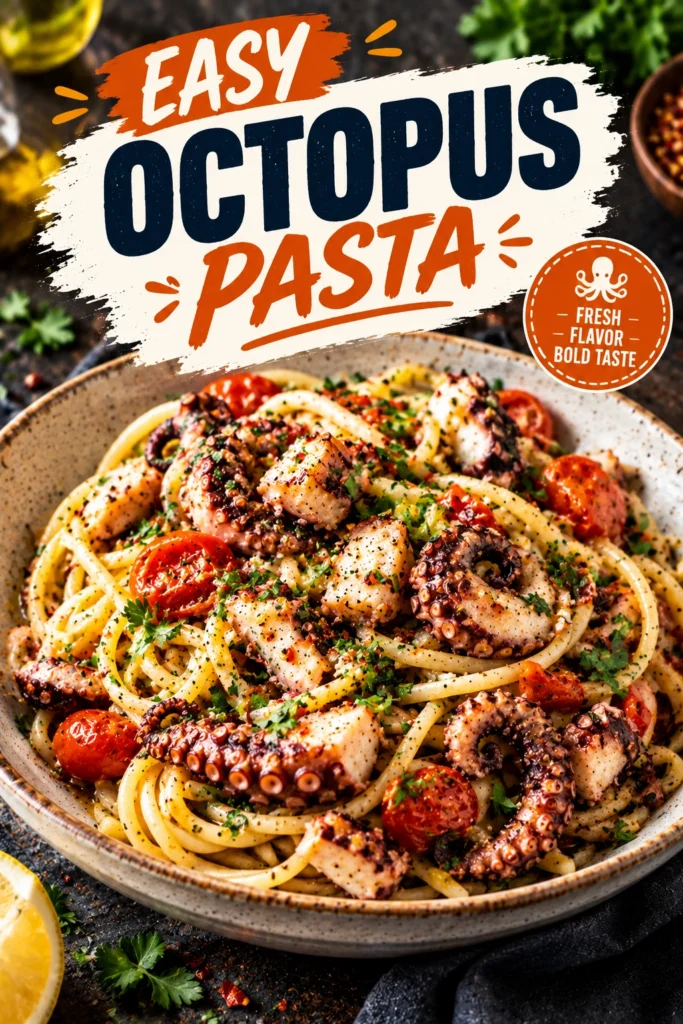
The scent of garlic browning in olive oil transforms the moment the octopus hits the pan, searing into a golden crust that locks in tenderness.
This Easy Octopus Pasta is a sophisticated yet accessible dish that brings the flavors of a Mediterranean coast to your home kitchen.
Home cooks appreciate this recipe because it removes the intimidation factor of cooking octopus from scratch -quality pre-cooked tentacles.
The distinguishing feature of this version is the addition of a splash of pasta water and lemon zest to create a light, emulsified sauce that clings to the noodles without being heavy.
Compared to traditional seafood pastas that often rely on heavy creams, this recipe stays bright and clean, letting the natural brine of the octopus shine.
It is a great choice for anyone wanting a gourmet experience without spending hours in the kitchen, similar to the refined feel of Creamy Salmon Paccheri Pasta Easy Gourmet Seafood Pasta Dinner
The following guide provides everything needed to master this elegant seafood meal.
- ●Why You’ll Love This Recipe
- ●A Brief Background / Why This Recipe Works
- ●Perfect For Elegant Dinners and Date Nights
- ●Main Ingredient Spotlight: Octopus
- ●Secondary Ingredient Spotlight: Garlic and Lemon
- ●Key Ingredients
- ●How to Make It
- ●Pro Tips
- ●Delicious Variations
- ●Best Ways to Serve
- ●Storage and Leftovers
- ●Frequently Asked Questions
- ●Why This Recipe Belongs in Your Weekly Rotation
- ●Final Thoughts
This dish balances luxury and simplicity, offering a high-end taste with minimal effort.
- ●Fast preparation using pre-tenderized octopus.
- ●Balanced flavor profile of acidity, salt, and aromatics.
- ●Impressive presentation that looks professional on the plate.
- ●Light enough for a summer evening but hearty enough for winter.
- ●Uses pantry staples like olive oil and garlic.
- ●Customizable based on your favorite pasta shape.
- ●Less cleanup than multi-pot seafood stews.
- ●High protein content from the seafood.
It provides a refreshing change of pace from standard pasta dishes while remaining easy to execute.
A Brief Background / Why This Recipe Works |
Octopus is prized in Mediterranean cuisine for its unique texture and deep ocean flavor. The challenge for most home cooks is the toughening of the muscle if not simmered correctly. -cooked octopus, the focus shifts from the long braise to the quick sear, which adds a smoky charred exterior.
The combination of lemon and garlic acts as a natural foil to the richness of the seafood. The acidity cuts through the olive oil, ensuring the dish feels fresh rather than greasy. Using pasta water to bind the ingredients creates a glossy coating that integrates the sauce into every strand of pasta.
This approach ensures a consistent result every time, regardless of your skill level with seafood.
Perfect For Elegant Dinners and Date Nights |
The visual appeal of octopus tentacles makes this an ideal choice for a romantic dinner or a small gathering where you want to impress guests. It feels curated and intentional, providing a restaurant-quality experience in a home setting.
Because the active cooking time is short, it is also feasible for a weeknight when you want something more exciting than a standard meal. It bridges the gap between a quick dinner and a special occasion feast.
For holiday gatherings or brunch, this pasta can be served in smaller portions as a sophisticated appetizer alongside other seafood options like Creamy Shrimp Macaroni Salad Easy Seafood Pasta Salad Recipe
Main Ingredient Spotlight: Octopus |
Octopus provides a meaty, satisfying texture that is distinct from fish or shrimp. It has a mild sweetness and a salty depth that pairs exceptionally well with citrus. Nutritionally, it is lean and rich in minerals, making it a healthy centerpiece for a pasta dish. When seared quickly, the edges caramelize, adding a layer of complexity to the overall flavor.
Secondary Ingredient Spotlight: Garlic and Lemon |
Garlic serves as the aromatic foundation of the dish. When sautéed slowly in olive oil, it releases a mellow sweetness that permeates the pasta and seafood.
Lemon brings the necessary brightness. Both the juice and the zest are used; the juice provides the sharp acidity, while the zest offers a floral, citrusy aroma that lingers on the palate. Together, they prevent the octopus from feeling too heavy.
Key Ingredients |
These components work together to create a harmonious balance of salt, acid, and starch.
- ●Octopus — The star protein, providing a tender yet firm texture and oceanic flavor.
- ●Pasta — The base that carries the sauce; long noodles like linguine or spaghetti are traditional.
- ●Olive Oil — The cooking fat that imparts a fruity richness and helps sear the seafood.
- ●Garlic — A pungent aromatic that adds depth and warmth to the sauce.
- ●Lemon — Used for both zest and juice to provide a bright, acidic lift.
- ●Fresh Parsley — Adds a pop of color and a clean, peppery finish.
- ●Red Pepper Flakes — Introduces a subtle heat to balance the citrus.
- ●Parmesan Cheese — An optional salty finish that adds a touch of creaminess.
How to Make It |
Follow these steps to ensure the octopus remains tender and the sauce is perfectly emulsified.
- Boil the pasta: Cook your chosen pasta in a large pot of heavily salted water. Remove the noodles when they are just shy of al dente, as they will finish cooking in the pan with the sauce.
- Reserve the liquid: Before draining the pasta, scoop out about a cup of the starchy cooking water. This liquid is essential for creating a smooth sauce that sticks to the noodles.
- Sear the octopus: Heat olive oil in a wide skillet over medium-high heat. Add the octopus pieces and cook until they develop a golden-brown crust on all sides. Avoid overcrowding the pan, or the octopus will steam instead of sear.
- Sauté the aromatics: Lower the heat to medium and push the octopus to the side of the pan. Add the minced garlic and red pepper flakes, stirring for about one minute until the garlic is fragrant but not browned.
- Deglaze and emulsify: Stir in the lemon juice and a splash of the reserved pasta water. Stir continuously for a minute to allow the liquid to reduce slightly and blend with the oil.
- Combine and toss: Add the cooked pasta and lemon zest to the skillet. Toss everything together over medium heat for two minutes, adding more pasta water if the sauce looks too dry.
- Final touches: Remove the pan from the heat and stir in the chopped fresh parsley. This preserves the bright green color and fresh taste of the herb.
1A few small adjustments can make a significant difference in the final texture and taste.
- ●2Pat the octopus dry: Use paper towels to remove excess moisture from the octopus before searing to ensure a better crust.
- ●3Don’t overcook the garlic: Garlic turns bitter if it burns; keep the heat medium and move it quickly.
- ●4Use high-quality oil: A good extra-virgin olive oil adds a distinct flavor that elevates the entire dish.
- ●5Zest before juicing: It is much easier to grate the lemon peel before you cut the fruit in half for juicing.
- ●6Salt the water: Ensure your pasta water is salty like the sea, as this is the only chance to season the noodles themselves.
Delicious Variations |
While the classic version is timeless, these twists can adapt the recipe for different moods or dietary needs.
- ●Creamy Version: Stir in a tablespoon of heavy cream or crème fraîche at the end for a richer sauce, similar to a Creamy Pumpkin Pasta With Sage Easy Fall Dinner Idea
- ●Mediterranean Garden: Add halved cherry tomatoes and Kalamata olives during the sauté step for a salty, tangy punch.
- ●Spicy Arrabiata Style: Increase the red pepper flakes and add a tablespoon of tomato paste for a bold, red sauce.
- ●White Wine Twist: Replace the pasta water with a splash of dry white wine like Pinot Grigio to add a sophisticated acidity.
- ●Veggie-Packed: Toss in a handful of ba frozen peas during the final tossing stage for added nutrients and color.
These variations allow you to shift the flavor profile from light and citrusy to rich and hearty.
Best Ways to Serve |
Presentation enhances the dining experience, especially with a visually striking ingredient like octopus.
- ●Plating: Twirl the pasta into a high mound in the center of the plate and nestle the octopus tentacles on top.
- ●Garnish: Finish with a final sprinkle of fresh parsley and a thin slice of lemon on the rim of the plate.
- ●Side Dish: Serve with a crisp arugula salad or a piece of toasted garlic sourdough bread.
For a more casual approach, serve the pasta in shallow bowls and sprinkle a generous amount of grated Parmesan or Pecorino Romano over the top.
A chilled glass of Sauvignon Blanc or a light Pinot Grigio complements the citrus and seafood notes perfectly.
Storage and Leftovers |
Refrigerating
Store leftovers in an airtight container in the refrigerator for up to 2 days. The pasta may absorb the sauce over time, which is normal.
Reheating
Reheat in a skillet over medium heat with a tablespoon of water or olive oil to loosen the sauce and prevent the octopus from becoming rubbery.
Freezing
Freezing is not recommended for this dish. The texture of the octopus and the pasta will degrade, and the lemon sauce may separate during the thawing process.
Frequently Asked Questions |
- ●Q: Can I use raw octopus instead of pre-cooked?A: Yes, but you must simmer the raw octopus in water with aromatics for 45 to 60 minutes until tender before starting the searing process. Using raw octopus directly in the pan will result in a very rubbery texture that is difficult to chew.
- ●Q: What is the best pasta shape for this recipe?A: Long, thin pastas like linguine, spaghetti, or angel hair work best because they coat evenly in the light lemon-garlic sauce. However, short pastas like penne or fusilli also work if you prefer a heartier bite and more surface area for the sauce.
- ●Q: How do I prevent the octopus from sticking to the pan?A: Ensure the pan is sufficiently hot before adding the olive oil and the octopus. Avoid stirring the octopus too frequently during the first two minutes of searing; let it sit undisturbed so a proper crust forms, which naturally releases it from the pan.
- ●Q: Can I make this recipe dairy-free?A: This recipe is naturally dairy-free if you omit the optional Parmesan cheese at the end. The emulsion of olive oil, lemon juice, and pasta water provides plenty of richness and flavor without the need for butter or cream.
- ●Q: My sauce is too oily; how can I fix it?A: This usually happens if the oil and water didn’t emulsify. Add a small amount of additional pasta water and stir vigorously over medium heat. The starch in the water helps bind the oil and liquid into a cohesive, glossy sauce.
Why This Recipe Belongs in Your Weekly Rotation |
Introducing octopus into your regular meals breaks the monotony of chicken and beef. It provides a sophisticated flavor profile that feels like a treat, yet the preparation is fast enough for a standard Tuesday night.
The health benefits of lean seafood combined with the heart-healthy fats of olive oil make this a balanced choice. It is a versatile base that can be tweaked based on whatever fresh produce you have in the fridge.
Final Thoughts |
This Easy Octopus Pasta blends the luxury of fresh seafood with a zesty, aromatic sauce that highlights the natural flavors of the Mediterranean. It is a streamlined approach to a gourmet classic.
You should make this recipe whenever you need a dinner that feels celebratory but requires minimal cleanup and stress. It proves that high-end ingredients can be handled simply and effectively.
Gather your ingredients and bring a touch of coastal elegance to your table tonight.
Easy Octopus Pasta with Garlic and Lemon
- Total Time: 30 minutes
- Yield: 4 servings 1x
Description
A refined yet simple pasta dish featuring tender seared octopus, a bright lemon-garlic sauce, and fresh parsley. Perfect for an elegant dinner that comes together quickly.
Ingredients
- 1 lb linguine or spaghetti
- 1 lb pre-cooked octopus tentacles, sliced into bite-sized pieces
- 1/4 cup extra-virgin olive oil
- 4 cloves garlic, minced
- 1 tsp red pepper flakes
- 1 large lemon, zested and juiced
- 1/4 cup fresh parsley, chopped
- 1/2 cup reserved pasta water
- 1/4 cup grated Parmesan cheese (optional)
- Salt and black pepper to taste
Instructions
- Bring a large pot of salted water to a boil and cook the pasta until just under al dente.
- Reserve 1 cup of pasta water, then drain the noodles.
- Heat olive oil in a large skillet over medium-high heat.
- Add octopus pieces and sear until golden brown on all sides, about 3-5 minutes.
- Reduce heat to medium and add minced garlic and red pepper flakes; sauté for 1 minute until fragrant.
- Stir in lemon juice and 1/2 cup of reserved pasta water, simmering for 2 minutes to emulsify.
- Add the cooked pasta and lemon zest to the skillet, tossing for 2 minutes until the sauce thickens and coats the noodles.
- Remove from heat, stir in fresh parsley, and season with salt and pepper.
- Serve immediately with optional Parmesan cheese.
- Prep Time: 10 minutes
- Cook Time: 20 minutes
- Category: Dinner
- Method: Stovetop
- Cuisine: Mediterranean
