

Finding a dinner that feels like a restaurant treat but takes less than thirty minutes to prepare is a win for any home cook.
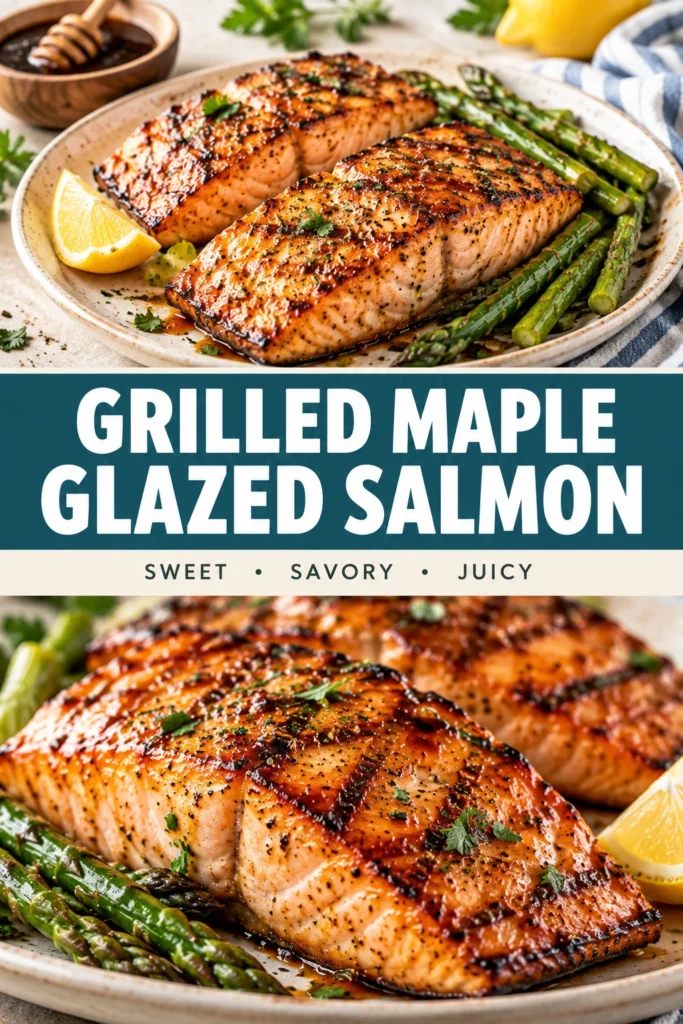
This Grilled Maple Glazed Salmon combines the deep sweetness of maple syrup with the saltiness of soy sauce and the punch of garlic.
The result is a fish fillet with a sticky, caramelized exterior and a tender, flaky center that melts in the mouth.
Many people avoid grilling salmon because they fear overcooking it, but a controlled glaze helps lock in moisture while adding complex flavor.
Unlike store-bought marinated fillets that often taste overly metallic or sugary, this homemade version balances acidity and sweetness perfectly.
This recipe is ideal for anyone seeking a nutrient-dense meal that does not sacrifice taste for health.
Below are the details and techniques needed to master this dish on your grill.
- ●Why You’ll Love This Recipe
- ●A Brief Background / Why This Recipe Works
- ●Perfect For Busy Weeknights and Healthy Dinners
- ●Main Ingredient Spotlight: Salmon
- ●Secondary Ingredient Spotlight: Pure Maple Syrup
- ●Key Ingredients
- ●How to Make It
- ●Pro Tips
- ●Delicious Variations
- ●Best Ways to Serve
- ●Storage and Leftovers
- ●Frequently Asked Questions
- ●Why This Recipe Belongs in Your Weekly Rotation
- ●Final Thoughts
This salmon recipe streamlines the process of achieving a gourmet finish without requiring professional equipment or hours of preparation.
- ●The glaze creates a beautiful mahogany crust on the grill.
- ●Preparation time is minimal, making it viable for tight schedules.
- ●Maple syrup provides a more natural, nuanced sweetness than refined sugar.
- ●It uses basic pantry staples like soy sauce and garlic.
- ●The Omega-3 rich salmon pairs well with a variety of side dishes.
- ●It is naturally dairy-free, fitting many dietary preferences.
- ●The flavor profile is sophisticated yet appealing to children.
- ●Cooking times are short, reducing the chance of drying out the fish.
- ●It scales easily for small couples or large family gatherings.
Whether you are using a charcoal grill or a gas stovetop grill pan, the consistency of the glaze remains reliable.
A Brief Background / Why This Recipe Works |
The success of this dish relies on the interaction between the sugar in the maple syrup and the high heat of the grill. When the glaze hits the hot grates, it undergoes caramelization, which creates those distinctive charred lines and a sticky coating.
The inclusion of soy sauce provides a necessary salty counterpoint to the syrup. This balance prevents the dish from tasting like a dessert and instead elevates it to a savory main course. Garlic and black pepper add aromatic depth that cuts through the richness of the salmon fats.
Because salmon is a fatty fish, it can withstand the high heat of a grill better than leaner white fish. The fats protect the proteins from toughening, provided the cooking time is monitored closely.
This approach is similar to the Delicious Rich Simple Brown Sugar Soy Glazed Salmon Recipe, but uses maple syrup for a more earthy, woody sweetness.
Perfect For Busy Weeknights and Healthy Dinners |
On hectic weeknights, the ability to prep a glaze in two minutes and grill the fish in ten makes this a reliable staple. It removes the stress of long kitchen clean-ups since the primary cooking happens outdoors or in a single pan.
For those focused on meal prep, this salmon stays moist when chilled, making it a great addition to cold grain bowls or salads for the following lunch. The flavors actually deepen as the fish rests.
Family dinners benefit from this recipe because it bridges the gap between “healthy food” and “tasty food.” The sweetness of the maple syrup is generally a hit with kids, while the sophisticated garlic notes satisfy adults.
It also serves as an impressive yet low-effort option for holiday gatherings or summer barbecues where the host wants to spend more time with guests than at the stove.
Main Ingredient Spotlight: Salmon |
Salmon is the ideal candidate for grilling because its high oil content prevents it from sticking to the grates and keeps the meat juicy. Its rich, buttery flavor is robust enough to stand up to bold glazes without being overshadowed.
Using center-cut fillets ensures even cooking across the piece of fish. While Atlantic salmon is common, King or Sockeye varieties offer a more intense flavor and a firmer texture that holds up exceptionally well under high heat.
Secondary Ingredient Spotlight: Pure Maple Syrup |
Pure maple syrup is the driving force behind the glaze’s unique character. Unlike corn syrup or honey, maple syrup has a distinct forest-like aroma and a viscosity that allows it to cling to the fish without becoming overly thick or gloppy.
The natural sugars in maple syrup break down and brown quickly, which is what creates the sticky, lacquer-like finish on the salmon’s surface. It adds a layer of complexity that balances the brine of the soy sauce.
Key Ingredients |
The following components work together to create a balance of sweet, salty, and aromatic notes.
- ●Salmon fillets — The protein base, providing a rich texture and heartiness.
- ●Pure maple syrup — Adds a woody sweetness and aids in caramelization.
- ●Soy sauce — Provides saltiness and a deep umami undertone.
- ●Garlic — Adds a pungent, savory aroma that cuts through the sweetness.
- ●Olive oil — Prevents sticking and helps distribute heat evenly.
- ●Black pepper — Introduces a subtle heat to balance the sugars.
- ●Lemon juice — Adds acidity to brighten the overall flavor profile.
How to Make It |
Follow these steps to ensure the salmon is perfectly glazed and not overcooked.
- Prepare the glaze: In a small bowl, whisk together the maple syrup, soy sauce, minced garlic, lemon juice, and black pepper. Ensure the garlic is finely minced so it distributes evenly and does not burn in large chunks.
- Dry the fish: Pat the salmon fillets completely dry with paper towels. Moisture on the surface of the fish creates steam, which prevents the salmon from searing and prevents the glaze from adhering properly.
- Oil the grates: Preheat your grill to medium-high heat. Lightly oil the grill grates using a folded paper towel dipped in vegetable oil to prevent the fish from sticking, which could cause the fillets to tear when flipped.
- First sear: Place the salmon on the grill, skin-side down if applicable. Grill for about 4 to 5 minutes without moving the fish. This allows a crust to form, which naturally releases the fish from the grate.
- Flip and glaze: Carefully flip the fillets. Immediately brush a generous layer of the maple glaze over the cooked side. The heat from the fish will help the glaze set and thicken.
- Finish cooking: Grill for another 3 to 5 minutes, brushing the glaze on the other side during the final minute. Look for the glaze to bubble and turn a deep golden brown, but avoid letting it turn black, as the sugars can burn quickly.
- Rest the meat: Remove the salmon from the grill and let it rest on a plate for 3 to 5 minutes. This allows the juices to redistribute, ensuring the fish remains moist when sliced.
1Refining your technique can make the difference between a good fillet and a professional-grade dish.
- ●2Use a meat thermometer: Pull the salmon off the grill when the internal temperature reaches 135°F (57°C) for a medium finish.
- ●3Avoid over-flipping: Only flip the fish once. Constant movement prevents the formation of a proper sear and increases the risk of the fillet breaking.
- ●4Room temperature fish: Let the salmon sit out for 15 minutes before grilling so it cooks more evenly from edge to center.
- ●5Strain the garlic: If you prefer a smoother glaze, grate the garlic into a paste rather than chopping it.
- ●6Clean the grates: Use a grill brush to remove old residue, as leftover charred bits can impart a bitter taste to the maple glaze.
Delicious Variations |
You can easily adapt this base recipe to fit different flavor preferences or dietary needs.
- ●Spicy Maple: Stir in a teaspoon of Sriracha or red pepper flakes for a sweet-heat combination.
- ●Ginger Twist: Add freshly grated ginger to the glaze for a brighter, more zesty Asian-inspired profile.
- ●Coconut Aminos: Replace soy sauce with coconut aminos for a soy-free, lower-sodium alternative.
- ●Citrus Blend: Swap the lemon juice for orange juice to complement the maple syrup with a citrusy sweetness.
- ●Herbed Finish: Garnish with fresh chopped parsley or cilantro after grilling for a pop of color and freshness.
For those who prefer an oven-based method, you can find similar results with a Maple Dijon Salmon Sheet Pan Dinner Easy Healthy Weeknight Salmon Recipe
Best Ways to Serve |
Since the salmon is rich and sweet, it pairs best with sides that offer acidity, bitterness, or a clean, neutral starch.
- ●Roasted Asparagus: The earthy bitterness of asparagus balances the maple sugar.
- ●Quinoa or Brown Rice: A nutty grain absorbs any extra glaze that pools on the plate.
- ●Cucumber Salad: A vinegar-based cucumber and red onion salad provides a refreshing contrast.
- ●Sautéed Spinach: Lightly wilted spinach with lemon juice complements the fish’s richness.
For a complete meal, serve the salmon over a bed of wild rice and steamed bok choy. The contrast of the sticky glaze against the crisp greens creates a visually appealing and balanced plate.
If serving as an appetizer, you can cut the fillets into smaller cubes before grilling, similar to the approach in Maple Soy Glazed Salmon Bites A Gourmet Fusion Treat Easy Salmon Appetizers
Storage and Leftovers |
Refrigerating
Store leftover cooked salmon in an airtight container in the refrigerator for up to 3 days. Ensure the fish is completely cooled before sealing the lid to prevent excess moisture from making the glaze soggy.
Reheating
To maintain the texture, reheat the salmon in a skillet over medium-low heat with a teaspoon of water or butter for 2 to 3 minutes. Avoid the microwave, as it often overcooks the fish and makes it rubbery.
Freezing
While cooked salmon can be frozen for up to 2 months, the texture of the glaze may change. Wrap the fillets tightly in foil and place them in a freezer bag to prevent freezer burn.
Frequently Asked Questions |
- ●Q: Can I use honey instead of maple syrup?A: Yes, honey is a suitable substitute. However, honey has a higher sugar concentration and a different viscosity, which means it may burn faster on the grill. You should keep a closer eye on the heat and perhaps dilute it with a small amount of water.
- ●Q: How do I know when the salmon is perfectly cooked?A: The salmon is done when the flesh changes from translucent pink to an opaque light pink. If you press the top of the fillet, it should flake easily with a fork. An internal temperature of 135°F to 145°F is the standard.
- ●Q: Is it better to grill salmon with or without the skin?A: Grilling with the skin is highly recommended. The skin acts as a protective barrier between the delicate flesh and the intense heat of the grill, which helps prevent the fish from drying out or sticking to the grates.
- ●Q: Why did my glaze burn before the fish was cooked?A: This usually happens if the grill temperature is too high or if the glaze was applied too early. Only apply the glaze during the last few minutes of cooking to allow the fish to cook through without scorching the sugars.
- ●Q: Can I make this recipe in a cast-iron pan?A: Absolutely. A cast-iron pan mimics the high, direct heat of a grill. Simply sear the salmon on medium-high heat and apply the glaze during the final minutes of cooking, just as you would on an outdoor grill.
Why This Recipe Belongs in Your Weekly Rotation |
This dish proves that healthy eating does not have to be bland. By utilizing a few high-impact ingredients, you can create a meal that satisfies cravings for sweetness and salt while providing essential nutrients.
The versatility of the maple glaze means you can adapt it to whatever you have in the fridge. Whether you are cooking for a picky toddler or a gourmet-loving partner, the flavor profile is universally appealing.
Integrating this into your routine reduces the reliance on takeout and processed meals. It is a fast, reliable, and impressive dish that makes the transition to a healthier diet feel like a luxury rather than a chore.
Final Thoughts |
Grilled Maple Glazed Salmon combines the rustic charm of outdoor grilling with a sophisticated sweet-and-savory glaze. It is a streamlined recipe that prioritizes flavor and texture without requiring extensive kitchen time.
Making this recipe allows you to master the art of caramelization and heat management. It transforms a simple piece of fish into a centerpiece meal that feels special every time it is served.
Fire up the grill and experience how these simple ingredients create a truly memorable dinner.
Grilled Maple Glazed Salmon
- Total Time: 22 minutes
- Yield: 4 servings 1x
Description
A succulent grilled salmon fillet coated in a sticky, sweet-and-savory maple soy glaze. Perfect for healthy weeknight dinners or outdoor summer grilling.
Ingredients
- 4 salmon fillets (6 oz each)
- 1/4 cup pure maple syrup
- 2 tablespoons soy sauce
- 2 cloves garlic, minced
- 1 tablespoon lemon juice
- 1 tablespoon olive oil
- 1/2 teaspoon black pepper
- Salt to taste
Instructions
- In a small bowl, whisk together maple syrup, soy sauce, minced garlic, lemon juice, and black pepper to create the glaze.
- Pat the salmon fillets completely dry with paper towels and season lightly with salt.
- Preheat the grill to medium-high heat and lightly oil the grates to prevent sticking.
- Place salmon fillets on the grill, skin-side down, and cook for 4-5 minutes without moving them.
- Flip the fillets carefully using a spatula.
- Brush a generous amount of the maple glaze over the cooked side of the salmon.
- Continue grilling for another 3-5 minutes, brushing the glaze on the opposite side during the final minute of cooking.
- Remove from heat when the internal temperature reaches 135-145°F and let rest for 3-5 minutes before serving.
- Prep Time: 10 minutes
- Cook Time: 12 minutes
- Category: Dinner
- Method: Grilling
- Cuisine: American
