

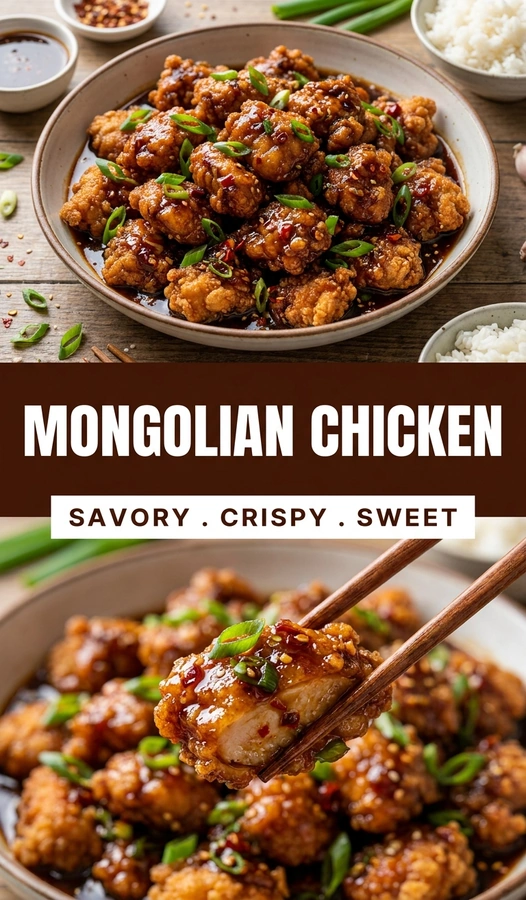
Dark, glossy sauce clings to seared edges of golden chicken, creating a rich glaze that balances salt and sugar. This stir-fry brings a concentrated punch of ginger and garlic to the plate.
Mongolian chicken is a fast-paced meal that relies on high heat to achieve a charred exterior while keeping the meat tender. It transforms basic pantry staples into a restaurant-style dinner.
The appeal lies in the stark contrast between the crisp, browned chicken surfaces and the smooth, syrupy consistency of the reduction.
While some versions rely on heavy cornstarch coatings, this approach focuses on a clean sear and a concentrated glaze for a more natural texture.
This dish suits anyone needing a high-impact meal that requires minimal prep time and only one pan.
The following guide breaks down the technique for achieving the right sear and the correct sauce consistency.
- ●Why You’ll Love This Recipe
- ●A Brief Background / Why This Recipe Works
- ●Perfect For Busy Weeknight Dinners
- ●Main Ingredient Spotlight
- ●Secondary Ingredient Spotlight
- ●Key Ingredients
- ●How to Make It
- ●Pro Tips
- ●Delicious Variations
- ●Best Ways to Serve
- ●Storage and Leftovers
- ●Frequently Asked Questions
- ●Why This Recipe Belongs in Your Weekly Rotation
- ●Final Thoughts
This stir-fry is designed for efficiency without sacrificing the depth of flavor found in traditional takeout.
- ●Concentrated ginger and garlic provide a sharp, aromatic base.
- ●The cooking process takes less than 30 minutes from start to finish.
- ●A single skillet or wok handles everything, reducing cleanup.
- ●The balance of brown sugar and soy sauce creates a nostalgic, savory-sweet profile.
- ●Chicken breast remains juicy when seared quickly over high heat.
- ●The sauce thickens rapidly, coating the meat without becoming gummy.
- ●It pairs well with a variety of grains or steamed vegetables.
- ●The ingredients are common staples found in most grocery stores.
- ●It offers a bold alternative to lighter options like Healthy Chicken Piccata Light Flavorful
Whether you are craving something hearty or looking to impress guests with a quick dish, this recipe delivers consistent results.
A Brief Background / Why This Recipe Works |
Mongolian-style chicken is an adaptation of stir-fry techniques that emphasize a high-heat sear. The goal is to create a Maillard reaction on the meat, which adds a nutty, toasted quality to the overall flavor profile.
The success of the dish depends on the reduction of the sauce. soy and sugar mixture, the water evaporates, leaving behind a thick syrup that adheres to the chicken rather than pooling at the bottom of the plate.
Using a cornstarch dusting on the chicken creates a thin barrier that prevents the meat from overcooking while helping the sauce grip the surface of each piece.
This combination of high-heat searing and slow-glazing ensures a professional finish every time.
Perfect For Busy Weeknight Dinners |
When time is limited, this recipe functions as a reliable solution for a complete meal. The active cooking time is short, making it a viable option even after a long workday.
For those who enjoy meal prep, this chicken holds its flavor well when stored and reheated, pairing easily with pre-cooked rice or quinoa. It provides a substantial protein source that feels indulgent but remains simple to execute.
During family dinners, the sweet and savory notes typically appeal to both children and adults. It is a versatile dish that can be scaled up easily to feed a larger group during casual gatherings.
Main Ingredient Spotlight |
Chicken Breast provides a lean, neutral canvas that allows the bold flavors of the sauce to take center stage. When cut into uniform bite-sized pieces, it cooks evenly and quickly, which is vital for maintaining a tender interior. The protein absorbs the salt from the soy sauce and the sweetness of the sugar, resulting in a well-rounded taste in every bite.
Secondary Ingredient Spotlight |
Fresh Ginger adds a pungent, peppery warmth that cuts through the richness of the brown sugar. Its aromatic quality transforms the sauce from a simple syrup into a complex, layered glaze.
Garlic contributes a savory depth and a characteristic sharpness. When sautéed in oil before adding the liquids, it releases essential oils that permeate the entire dish, grounding the sweetness with an earthy base.
Key Ingredients |
Each component plays a specific role in balancing the final flavor profile of the stir-fry.
- ●Chicken Breast — The primary protein, providing a tender and lean base.
- ●Cornstarch — Used for dusting the chicken to create a slight crust and thicken the sauce.
- ●Soy Sauce — Delivers the essential salty, umami foundation.
- ●Brown Sugar — Adds sweetness and helps the sauce caramelize into a sticky glaze.
- ●Fresh Garlic — Provides a sharp, aromatic punch.
- ●Fresh Ginger — Adds a zesty, warm spice.
- ●Vegetable Oil — A neutral fat used for high-heat searing.
- ●Green Onions — Freshness and a mild onion bite for garnish.
How to Make It |
Precision in temperature and timing prevents the chicken from becoming tough and the sauce from burning.
- Prepare the chicken: Cut the chicken breast into uniform 1-inch cubes. Toss them in a bowl with cornstarch and a pinch of salt until evenly coated. This layer prevents the meat from sticking and helps the sauce cling to the chicken later.
- Whisk the glaze: In a small bowl, combine soy sauce, brown sugar, minced garlic, and grated ginger. Stir until the sugar is mostly dissolved. Preparing this beforehand is critical because the stir-fry process happens very quickly, and you cannot afford to stop and mix ingredients once the pan is hot.
- Sear the meat: Heat oil in a large skillet or wok over medium-high heat until it shimmers. Add the chicken in a single layer, leaving space between pieces. Avoid crowding the pan, as this lowers the temperature and causes the chicken to steam rather than brown. Cook for 3-4 minutes per side until golden brown.
- Introduce the sauce: Pour the sauce mixture over the browned chicken. Immediately reduce the heat to medium. The sauce will begin to bubble and hiss as the sugars react with the heat.
- Reduce and glaze: Stir the chicken constantly for 2-3 minutes. Watch for the sauce to transition from a thin liquid to a thick, glossy syrup that coats the meat. Avoid overcooking at this stage, as the sugar can burn and turn bitter if the heat is too high.
- Final garnish: Remove the pan from the heat once the sauce is thick. Stir in sliced green onions. The residual heat will soften the onions slightly while keeping their bright green color and fresh flavor.
1Following these technical adjustments will improve the texture and consistency of your Mongolian chicken.
- ●2Use a wide pan: A larger surface area allows moisture to evaporate faster, which is the only way to get a proper sear on the chicken.
- ●3Avoid overcrowding: If you have a small pan, sear the chicken in two batches. Crowding leads to grey, boiled meat instead of golden-brown edges.
- ●4Grate the ginger: Use a microplane or fine grater for the ginger rather than chopping it. This ensures the flavor is distributed evenly throughout the sauce without leaving woody chunks.
- ●5Control the sugar: If the sauce becomes too thick too quickly, add a tablespoon of water to loosen it back to a glossy consistency.
- ●6Pat the chicken dry: Before dusting with cornstarch, use paper towels to remove excess moisture from the meat. This ensures the cornstarch doesn’t clump and the chicken browns faster.
Delicious Variations |
This base recipe can be adapted to suit different dietary needs or flavor preferences.
- ●Honey Swap: Replace brown sugar with honey for a floral sweetness and a thicker, stickier glaze.
- ●Spicy Kick: Add a teaspoon of Sriracha or red pepper flakes to the sauce for a heat-forward version.
- ●Protein Switch: Use flank steak or pork tenderloin instead of chicken for a richer, meatier profile.
- ●Vegetable Add-ins: Stir in sliced bell peppers or snap peas during the last two minutes of cooking for added color and nutrition.
- ●Sesame Twist: Finish the dish with a drizzle of toasted sesame oil and a sprinkle of sesame seeds for an aromatic, nutty finish.
These modifications allow you to shift the flavor profile from traditionally sweet to something more pungent or spicy.
Best Ways to Serve |
The intensity of the glaze requires neutral sides that can absorb the extra sauce.
- ●Steamed Jasmine Rice: The fragrant, fluffy grains act as a sponge for the soy-ginger glaze.
- ●Brown Rice or Quinoa: A heartier grain option that adds a nutty contrast to the sweet chicken.
- ●Steamed Broccoli: The bitterness of the broccoli balances the sugar in the sauce.
- ●Cauliflower Rice: A lighter, low-carb alternative that still pairs well with the bold seasonings.
For a more comprehensive meal, serve the chicken alongside a crisp cucumber salad with rice vinegar. The acidity of the salad cleanses the palate between bites of the rich, sticky chicken.
If you prefer a wrap-style dinner, this chicken can be tucked into warm tortillas or lettuce leaves, similar to how one might enjoy Quick Healthy Pesto Chicken Lettuce Wraps Recipe
Storage and Leftovers |
Refrigerating
Store the cooked chicken in an airtight container in the refrigerator for up to 4 days. The sauce will thicken further as it cools, which is normal.
Reheating
Warm the chicken in a skillet over medium heat with a splash of water or broth. This re-liquefies the glaze and prevents the meat from drying out. Microwave for 1-2 minutes if a skillet is unavailable.
Freezing
This dish can be frozen for up to 3 months. Allow it to cool completely before sealing in a freezer-safe bag to prevent ice crystals from forming in the sauce.
Frequently Asked Questions |
- ●Q: Can I use chicken thighs instead of breast?A: Yes, chicken thighs are an excellent substitute. They contain more fat, which makes them more forgiving during the high-heat searing process and prevents them from drying out as easily as breast meat.
- ●Q: How do I prevent the sauce from burning?A: The key is to lower the heat to medium immediately after adding the sauce. Because of the high sugar content, the glaze can go from a syrup to a burnt crust in seconds if the pan remains on high.
- ●Q: What is the best substitute for soy sauce?A: Coconut aminos are a great alternative for those avoiding soy. They provide a similar salty-sweet profile but with slightly less sodium and a subtle coconut undertone that complements the ginger.
- ●Q: Do I have to use cornstarch on the chicken?A: While not mandatory, cornstarch is highly recommended. It creates a thin crust that protects the meat and acts as a binding agent, ensuring the sauce coats every piece rather than sliding off.
- ●Q: Why is my sauce too thin?A: This usually happens if the pan wasn’t hot enough or if the sauce wasn’t simmered long enough. Continue cooking over medium heat, stirring constantly, until the liquid reduces and becomes glossy.
Why This Recipe Belongs in Your Weekly Rotation |
Adding this dish to your repertoire solves the common struggle of finding a dinner that is both fast and satisfying. It bridges the gap between a simple protein and a complex meal, providing deep flavor without requiring hours of simmering.
The flexibility of the ingredients means you can adjust the sweetness or saltiness to fit your family’s preference. It is a reliable way to use up pantry staples while providing a meal that feels special enough for a weekend but efficient enough for a Tuesday.
Final Thoughts |
This Mongolian chicken combines tender protein with a concentrated, aromatic glaze of ginger, garlic, and soy. It relies on the balance of high-heat searing and a careful sugar reduction to achieve its characteristic stickiness.
Choosing this recipe means opting for a meal that is rapid to prepare but delivers a sophisticated flavor profile. It is a versatile choice that pairs with various sides and allows for endless customizations.
Bring the bold, savory-sweet flavors of a professional stir-fry into your own kitchen tonight.
Mongolian Chicken: A Sweet and Savory Stir-Fry
- Total Time: 30 minutes
- Yield: 4 servings 1x
Description
A savory-sweet stir-fry featuring tender chicken breast coated in a thick, glossy ginger-garlic soy glaze. This dish is characterized by its rich color and sticky texture.
Ingredients
- 1.5 lbs chicken breast, cut into 1-inch cubes
- 3 tbsp cornstarch
- 1/2 tsp salt
- 1/4 cup soy sauce
- 1/3 cup brown sugar
- 3 cloves garlic, minced
- 1 tbsp fresh ginger, grated
- 2 tbsp vegetable oil
- 2 green onions, sliced for garnish
Instructions
- Toss cubed chicken with cornstarch and salt in a bowl until evenly coated.
- Whisk together soy sauce, brown sugar, minced garlic, and grated ginger in a separate small bowl.
- Heat vegetable oil in a large skillet or wok over medium-high heat until shimmering.
- Add chicken in a single layer and sear for 3-4 minutes per side until golden brown.
- Pour the sauce mixture over the chicken and immediately reduce heat to medium.
- Stir constantly for 2-3 minutes until the sauce reduces into a thick, glossy glaze that coats the meat.
- Remove from heat and stir in sliced green onions before serving.
- Prep Time: 10 minutes
- Cook Time: 20 minutes
- Category: Dinner
- Method: Stir-Fry
- Cuisine: Asian-inspired
