

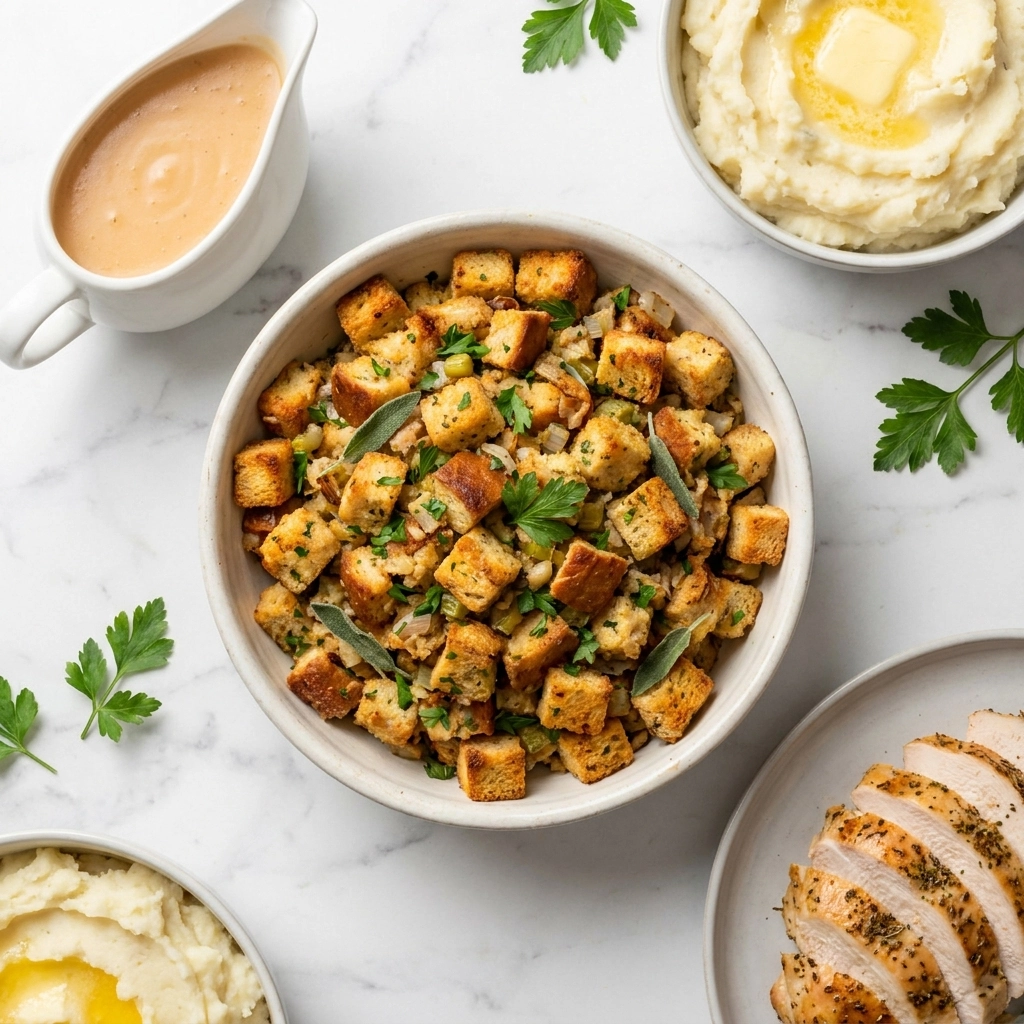
The scent of sage and toasted bread always reminds me of the chaotic energy of my grandmother’s kitchen during November. I remember the frantic search for oven space, where the turkey and the side dishes fought for every single inch of the rack.
This preparation transforms a traditional oven-baked staple into a set-it-and-forget-it masterpiece. It provides a hearty, savory accompaniment that doesn’t require constant monitoring.
Most families love this version because it eliminates the risk of burnt corners or a soggy center. The gentle heat of the ceramic pot creates a uniform texture throughout.
Unlike store-bought mixes that often taste metallic or overly salty, this recipe relies on fresh aromatics and high-quality bread. It brings a homemade feel with minimal active labor.
It is a lifesaver for anyone managing a crowded kitchen or those who simply want to reclaim their afternoon. You can focus on your guests instead of your timer.
I almost gave up on this recipe until I realized that adding a layer of butter at the very top created the crust I was missing. That small adjustment changed everything.
Let us dive into the details of how to achieve this savory bliss. If you need more comfort food, try our Delectable Slow Cooker Chicken Parmesan Soup Recipe
- ●Why You’ll Love This Recipe
- ●A Brief Background / Why This Recipe Works
- ●Perfect For Your Holiday Table
- ●Main Ingredient Spotlight
- ●Secondary Ingredient Spotlight
- ●Key Ingredients
- ●How to Make It
- ●Pro Tips
- ●Savoring Variations
- ●Best Ways to Serve
- ●Storage and Leftovers
- ●Frequently Asked Questions
- ●Why This Recipe Belongs in Your Weekly Rotation
- ●Final Thoughts
There are several reasons why shifting your stuffing to a slow cooker is a game changer for any cook.
- ●Oven Space Recovery: You free up a massive amount of room for your main roast or turkey. This prevents the dreaded “oven shuffle” where items are moved around mid-cook.
- ●Consistent Moisture: The sealed environment traps steam, which keeps the bread from drying out. Every bite remains tender from the top to the bottom.
- ●Flavor Infusion: The long, slow heating process allows the herbs to penetrate deep into the bread. This results in a more cohesive taste profile than quick baking.
- ●Stress Reduction: You can prepare the mixture hours in advance and simply flip a switch. This removes the anxiety of timing your sides to match the meat.
- ●Customizable Textures: You can control the liquid ratio to achieve either a firm or a porridge-like consistency. This accommodates every family member’s preference.
- ●Ease of Serving: The pot serves as a warming vessel throughout the entire meal. Your side dish stays hot even if guests arrive late.
- ●No Dry Edges: Because there is no direct high heat from a heating element, you avoid the charred bits. The result is a balanced, golden hue.
- ●Simple Cleanup: You only have one pot to wash instead of multiple baking dishes. This means more time spent relaxing and less time at the sink.
Once you experience this method, you will never go back to the traditional pan.
A Brief Background / Why This Recipe Works |
The science of this dish relies on the slow hydration of starch. By introducing a warm broth to dried bread cubes over several hours, the grains swell and absorb the savory liquids without collapsing into a mush.
The low temperature prevents the butter from separating too quickly, allowing the fats to emulsify with the vegetable juices. This creates a rich, velvety mouthfeel that mimics a high-end restaurant side.
It is essentially a slow-steamed pudding, but with a savory profile. The gentle conduction of heat ensures that the center is cooked through without scorching the perimeter. If you enjoy other slow-cooked wonders, check out the Irresistible Slow Cooker Herb Crusted Chicken Recipe
This approach guarantees a reliable result every single time.
Perfect For Your Holiday Table |
This recipe is a champion for Thanksgiving or Christmas, where the kitchen is often a zone of high stress. stuffing to the counter, you create a more breathable environment for yourself and your helpers.
It also works for cozy Sunday family dinners during the winter months. Pairing it with a roast makes the entire meal feel like a celebration without requiring a full day of prep.
For those who enjoy meal prep, this can be made in large batches. It holds its structure well, making it a sturdy addition to a rotating menu of comfort foods.
Main Ingredient Spotlight |
Dried Bread Cubes are the foundation of this dish. From a chemical perspective, the dryness is essential because it creates a porous structure that acts like a sponge, soaking up the butter and broth. If you used fresh, moist bread, the stuffing would turn into a paste rather than maintaining its distinct crumbles.
Secondary Ingredient Spotlight |
Fresh Sage provides the defining aromatic profile of the dish. The essential oils in sage are potent and earthy, cutting through the richness of the butter to provide a balanced, herbal finish.
When heated slowly, these oils infuse the surrounding bread, ensuring that the flavor is not just on the surface but integrated into every crumb.
Key Ingredients |
Each component plays a specific role in building the complex flavor profile of this side dish.
- ●Bread Cubes — Provides the structural integrity and absorbent base for the liquids.
- ●Butter — Adds fat for a rich mouthfeel and helps toast the bread.
- ●Chicken Broth — Supplies the primary moisture and a deep, savory salt base.
- ●Celery — Introduces a watery crunch and a subtle, peppery note.
- ●Onion — Offers a sweet, caramelized depth when softened.
- ●Fresh Sage — delivers the classic, earthy herb scent.
- ●Garlic — Adds a sharp, pungent kick that enhances the overall savoriness.
- ●Salt and Pepper — Essential for balancing the flavors and highlighting the herbs.
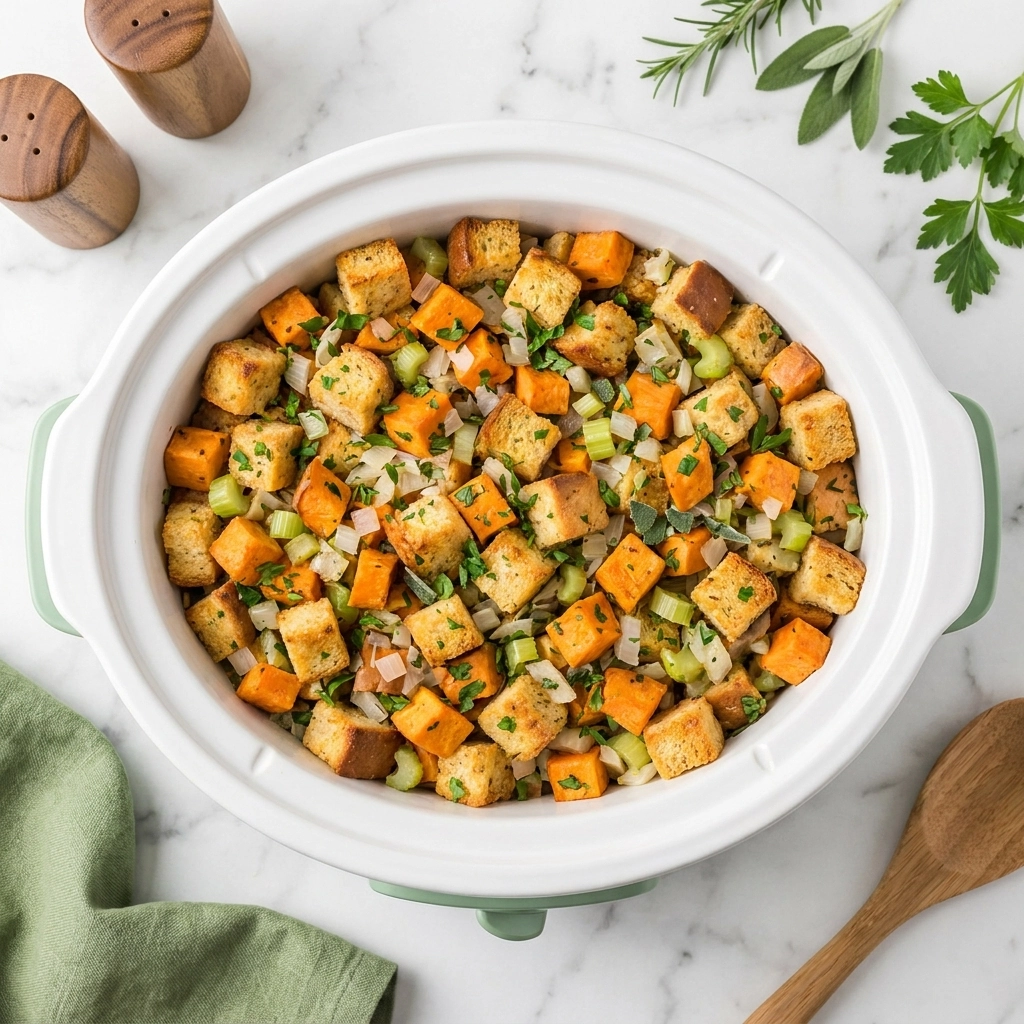 How to Make It |
Follow these steps to ensure your stuffing reaches the ideal consistency and flavor.
- Sauté the aromatics: To ensure the onions and celery aren’t raw in the final product, sauté them in a pan with butter until translucent. This removes the harsh bite of raw onion and creates a sweeter base.
- Prepare the bread mixture: To prevent clumps of dry bread, toss your cubes in a large bowl with the sautéed vegetables and chopped herbs. This ensures every piece of bread is evenly coated in flavor before moisture is added.
- Hydrate the base: To achieve a moist but not soggy texture, slowly pour the chicken broth over the bread mixture while stirring gently. You want the bread to be damp, but not swimming in liquid.
- Transfer to the cooker: To ensure even cooking, pour the mixture into the slow cooker and press down lightly with a spoon. Avoid packing it too tightly, as the steam needs room to circulate.
- Layer the fats: To mimic the toasted top of an oven-baked dish, place small pats of butter across the top surface. This fat will melt down and baste the bread as it heats.
- Slow heat the mixture: To allow the flavors to meld without burning, set the device to low for several hours. This slow transition ensures the center is heated through before the exterior becomes too dark.
- The final check: To verify it is done, poke a fork into the center to ensure the bread has softened and the broth is fully absorbed. If it feels too wet, leave the lid off for the final thirty minutes.
It is a true labor of love that pays off in the first bite.
1Small adjustments can elevate this dish from simple to sophisticated.
- ●2Use Stale Bread:Dry your bread thoroughly out overnight or using a low oven. This prevents the stuffing from becoming mushy.
- ●3Squeeze out Liquid:Drain your celery well after washing. Excess water from the vegetables can dilute the broth and ruin the texture.
- ●4Butter Quality:Use salted European butter if possible. The higher fat content creates a richer, more velvety finish.
- ●5Fresh over Dried:Always prioritize fresh herbs over dried versions. Fresh sage and parsley provide a brightness that dried herbs lack.
- ●6Browning Finish:Transfer to a skillet for five minutes at the end if you crave a crispy crust. This provides a textural contrast to the soft interior.
7If you are looking for other hearty meals, try the Tempting Slow Cooker Creamy Swedish Meatballs Recipe
Savoring Variations |
Depending on your mood or the season, you can tweak the ingredients to change the flavor profile.
- ●Apple Cider Twist: Replace one cup of broth with apple cider for a sweet and tangy autumn flavor.
- ●Sausage Addition: Fold in cooked, crumbled Italian sausage for a protein-packed, savory version.
- ●Wild Mushroom Mix: Add sautéed shiitake or cremini mushrooms to introduce an earthy, umami depth.
- ●Vegan Swap: Use vegetable broth and a high-quality plant-based butter alternative.
- ●Chestnut Crunch: Fold in roasted chestnuts for a nutty texture and a festive flair.
Experimenting with these additions allows you to tailor the dish to any occasion.
Best Ways to Serve |
Presentation and pairing are key to making this side shine on the dinner table.
- ●Platter Style: Scoop the stuffing onto a wide ceramic platter and garnish with fresh parsley.
- ●Individual Ramekins: Bake small portions in ramekins for an elegant, plated presentation.
- ●The Gravy Boat: Always serve with a side of warm turkey or mushroom gravy for extra moisture.
This dish acts as the perfect anchor for a plate of roasted meats and steamed vegetables. The richness of the butter balances the lean nature of turkey or pork.
For a more casual approach, serve it in a bowl with a side of cranberry sauce. The tartness of the berries cuts through the savory herbs perfectly. You can also find inspiration in Savory Slow Cooker Pot Roast 1.Png for pairing ideas.
Storage and Leftovers |
Refrigerating
Store any remaining stuffing in an airtight container in the fridge for up to four days. Keep it sealed tight to prevent it from absorbing other fridge odors.
Reheating
Reheat in a skillet with a small knob of butter over medium heat for 10 minutes. This restores the crisp edges and warms the center evenly.
Freezing
Wrap the cooled stuffing in foil and place it in a freezer bag for up to three months. Thaw overnight in the refrigerator before reheating in the oven.
Frequently Asked Questions |
- ●Q: Can I use store-bought bread cubes instead of cutting my own?A: Yes, store-bought cubes work very well because they are typically dried to a consistent level. However, ensure they do not contain excessive preservatives or artificial flavorings that could clash with your fresh herbs and butter.
- ●Q: What should I do if my stuffing is too dry after cooking?A: If the mixture looks too dry, simply stir in an additional half-cup of warm chicken broth. Let it sit for ten minutes to absorb the liquid before serving to ensure the texture remains cohesive.
- ●Q: Can I use a different herb if I do not like sage?A: Absolutely, rosemary and thyme are excellent substitutes. A combination of both provides a woody, aromatic base that complements the bread and butter without the specific intensity of sage. For consistent results, use the freshest possible ingredients, measure carefully, and follow the step-by-step instructions closely on your first attempt before making any modifications.
- ●Q: Do I have to sauté the vegetables first?A: While you can put raw vegetables in the pot, sautéing them first ensures they are fully cooked and caramelized. Raw onions can sometimes remain crunchy or taste too sharp in a slow cooker environment.
- ●Q: How do I prevent the stuffing from getting too mushy?A: Avoid over-adding the broth; start with a smaller amount and add more only if the bread seems too dry. Also, avoid stirring the mixture too aggressively, which can break down the bread cubes.
Why This Recipe Belongs in Your Weekly Rotation |
Integrating this method into your routine means you no longer have to compromise between a high-quality side and a stress-free evening. It provides the comfort of a traditional feast with the efficiency of modern technology.
Beyond the holidays, this serves as a hearty base for breakfast hashes or a savory side for grilled chicken. The versatility of the ingredients makes it a staple for any comfort-food lover.
Final Thoughts |
This approach to preparing stuffing utilizes the low, steady heat of a slow cooker to create a moist, flavor-dense side dish. the chemistry of dried bread and the infusion of fresh herbs, it achieves a professional result with very little effort.
You should embrace this method because it saves your sanity during busy cooking days and guarantees a consistent texture. It removes the guesswork from the kitchen and allows you to enjoy your time with loved ones.
Go ahead and bring this cozy, aromatic experience into your own home tonight.

Slow Cooker Stuffing: The Ultimate Hands-Off Holiday Side
- Total Time: 4 hours 20 minutes
- Yield: 8 servings 1x
Description
A rich and savory holiday stuffing prepared in a slow cooker to ensure consistent moisture and deep herb infusion without using oven space.
Ingredients
- 12 cups dried bread cubes
- 1/2 cup unsalted butter, melted (plus extra for topping)
- 2 cups chicken broth
- 1 cup diced onion
- 1 cup diced celery
- 2 tablespoons fresh sage, chopped
- 1 tablespoon fresh parsley, chopped
- 3 cloves garlic, minced
- 1 teaspoon salt
- 1/2 teaspoon black pepper
Instructions
- Sauté the diced onion and celery in a pan with a bit of butter until they are translucent and soft.
- In a large mixing bowl, combine the dried bread cubes, sautéed vegetables, chopped sage, parsley, and minced garlic.
- Slowly pour the chicken broth over the bread mixture, stirring gently to ensure the cubes are moistened but not saturated.
- Transfer the entire mixture into the slow cooker, pressing down lightly to ensure it is evenly distributed.
- Place small pats of butter across the top of the stuffing to create a rich, basted finish.
- Cover and cook on Low for 4 hours, or until the bread has softened and the broth is fully absorbed.
- Taste and adjust salt and pepper as needed before serving.
- Prep Time: 20 minutes
- Cook Time: 4 hours
- Category: Side Dish
- Method: Slow Cooking
- Cuisine: American

