

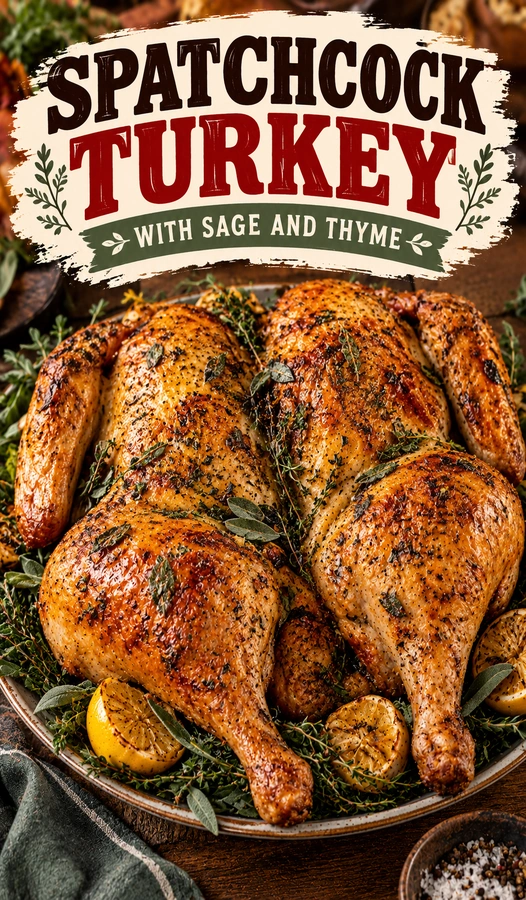
Expect a bird with a deep golden-brown skin and meat that remains juicy from the breast to the drumsticks. This method eliminates the common problem of dry white meat while the dark meat overcooks.
Spatchcocking is the process of removing the backbone to flatten the turkey, allowing it to sit closer to the heat source. This technique significantly reduces the total time spent in the oven.
Home cooks appreciate this approach because it provides a more consistent heat distribution across the entire bird. You no longer have to worry about the center remaining raw while the outside burns.
The combination of fresh sage and thyme adds an earthy, aromatic profile that cuts through the richness of the turkey fat. It creates a classic flavor profile that pairs well with almost any side dish.
Traditional whole-roasting often takes several hours and requires constant basting to prevent drying. This flattened version requires less effort for a more reliable result.
This recipe is ideal for those who want a festive center-piece without spending the entire day monitoring the oven. It is a practical choice for both small family gatherings and larger holiday crowds.
Following these steps will result in a professionally roasted bird. Start workspace and gathering the necessary tools.
- ●Why You’ll Love This Recipe
- ●A Brief Background on Spatchcocking
- ●Perfect For Holiday Feasts and Family Gatherings
- ●Turkey Ingredient Spotlight
- ●Sage and Thyme Ingredient Spotlight
- ●Key Ingredients
- ●How to Make It
- ●Pro Tips
- ●Delicious Variations
- ●Best Ways to Serve
- ●Storage and Leftovers
- ●Frequently Asked Questions
- ●Why This Recipe Belongs in Your Weekly Rotation
- ●Final Thoughts
This preparation method transforms the most intimidating bird of the year into a manageable dinner. The results are consistently better than the traditional method.
- ●Cooking time is reduced by nearly 50 percent compared to a whole bird.
- ●The skin browns evenly across the entire surface area of the turkey.
- ●Breast meat stays moist because it cooks faster.
- ●Legs and thighs reach a safe internal temperature at the same time as the breast.
- ●Fresh herbs infuse the skin and meat for a deep, savory flavor.
- ●It takes up less vertical space in the oven, leaving room for other pans.
- ●Carving is simpler when the bird is already flat.
- ●Less basting is required to achieve a mahogany finish.
- ●The flat profile allows for a bed of vegetables to roast underneath.
This method removes the guesswork from roasting, making it a reliable choice for any skill level.
A Brief Background on Spatchcocking |
Spatchcocking, also known as butterflying, is a technique used to flatten poultry spinal column. bird, the heat can penetrate the thickest parts of the meat more efficiently.
This approach avoids the temperature gradient found in whole birds, where the exterior is overdone the deep interior is safe. It is a preferred method for chefs who prioritize texture and speed.
Integrating sage and thyme complements the natural flavor of the turkey without overpowering it. These herbs are traditional staples that provide a warm, woody aroma during the roasting process.
Using this technique allows you to achieve a result similar to the Yummy Spatchcock Roast Chicken With Crunchy Potatoes Recipe but on a much larger scale.
Perfect For Holiday Feasts and Family Gatherings |
This recipe is a lifesaver during Thanksgiving or Christmas when oven space is at a premium. Because the turkey sits low in the pan, you can easily slide in side dishes or rolls at the same time.
It works exceptionally well for smaller family dinners where a full-sized roasting pan feels excessive. A spatchcocked bird fits comfortably on a standard rimmed baking sheet.
The efficiency of the cook time makes it possible to prepare a roast turkey for a Sunday dinner without committing the entire afternoon to the kitchen. It bridges the gap between a quick weeknight meal and a formal banquet.
Turkey Ingredient Spotlight |
Turkey provides a lean yet flavorful protein base that absorbs herb infusions exceptionally well. The skin is rich in collagen, which crisps up beautifully when exposed to direct heat in a flattened position.
Sage and Thyme Ingredient Spotlight |
Sage offers a pungent, slightly peppery note that is synonymous with autumn roasting. It helps balance the richness of the turkey skin.
Thyme brings a subtle lemony and earthy sweetness to the dish. Together, these herbs create a fragrant crust that penetrates the meat as the fats render during cooking.
Key Ingredients |
Quality ingredients are the foundation of a savory roast. Use the freshest herbs available for the best aromatic results.
- ●Turkey — The main protein, preferably air-chilled for better skin crisping.
- ●Unsalted Butter — Acts as the fat medium to carry herb flavors into the skin.
- ●Fresh Sage — Provides a deep, earthy flavor profile.
- ●Fresh Thyme — Adds a woody, floral note to the roast.
- ●Garlic — Enhances the overall savory depth of the butter rub.
- ●Kosher Salt — Draws out moisture from the skin to ensure a crunchier finish.
- ●Black Pepper — Provides a mild heat and sharp contrast to the butter.
How to Make It |
Preparation is the most important part of this recipe. Ensure your turkey is completely thawed before attempting to remove the backbone.
- Remove the backbone: Use heavy-duty kitchen shears to cut along both sides of the spine from the neck to the tail. Remove the bone entirely and discard it.
- Flatten the bird: Place your palms on the breastbone and press down firmly until you hear a crack and the turkey lies flat against the cutting board. This ensures even heat exposure.
- Prepare the herb butter: Mash softened butter with minced garlic, chopped sage, and chopped thyme. Mix until the herbs are evenly distributed so no single area is overpowered.
- Season the turkey: Pat the skin completely dry with paper towels. Rub the herb butter underneath the skin of the breast and thighs, then coat the exterior of the skin generously.
- Roast the turkey: Place the bird skin-side up on a roasting pan or baking sheet. Roast at 425°F (218°C) until a meat thermometer reaches 165°F (74°C) in the thickest part of the breast.
- Check for readiness: Look for the skin to turn a deep, mahogany brown and for the juices to run clear when the thigh is pierced. Overcooking at this stage leads to dry meat.
- Rest the meat: Transfer the turkey to a carving board and let it sit for 20 to 30 minutes. This allows juices to redistribute, preventing the meat from drying out during carving.
1Small adjustments in technique can lead to a significant difference in the final texture and flavor.
- ●2Dry brine the bird: Salt the turkey 24 hours in advance and leave it uncovered in the fridge to get the crispiest skin possible.
- ●3Use a roasting rack: Elevating the turkey slightly allows hot air to circulate underneath, preventing the bottom from steaming.
- ●4Avoid over-stuffing: If you use stuffing, place it in a separate dish to avoid slowing down the cooking time of the meat.
- ●5Use a digital thermometer: Relying on a timer is risky; always check the internal temperature of the breast and thigh.
- ●6Butter under the skin: Pushing butter directly onto the meat beneath the skin protects the breast from drying out.
Delicious Variations |
While sage and thyme are classics, you can adapt the flavor profile to suit your preference or the season.
- ●Citrus Twist: Add lemon zest and a tablespoon of orange juice to the herb butter for a brighter flavor.
- ●Rosemary Blend: Swap half of the thyme for fresh rosemary for a more pungent, piney aroma.
- ●Smoky Profile: Incorporate a teaspoon of smoked paprika into the butter rub for a subtle grilled taste.
- ●Garlic Heavy: Double the amount of garlic and add a splash of soy sauce for a more savory, umami-rich crust.
- ●Maple Glaze: Brush the skin with a mixture of maple syrup and melted butter during the last 15 minutes of roasting.
These adjustments allow you to repurpose the spatchcock method for different holidays throughout the year.
Best Ways to Serve |
The presentation of a spatchcocked turkey is naturally rustic and impressive. Arrange the bird on a large platter surrounded vegetables.
- ●Pair with a Rich Mushroom Gravy With Garlic And Thyme Easy Homemade Savory Sauce for added moisture.
- ●Serve alongside wild rice pilaf or traditional stuffing.
- ●Add a side of tart cranberry sauce to balance the rich butter flavors.
- ●Accompany with steamed green beans or honey-glazed carrots.
Since the bird is flat, you can carve it into neat sections the breast and separating the legs.
For a more casual approach, serve the turkey directly from the roasting pan with the vegetables integrated into the presentation.
Storage and Leftovers |
Refrigerating
Store leftover turkey in airtight containers in the refrigerator for up to 3 to 4 days. Keep the meat in its own juices to maintain moisture.
Reheating
Reheat slices in a skillet with a small amount of butter or in the oven at 300°F covered in foil for 15 to 20 minutes to avoid drying the meat.
Freezing
Wrap meat tightly in foil and then plastic wrap, freezing for up to 3 months. Thaw slowly in the refrigerator overnight before reheating.
Frequently Asked Questions |
- ●Q: How do I know when the turkey is fully cooked?A: The only reliable way is using a meat thermometer. Insert it into the thickest part of the breast and the inner thigh; both should read 165°F (74°C). Visually, the skin should be deep brown and the juices should run clear.
- ●Q: Can I spatchcock a frozen turkey?A: No, you must fully thaw the turkey first. Attempting to cut the backbone of a frozen bird is dangerous and nearly impossible. Thaw it slowly in the refrigerator over several days to ensure food safety.
- ●Q: Do I need a special tool to remove the backbone?A: Heavy-duty kitchen shears or poultry shears are the best tool for the job. They are designed to cut through bone and cartilage easily. A standard kitchen knife is not suitable and could lead to injury.
- ●Q: Why is my turkey skin not getting crispy?A: Moisture is the enemy of crispiness. Ensure the skin is patted completely dry before applying butter. Additionally, avoid overcrowding the pan or using a lid, which traps steam and makes the skin soft.
- ●Q: Can I use dried herbs instead of fresh?A: You can, but the flavor will be less vibrant. If using dried herbs, use about one-third of the amount listed for fresh herbs. Rub them into the butter thoroughly to help them rehydrate during roasting.
- ●Q: What should I do if the breast is cooking faster than the legs?A: If the breast reaches 165°F before the thighs, loosely cover the breast area with a piece of aluminum foil. This shields the white meat from direct heat while the dark meat finishes.
Why This Recipe Belongs in Your Weekly Rotation |
Moving away from the traditional roasting method removes the stress associated with large poultry. The speed and reliability of spatchcocking make it a viable option for more than just once-a-year celebrations.
The integration of fresh herbs provides a sophisticated flavor profile that rivals restaurant quality. It is an efficient way to feed a crowd while maintaining high standards for texture and taste.
Final Thoughts |
This spatchcock turkey combines a modern roasting technique with timeless herb flavors. It solves the problem of uneven cooking, providing a juicy result every time.
Whether you are hosting a formal dinner or a simple family meal, this method reduces stress and saves time. It allows the cook to spend more time with guests and less time hovering over the oven.
Grab your kitchen shears and transform your next roast into a seamless, delicious success.
Spatchcock Turkey with Sage and Thyme
- Total Time: 0 hours
- Yield: 8-12 servings 1x
Description
A fast-roasting flattened turkey infused with fresh sage, thyme, and garlic for a juicy, golden-brown finish. This spatchcock method ensures the breast and thighs cook evenly in half the time.
Ingredients
- 12–14 lb whole turkey, thawed
- 1/2 cup unsalted butter, softened
- 2 tablespoons fresh sage, finely chopped
- 2 tablespoons fresh thyme, finely chopped
- 4 cloves garlic, minced
- 2 teaspoons kosher salt
- 1 teaspoon black pepper
Instructions
- Preheat your oven to 425°F (218°C).
- Use kitchen shears to remove the backbone of the turkey by cutting along both sides of the spine.
- Press firmly on the breastbone to flatten the bird completely against your work surface.
- Combine softened butter, minced garlic, chopped sage, and chopped thyme in a small bowl.
- Pat the turkey skin completely dry with paper towels.
- Rub the herb butter underneath the skin of the breasts and thighs, then coat the exterior skin with the remaining butter.
- Season the exterior generously with kosher salt and black pepper.
- Place the turkey skin-side up on a roasting pan or baking sheet.
- Roast until a meat thermometer reads 165°F (74°C) in the thickest part of the breast and thigh.
- Remove from the oven and let the turkey rest on a carving board for 20-30 minutes before slicing.
- Prep Time: 30 minutes
- Cook Time: 80-120 minutes
- Category: Main Course
- Method: Roasting
- Cuisine: American
