

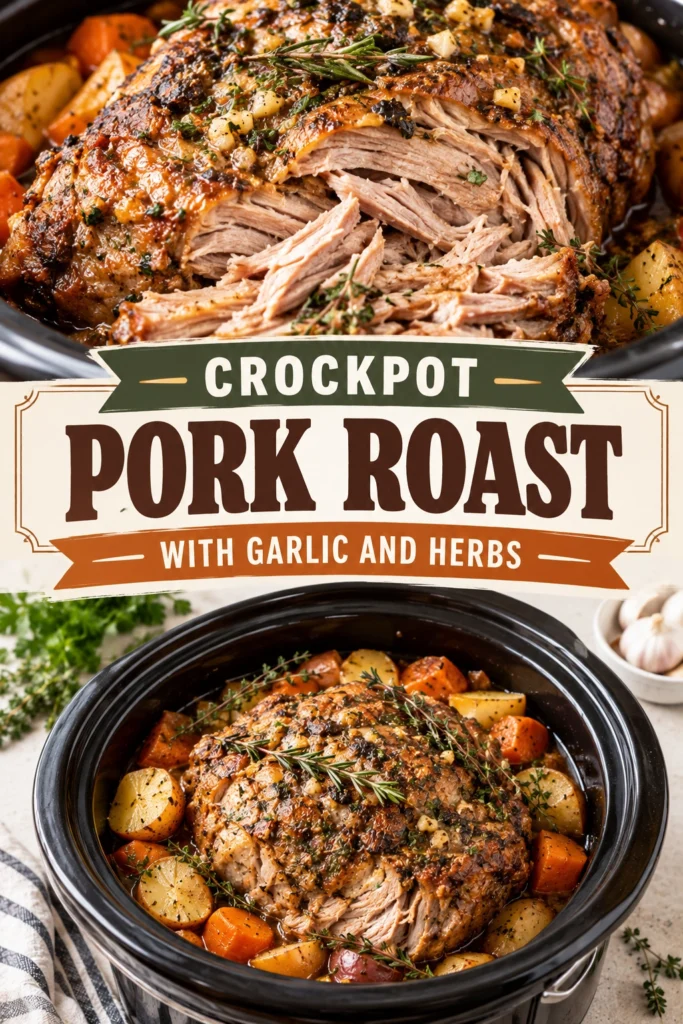
A house smells different when a roast is simmering all day, filling the rooms with a heavy, savory aroma that signals comfort. This slow-cooked pork is the embodiment of that feeling, turning a tough cut of meat into something that yields to a fork with almost no effort.
This recipe is a classic garlic and herb pork roast designed specifically for the crockpot. It relies on low heat and time to break down connective tissues, resulting in a succulent texture and deep flavor.
Home cooks appreciate this dish because it eliminates the stress of monitoring an oven. Once the ingredients are set, the machine handles the work while you focus on other tasks.
What sets this version apart is the concentrated herb rub that penetrates the meat during the long braise. It avoids the watery consistency often found in slow cooker meals by utilizing a targeted amount of liquid.
Compared to a store-bought pre-marinated roast, this version allows you to control the sodium levels and use fresh aromatics. You get a cleaner, more vibrant taste without the preservatives found in commercial packaging.
Anyone from a novice cook to a seasoned meal-prepper will find this accessible. It is a reliable way to feed a crowd without spending hours standing over a stove.
Below are the details on how to achieve the perfect roast, from ingredient selection to the final sear.
- ●Why You’ll Love This Recipe
- ●A Brief Background on the Technique
- ●Perfect For Effortless Family Dinners
- ●Pork Shoulder Spotlight
- ●Garlic and Herb Synergy
- ●Key Ingredients
- ●How to Make It
- ●Pro Tips
- ●Delicious Variations
- ●Best Ways to Serve
- ●Storage and Leftovers
- ●Frequently Asked Questions
- ●Why This Recipe Belongs in Your Weekly Rotation
- ●Final Thoughts
This roast provides a high-reward result for very little active effort. Beyond the convenience, there are several specific reasons this dish stands out in a kitchen rotation.
- ●The low-and-slow method ensures the pork remains juicy rather than drying out.
- ●Garlic becomes mellow and sweet after eight hours of cooking, removing any harsh raw bite.
- ●A single pot handles the cooking and the sauce base, reducing cleanup time.
- ●The herb blend provides a sophisticated flavor profile that mimics high-end catering.
- ●It creates a large volume of protein that is easy to repurpose for lunches.
- ●The recipe is forgiving, meaning slight variations in cook time won’t ruin the meat.
- ●It pairs naturally with a wide variety of side dishes, from root vegetables to grains.
- ●Searing the meat first adds a Maillard reaction that deepens the overall savoriness.
These factors combine to make a meal that feels like a special occasion but requires the effort of a Tuesday night dinner.
A Brief Background on the Technique |
Slow cooking is essentially a controlled braise. By maintaining a steady, low temperature, the collagen in the pork slowly converts into gelatin. This is the secret to that signature “fall-apart” texture that cannot be achieved through quick roasting.
The addition of garlic and herbs during this process allows the flavors to infuse deeply into the muscle fibers. Because the meat is submerged in a small amount of liquid and sealed in a crockpot, the aromatics have nowhere to escape, forcing them into the meat.
Using a heavy cut of pork is essential here. Leaner cuts would toughen up over several hours, but the marbled fat in a shoulder or butt roast keeps the meat lubricated and flavorful.
This method mirrors the logic used in Slow Cooker Ribs With Garlic And Herbs Easy Crock Pot Pork Ribs Recipe, where low heat transforms a tough cut into a tender delicacy.
Perfect For Effortless Family Dinners |
Weeknights are often a scramble of schedules and homework. This roast is ideal because the preparation happens in the morning, meaning dinner is ready the moment the family walks through the door.
For those who practice meal prep, this recipe is a powerhouse. One large roast can be sliced for Sunday dinner and then shredded for tacos or sandwiches throughout the following week.
Holiday gatherings also benefit from the crockpot. main protein to a slow cooker, you free up valuable oven space for side dishes like roasted carrots or a Baked Ziti With Garlic And Herbs Easy Cheesy Pasta Bake Dinner
Pork Shoulder Spotlight |
Pork shoulder, also known as pork butt, is the gold standard for this recipe. It contains the ideal balance of lean meat and intramuscular fat. This fat renders down during the slow cooking process, essentially basting the meat from the inside out.
Choosing a piece with a good fat cap on top helps protect the meat from the direct heat of the crockpot walls. This ensures the top doesn’t dry out while the bottom simmers in the juices.
Garlic and Herb Synergy |
Garlic acts as the foundational aromatic. When cooked slowly, it loses its sharp edge and develops a rich, nutty quality that complements the natural sweetness of the pork.
Fresh herbs like rosemary and thyme provide an earthy, woody contrast to the rich fat of the meat. Rosemary adds a slight piney note, while thyme brings a subtle lemony brightness. Together, they create a fragrance that is both rustic and refined, similar to the notes found in Rotisserie Style Chicken With Rosemary And Garlic Easy Roast Chicken Dinner
Key Ingredients |
Each component of this dish serves a specific purpose in building the final flavor profile.
- ●Pork Shoulder — The primary protein that provides a rich, marbled texture.
- ●Garlic — Adds a deep, savory aromatic base that mellows during the slow cook.
- ●Fresh Rosemary — Provides an earthy, pine-like aroma that cuts through the fat.
- ●Fresh Thyme — Contributes a subtle, floral savoriness.
- ●Olive Oil — Used for searing the meat to create a browned crust.
- ●Beef or Chicken Broth — Creates the braising liquid that keeps the meat moist.
- ●Salt and Black Pepper — Fundamental seasonings that enhance all other flavors.
- ●Paprika — Adds a hint of smokiness and a rich golden color to the roast.
How to Make It |
Follow these steps to ensure your roast is tender and well-seasoned throughout.
- Prepare the seasoning rub: Combine the salt, pepper, paprika, and minced garlic in a small bowl. Mixing these first ensures that the seasoning is evenly distributed across the meat rather than clumping in one area.
- Apply the rub: Pat the pork roast dry with paper towels. This is important because moisture on the surface prevents the seasoning from sticking and hinders the searing process. Rub the spice mixture firmly into all sides of the meat.
- Sear the pork: Heat olive oil in a large skillet over medium-high heat. Brown the meat for 3-5 minutes per side until a deep brown crust forms. This step is vital for adding a complex, roasted flavor that the slow cooker cannot produce on its own.
- Arrange in the crockpot: Place the seared roast into the slow cooker. Scatter the fresh rosemary and thyme sprigs around the sides and top of the meat so the oils release directly onto the pork.
- Add the braising liquid: Pour the broth carefully into the bottom of the pot, avoiding pouring directly over the top of the meat to keep the seasoning rub in place. The liquid should not fully cover the roast; it should reach about one-third of the way up.
- Slow cook: Set the crockpot to Low for 8 hours or High for 4-5 hours. Cooking on Low is generally preferred as it allows the fat to render more slowly, resulting in a more tender texture.
- Rest and slice: Remove the roast from the pot and let it rest on a cutting board for 15 minutes. This allows the juices to redistribute, preventing the meat from drying out the moment you slice into it.
1Small adjustments in technique can significantly elevate the final result of your roast.
- ●2Use a meat thermometer: Check the internal temperature to ensure it reaches 195-205°F for shredding or 145°F for slicing.
- ●3Avoid too much liquid: Pork releases a significant amount of its own juices; adding too much broth will result in a boiled texture rather than a roast.
- ●4Fresh over dried: Whenever possible, use fresh herbs. Dried herbs can become bitter or lose their punch during an 8-hour cook.
- ●5Deglaze the pan: After searing the meat, pour a splash of broth into the hot skillet to scrape up the brown bits and pour that liquid into the crockpot.
- ●6Trim excess fat: While some fat is necessary for flavor, remove any excessively thick layers of hard white fat from the exterior to avoid a greasy finish.
Delicious Variations |
You can easily tweak this base recipe to suit different tastes or dietary preferences.
- ●Apple Cider Twist: Replace half of the broth with apple cider for a sweet and tangy flavor profile.
- ●Root Vegetable Addition: Add chunks of carrots, potatoes, and onions to the bottom of the pot to cook alongside the meat.
- ●Honey Garlic Glaze: Whisk honey into the remaining cooking juices at the end and brush it over the roast before serving.
- ●Mediterranean Style: Add sliced lemons and kalamata olives to the pot for a brighter, saltier profile.
- ●Spicy Rub: Incorporate a pinch of cayenne pepper or crushed red pepper flakes into the initial dry rub.
These variations allow the recipe to transition from a winter comfort meal to a lighter, spring-inspired dish.
Best Ways to Serve |
The way you present this roast can change the entire mood of the meal.
- ●Classic Style: Sliced thick and served with a side of garlic mashed potatoes and steamed green beans.
- ●Shredded Comfort: Pulled apart and piled onto toasted brioche buns with a side of coleslaw.
- ●Grain Bowl: Sliced thinly over a bed of quinoa or farro with roasted root vegetables.
- ●Low Carb: Served with cauliflower mash and sautéed spinach.
For a cohesive meal, use the leftover juices from the crockpot as a natural gravy. Simmer them in a pan with a small cornstarch slurry to thicken the sauce.
If you are serving this for a large group, platter the meat on a wooden board surrounded and roasted carrots for a rustic, appealing look.
Storage and Leftovers |
Refrigerating
Store the cooked pork and its juices in airtight containers. The meat will stay fresh in the refrigerator for up to 4 days.
Reheating
To keep the meat moist, reheat slices in a covered dish with a splash of broth at 325°F for 15 minutes, or microwave in short bursts with a damp paper towel over the top.
Freezing
Freeze the pork in vacuum-sealed bags or freezer-safe containers for up to 3 months. Thaw completely in the fridge before reheating to maintain the texture.
Frequently Asked Questions |
- ●Q: Can I use a pork loin instead of a pork shoulder?A: While you can use pork loin, it is a much leaner cut. Because it lacks the fat of a shoulder, it can dry out quickly in a slow cooker. If using loin, reduce the cooking time significantly and add more liquid to prevent the meat from becoming tough.
- ●Q: Do I really need to sear the meat first?A: Searing is not strictly required for the meat to cook through, but it is essential for flavor. The browning creates a caramelized crust that adds a layer of depth and richness that slow cooking alone cannot provide, making the final dish taste more like an oven-roasted roast.
- ●Q: What can I use if I don’t have fresh rosemary or thyme?A: You can use dried herbs, but use about one-third of the amount specified for fresh. Dried herbs are more concentrated. Alternatively, a general “Italian Seasoning” blend often contains both rosemary and thyme and works well as a convenient substitute in this recipe.
- ●Q: How do I know when the pork is perfectly done?A: The best indicator is a fork. When you pierce the thickest part of the roast, the fork should slide in and out with almost no resistance. If the meat feels springy or tough, it needs more time to break down the connective tissues.
- ●Q: Can I add vegetables at the beginning of the cook?A: Harder vegetables like carrots and potatoes can go in at the start. However, softer vegetables like peas or zucchini should be added during the last hour of cooking to prevent them from turning into mush during the long process.
Why This Recipe Belongs in Your Weekly Rotation |
Integrating a slow-cooked roast into your routine simplifies the most stressful part of the day: deciding what to eat for dinner. It removes the need for active cooking during the evening, giving you more time to relax or spend with family.
The versatility of the leftovers also makes it a strategic choice for the budget-conscious. One roast provides a primary dinner and several secondary meals, reducing the reliance on takeout or expensive pre-packaged lunches.
Ultimately, this dish combines the timeless flavors of garlic and herbs with a method that fits a modern, busy lifestyle. It is a reliable, satisfying meal that never fails to satisfy a hungry household.
Final Thoughts |
This garlic and herb pork roast is a masterclass in simplicity, using a few high-quality ingredients and the patience of a slow cooker to create a tender, flavorful centerpiece.
Whether you are looking to streamline your weeknight routine or want a dependable dish for guests, this recipe provides a foolproof path to a succulent roast every time.
Set your crockpot today and look forward to the incredible aroma that will welcome you home tonight.
Crockpot Pork Roast with Garlic and Herbs
- Total Time: 8 hours 20 minutes
- Yield: 6 servings 1x
Description
A succulent, slow-cooked pork shoulder infused with fresh garlic, rosemary, and thyme. This recipe produces melt-in-your-mouth meat with a rich, aromatic glaze.
Ingredients
- 3–4 lb pork shoulder (pork butt)
- 4 cloves garlic, minced
- 1 tablespoon fresh rosemary, chopped
- 1 tablespoon fresh thyme, chopped
- 2 tablespoons olive oil
- 1 cup beef or chicken broth
- 1 teaspoon salt
- 1 teaspoon black pepper
- 1 teaspoon paprika
Instructions
- In a small bowl, combine salt, pepper, paprika, and minced garlic to create the seasoning rub.
- Pat the pork roast dry with paper towels and rub the seasoning mixture evenly into all sides of the meat.
- Heat olive oil in a large skillet over medium-high heat. Sear the pork for 3-5 minutes per side until browned.
- Place the seared roast into the slow cooker and arrange fresh rosemary and thyme sprigs around the meat.
- Pour the broth into the bottom of the crockpot, ensuring you do not wash the seasoning off the top of the meat.
- Cover and cook on Low for 8 hours or on High for 4-5 hours until the meat is tender.
- Remove the roast from the pot and let it rest for 15 minutes before slicing or shredding.
- Prep Time: 20 minutes
- Cook Time: 8 hours
- Category: Dinner
- Method: Slow Cooking
- Cuisine: American
