

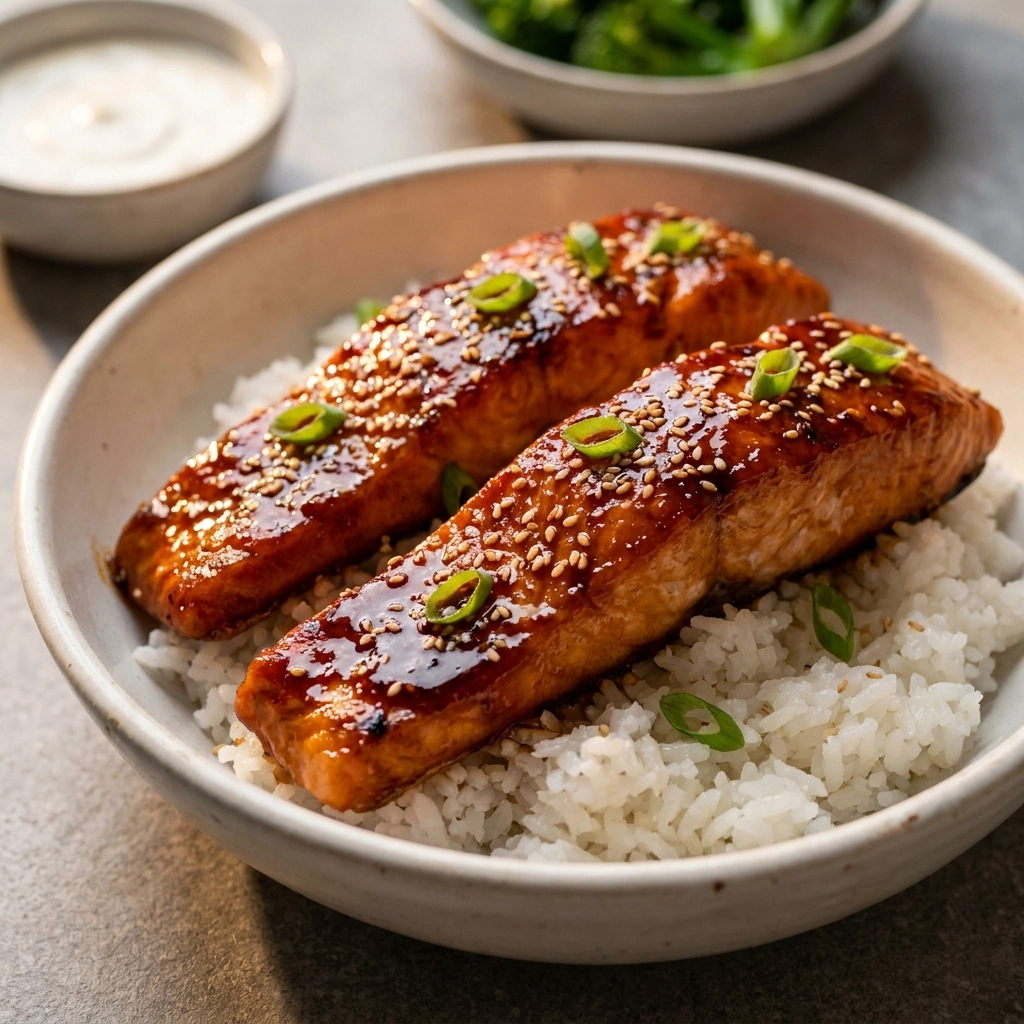
Precision meets flavor. |
I recall the first time I mastered this technique in a small kitchen where the air grew thick with the scent of caramelizing soy and toasted sesame. The sound of the oven door clicking shut signaled the start of a transformation, as the raw, coral-colored fillets began to surrender to the heat, releasing a rich, oceanic aroma that mingled with the pungent sweetness of ginger.
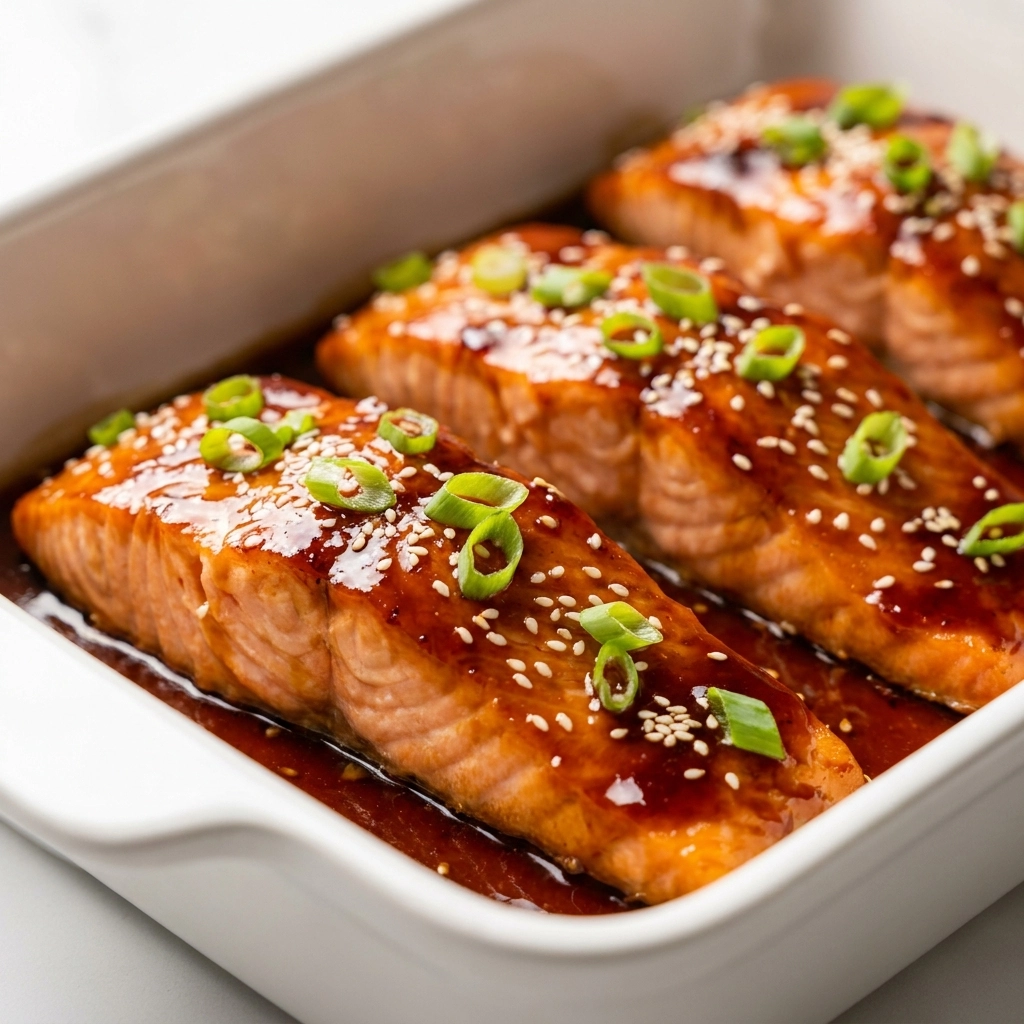
The true revelation occurred during the final plating, when the glaze had shifted from a thin liquid to a shimmering, mahogany lacquer. As the fork broke through the surface, the salmon flaked away in succulent, moist layers, proving that high-heat roasting and a balanced glaze could elevate a simple piece of fish into a professional-grade centerpiece.
- ●Controlled caramelization prevents the sugars from burning.
- ●The omega-3 rich fats integrate with the salty soy for a deeper profile.
- ●Minimal cleanup since everything happens on a single lined tray.
- ●The glaze provides a striking visual contrast against the pink fish.
- ●Versatile flavor base that pairs with both steamed greens and jasmine rice.
Essential Ingredients |
Salmon Fillets provide the rich, buttery foundation and structural integrity of the dish; substitute with Steelhead Trout for a milder taste.
Soy Sauce delivers the essential salinity and deep umami characteristic of the glaze; substitute with Coconut Aminos for a gluten-free alternative.
Honey acts as the primary sweetener and thickening agent to create that glossy sheen; substitute with Maple Syrup for a woodier note.
Fresh Ginger adds a sharp, peppery brightness that cuts through the fatty oils of the fish; substitute with ground ginger in a pinch.
Garlic introduces a pungent, savory depth that anchors the sweetness of the honey; substitute with garlic powder for a more uniform distribution.
Rice Vinegar provides the necessary acidity to balance the heavy sugars and salts; substitute with Apple Cider Vinegar.
 Let’s Make it Together |
- First, go ahead and preheat your oven to 400°F and line a baking sheet with parchment paper so we don’t have to scrub the pan later.
- Now, grab a small bowl and whisk together your soy sauce, honey, ginger, garlic, and vinegar until the honey fully dissolves into the liquid.
- Pat your salmon fillets completely dry with a paper towel—this is a crucial step to ensure the glaze sticks rather than slides off.
- Place the fish on the tray and brush a generous layer of that teriyaki mixture over the tops, letting some drip down the sides.
- Slide the tray into the oven and let them roast for about 12 to 15 minutes, depending on how thick your cuts are.
- While they cook, pour any leftover glaze into a small saucepan and simmer it for three minutes until it thickens into a syrup.
- Take the salmon out of the oven and immediately brush that reduced syrup over the fillets for a final, intense layer of flavor.
The contrast is striking.
Avoid overcooking the fish to prevent the proteins from tightening and becoming dry.
Always use a meat thermometer to verify the internal temperature of the thickest part.
Do not skip the parchment paper as the honey glaze will bond to metal surfaces.
Ensure your salmon is at room temperature for ten minutes before it hits the oven.
Patting the skin dry prevents the fish from steaming rather than roasting.
Perfecting the Cooking Process |
The chemistry of this dish relies on the Maillard reaction, where the sugars in the honey and the proteins in the salmon react under high heat. oven temperature of 400°F, we ensure the exterior caramelizes quickly while the interior remains translucent and tender. If the temperature is too low, the fish will overcook before the glaze develops its signature mahogany hue.
Precision timing is everything. For a standard 1-inch thick fillet, 12 to 15 minutes is the window of excellence. We are aiming for an internal temperature of 125°F to 135°F for medium-rare to medium. Because carry-over cooking occurs once the fish is removed from the heat, pulling the tray out a few degrees early prevents the dreaded white albumin from leaking out of the sides.
The final reduction of the sauce is a technical necessity. While the glaze on the fish cooks, it thins out; remaining sauce separately, we create a concentrated gastrique. Applying this concentrated syrup at the end provides a professional lacquer finish that locks in moisture and intensifies the flavor profile without drying out the fish.
Add Your Touch |
For a more complex flavor profile, stir in a teaspoon of toasted sesame oil or a pinch of red pepper flakes into the marinade. This adds a nutty aroma and a subtle heat that complements the sweetness of the honey and the richness of the fish.
You can also introduce a textural element finished fillets with toasted sesame seeds and thinly sliced scallions. The crunch of the seeds and the freshness of the onions provide a necessary counterpoint to the soft, glazed texture of the salmon.
Storing & Reheating |
Store leftover fillets in an airtight container in the refrigerator for up to two days. Ensure the fish is completely cooled before sealing the lid to prevent excess moisture from condensing and making the glaze soggy.
To reheat, avoid the microwave as it will toughen the proteins and make the fish rubbery. Instead, place the salmon in a 275°F oven for 5 to 8 minutes, gently brushing with a tiny bit of water or extra glaze to maintain humidity.
1Use a fish spatula to move the fillets to avoid breaking the delicate flakes.
2Season the fish with a pinch of salt before glazing to enhance the natural flavors.
3Always source wild-caught salmon for a more robust flavor and better nutrient density.
4If the glaze browns too quickly, slide the baking sheet to the lower rack.
5Rest the fish for three minutes before serving to allow the juices to redistribute.
FAQ |
- ●Q: How do I know when the salmon is done without a thermometer?A: Press the top of the fillet gently with a fork or your finger; the meat should feel firm but still have a slight spring to it. When the flakes begin to separate easily along the natural lines of the fish, it has reached the ideal level of doneness.
- ●Q: Can I use frozen salmon for this recipe?A: Yes, however, you must thaw the fish completely in the refrigerator overnight before cooking. If you bake it from frozen, the outside will become overcooked and dry before the center reaches a safe temperature, ruining the intended texture of the dish.
- ●Q: Why did white stuff come out of my salmon while baking?A: That white substance is called albumin, a protein that is pushed out when the muscle fibers contract too tightly due to overcooking. To minimize this, keep a close eye on your timing and pull the fish out slightly before it reaches your target internal temperature.
- ●Q: Can I marinate the salmon overnight?A: I would advise against marinating for more than two hours because the salt in the soy sauce and the acid in the vinegar will begin to cure the fish. This changes the texture, making it firmer and almost like sashimi, which interferes with the flaky result of oven baking.
Oven Baked Teriyaki Salmon: A Masterclass in Balance
- Total Time: 30 minutes
- Yield: 4 servings 1x
Description
A technically precise oven-baked salmon featuring a balanced honey-soy glaze and a professional lacquer finish.
Ingredients
- 4 salmon fillets (6oz each)
- 1/4 cup soy sauce
- 1/4 cup honey
- 1 tbsp fresh ginger, grated
- 2 cloves garlic, minced
- 1 tbsp rice vinegar
Instructions
- Preheat oven to 400F and line a baking sheet with parchment.
- Whisk soy sauce, honey, ginger, garlic, and vinegar in a bowl.
- Pat salmon fillets dry with paper towels.
- Place salmon on the tray and brush with the glaze.
- Bake for 12-15 minutes until internal temp reaches 130F.
- Simmer remaining glaze in a pan for 3 minutes until thickened.
- Brush the reduced glaze over the cooked fish and serve.
- Prep Time: 15 minutes
- Cook Time: 15 minutes
- Category: Dinner
- Method: Baking
- Cuisine: Japanese-Inspired
