

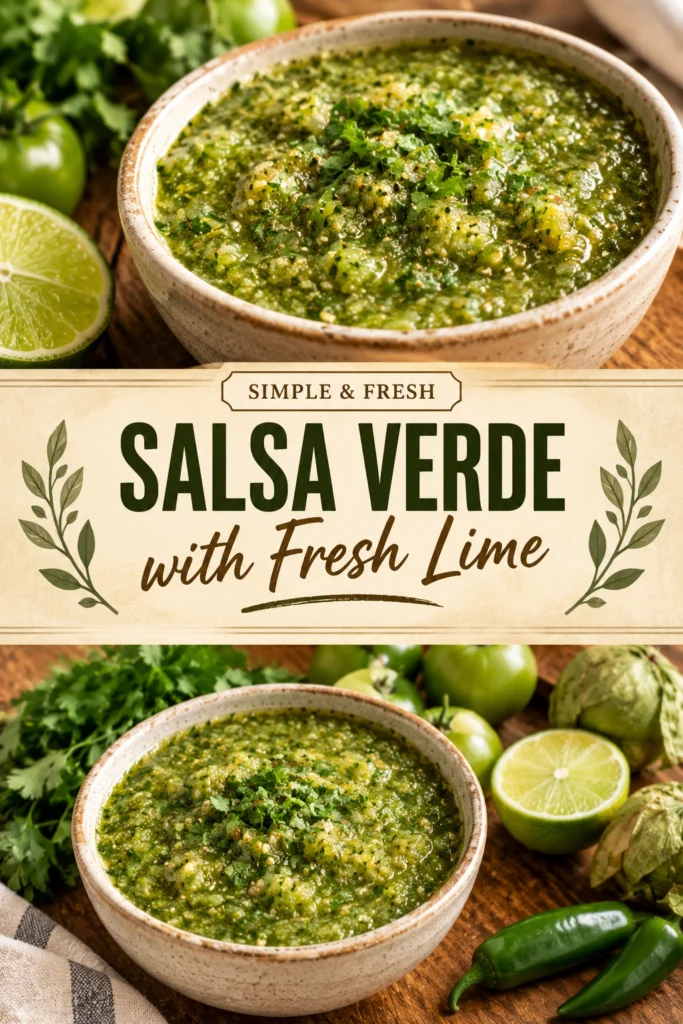
Finding a fresh, bright condiment that can wake up a bland weekday dinner is a common kitchen struggle. Many store-bought options rely on heavy preservatives or excessive salt, leaving the sauce tasting flat and artificial.
This Salsa Verde with Fresh Lime provides a sharp, clean contrast to rich foods. It is a vibrant green sauce that balances acidity with a subtle earthy depth.
The hallmark of this recipe is the combination of tart tomatillos and a generous squeeze of lime juice. This pairing creates a citrusy punch that cuts through fatty meats and cheeses.
Unlike traditional versions that may be overly sweet, this recipe emphasizes the natural tang of the ingredients. The result is a crisp flavor profile that tastes like it came from a professional kitchen.
Home cooks will appreciate how quickly this comes together without sacrificing the complexity of the flavor. It works as a dip, a marinade, or a topping for a variety of dishes.
Whether you are preparing a celebratory feast or a simple meal, this sauce adds an immediate lift. The following guide explains how to achieve the perfect balance of heat and zest.
- ●Why You’ll Love This Recipe
- ●A Brief Background on Salsa Verde
- ●Perfect For Fresh Summer Gatherings and Taco Nights
- ●Main Ingredient Spotlight: Tomatillos
- ●Secondary Ingredient Spotlight: Fresh Lime
- ●Key Ingredients
- ●How to Make It
- ●Pro Tips
- ●Delicious Variations
- ●Best Ways to Serve
- ●Storage and Leftovers
- ●Frequently Asked Questions
- ●Why This Recipe Belongs in Your Weekly Rotation
- ●Final Thoughts
This salsa is designed for those who crave a condiment that feels light yet impactful on the palate.
- ●The fresh lime adds a brightness that bottled salsas cannot replicate.
- ●Roasting the vegetables deepens the flavor without adding calories.
- ●It uses simple, whole-food ingredients available at most grocery stores.
- ●The preparation time is minimal, making it a great last-minute addition.
- ●It is naturally vegan and gluten-free, fitting most dietary needs.
- ●The consistency is customizable from chunky to completely smooth.
- ●It pairs exceptionally well with both seafood and poultry.
- ●The acidity helps balance the heaviness of fried appetizers.
Once you taste the difference that fresh citrus makes, it becomes difficult to go back to pre-made versions.
A Brief Background on Salsa Verde |
Salsa verde differs from salsa roja primarily through the use of tomatillos instead of red tomatoes. Tomatillos are related to tomatoes but possess a more acidic, citrus-like quality and a firmer texture.
The roasting process is essential because it softens the skin of the tomatillos and mellows their sharp bite. This creates a savory base that carries the heat of the peppers and the freshness of the herbs.
Adding fresh lime juice at the end preserves the volatile citrus oils that would otherwise evaporate during cooking. This technique ensures the final product tastes vibrant and zesty.
Combining these elements results in a versatile sauce that serves as a foundational element in many regional cuisines.
Perfect For Fresh Summer Gatherings and Taco Nights |
This recipe is ideal for busy weeknights when you need a quick way to upgrade a simple protein. It transforms basic grilled chicken or fish into a restaurant-quality meal with very little effort.
For meal prep, this salsa stays fresh in the fridge for several days, making it a convenient topping for bowls throughout the work week. It avoids the need for heavy dressings or calorie-dense sauces.
During holidays or large family gatherings, a big bowl of this salsa paired with corn chips is an effortless appetizer. Its bright color and clean taste make it a refreshing addition to a crowded table of rich foods.
Main Ingredient Spotlight: Tomatillos |
Tomatillos are the star of the show, providing the essential bulk and tartness of the salsa. Unlike red tomatoes, they are encased in a papery husk that protects the fruit as it grows.
Their high pectin content gives the salsa a slightly thicker, more cohesive texture when blended. This allows the sauce to cling to chips or meats rather than running off the plate.
When roasted, the natural sugars in the tomatillos caramelize, adding a hint of sweetness that balances the lime and chili heat.
Secondary Ingredient Spotlight: Fresh Lime |
Fresh lime juice acts as the brightening agent that ties all the other flavors together. It enhances the natural acidity of the tomatillos while adding a floral, citrus note.
The lime juice also serves as a natural preservative, helping the salsa maintain its vivid green color for a longer period in the refrigerator.
Using fresh lime instead of bottled concentrate is vital, as the fresh juice contains essential oils and a balanced pH that doesn’t taste metallic.
Key Ingredients |
Each component of this salsa contributes a specific layer of flavor, from earthy and spicy to bright and herbal.
- ●Tomatillos — provide the tart, fruity base and thick texture
- ●Fresh Lime — adds a sharp, citrusy finish and preserves color
- ●Jalapeños — bring a manageable heat and a peppery aroma
- ●White Onion — adds a pungent, savory depth to the mix
- ●Garlic — provides a rich, aromatic foundation
- ●Fresh Cilantro — adds a bright, herbaceous note to the finish
- ●Salt — enhances all the individual flavors and balances the acidity
How to Make It |
Preparing this salsa involves a simple process of roasting, blending, and seasoning to achieve the best results.
- Prepare the vegetables: Remove the papery husks from the tomatillos and rinse them under cold water to remove the sticky residue. Roughly chop the onion and slice the jalapeños in half lengthwise, removing seeds if a milder heat is preferred.
- Roast the base: Place the tomatillos, onions, jalapeños, and whole garlic cloves on a baking sheet. Broil them on high for about 5 to 7 minutes, watching for the skins to blacken and blister. This charring creates the smoky depth that defines a great salsa verde.
- Cool slightly: Remove the pan from the oven and let the vegetables sit for a few minutes. This prevents the blender from overheating and ensures the fresh cilantro does not wilt immediately from the heat.
- Blend the ingredients: Transfer the roasted vegetables and any juices from the pan into a food processor or blender. Add the fresh cilantro and salt, pulsing until the mixture reaches your desired consistency, whether that is chunky or smooth.
- Incorporate the lime: Pour in the fresh lime juice while the blender is on a low setting. Adding the lime at this stage keeps the flavor crisp and prevents the acidity from cooking the fresh herbs.
- Taste and adjust: Sample the salsa with a chip. Add more salt if the flavors feel muted, or an extra squeeze of lime if you want more tang. If the heat is too intense, a small pinch of sugar can help balance the spice.
1Small adjustments in technique can lead to a significantly better final product.
- ●2Avoid over-blending: Pulse the blender instead of running it continuously to keep some texture in the salsa.
- ●3Use a broiler: The high heat of the broiler creates better char marks on the tomatillos than a standard bake.
- ●4Peel the garlic: If the garlic cloves burn too quickly, wrap them in a small piece of foil before roasting.
- ●5Strain the lime: Pour the lime juice through a fine-mesh strainer to keep seeds out of the smooth sauce.
- ●6Chill before serving: Letting the salsa sit in the fridge for an hour allows the flavors to meld and deepen.
Delicious Variations |
This base recipe is highly adaptable and can be tweaked to suit different flavor preferences or dietary goals.
- ●Smoky Chipotle Twist: Replace the jalapeños with a chipotle pepper in adobo sauce for a deeper, smokier heat.
- ●Creamy Avocado Version: Blend in a ripe avocado to create a hybrid between salsa verde and guacamole.
- ●Pineapple Infusion: Add a handful of roasted pineapple chunks for a sweet and savory tropical profile.
- ●Extra Spicy Heat: Use serrano peppers instead of jalapeños for a sharper, more intense burn.
- ●Roasted Corn Addition: Stir in charred corn kernels after blending for added texture and sweetness.
These changes allow you to move from a classic accompaniment to a bold, standalone dip.
Best Ways to Serve |
Because of its acidity, this salsa works as a versatile tool in the kitchen, acting as both a sauce and a marinade.
- ●Serve chilled with thick-cut corn tortilla chips as a starter.
- ●Spoon over grilled fish tacos or shrimp for a zesty contrast.
- ●Use as a topping for an Effortless Salsa Verde Chicken Rice Skillet Recipe to add a layer of fresh acidity.
- ●Drizzle over roasted cauliflower or grilled zucchini for a vegan-friendly flavor boost.
- ●Mix into a bowl of quinoa and black beans for a healthy lunch.
The sauce is particularly effective when paired with salty cheeses like Cotija or Queso Fresco, which temper the lime’s sharpness.
It also complements other citrus-forward dishes, such as a Zesty Fresh Corn Salad With Lime And Cilantro Easy Summer Side Dish Recipe, creating a cohesive theme for a summer menu.
Storage and Leftovers |
Refrigerating
Store the salsa in an airtight glass container in the refrigerator for up to 5 days. Glass is preferred over plastic to prevent the lime acidity from leaching flavors from the container.
Reheating
This salsa is best served cold or at room temperature. If you prefer it warm, heat it gently in a small saucepan over low heat for 3 to 5 minutes, avoiding a boil to keep the lime flavor fresh.
Freezing
The salsa can be frozen for up to 3 months in freezer-safe bags. Note that the texture may separate slightly upon thawing, so a quick stir or a brief pulse in the blender is needed.
Frequently Asked Questions |
- ●Q: Can I make this salsa without a broiler?A: Yes, you can sauté the tomatillos, onions, and peppers in a skillet with a small amount of oil over medium-high heat. Cook them until they soften and develop brown spots, which mimics the effect of roasting.
- ●Q: My salsa is too tart; how do I fix it?A: If the lime and tomatillos make the sauce too acidic, add a pinch of salt or a small amount of honey or agave nectar. The sweetness neutralizes the sharp edges without masking the primary flavors.
- ●Q: What is the best substitute for tomatillos?A: While tomatillos are unique, you can use green tomatoes in a pinch. However, green tomatoes are less acidic, so you may need to increase the amount of lime juice to achieve the same zesty profile.
- ●Q: Why did my salsa turn a pale yellow color?A: This usually happens if the salsa is overcooked or if the cilantro was blended too aggressively. Adding fresh lime juice at the very end helps maintain the vivid green color for longer.
- ●Q: Is it okay to use dried cilantro?A: It is not recommended to use dried cilantro as it lacks the bright, citrusy punch of the fresh herb. If fresh cilantro is unavailable, fresh parsley is a better alternative for adding a green, herbal note.
Why This Recipe Belongs in Your Weekly Rotation |
Having a reliable, fresh sauce on hand simplifies the process of making healthy meals. It replaces the need for store-bought dressings that are often filled with sugar and artificial thickeners.
The ability to customize the heat and acidity means this recipe can be adapted for everyone in the family. It bridges the gap between a side dish and a primary flavor component for proteins.
Integrating this salsa into your routine encourages the use of fresh produce and adds a sophisticated touch to simple ingredients. It is an efficient way to bring bold, restaurant-style flavor into the home kitchen.
Final Thoughts |
This Salsa Verde with Fresh Lime is a balanced blend of roasted vegetables, pungent aromatics, and bright citrus. It transforms from a simple dip into a versatile culinary tool that enhances a wide range of meals.
Making this from scratch allows you to control the quality of the ingredients and the level of spice. The result is a cleaner, more vibrant sauce than any commercial alternative could provide.
Gather your ingredients and bring a burst of zesty, garden-fresh flavor to your next dinner table.
Salsa Verde with Fresh Lime
- Total Time: 20 minutes
- Yield: 2 cups 1x
Description
A vibrant, zesty green salsa made with roasted tomatillos and fresh lime juice for a bright, citrusy finish. Perfect as a dip or a topping for grilled proteins.
Ingredients
- 1 lb tomatillos, husked and rinsed
- 1 medium white onion, quartered
- 2 jalapeño peppers, halved
- 3 garlic cloves, peeled
- 1/2 cup fresh cilantro, chopped
- 2 tablespoons fresh lime juice
- 1 teaspoon salt, or to taste
Instructions
- Prepare the vegetables by removing tomatillo husks and slicing the jalapeños.
- Place tomatillos, onion, jalapeños, and garlic on a baking sheet.
- Broil on high for 5-7 minutes until vegetables are blistered and charred.
- Allow vegetables to cool for 5 minutes before transferring to a blender.
- Add fresh cilantro and salt to the blender.
- Pulse until the desired consistency (chunky or smooth) is reached.
- Stir in fresh lime juice and adjust seasoning with additional salt if needed.
- Prep Time: 10 minutes
- Cook Time: 10 minutes
- Category: Condiment
- Method: Roasting
- Cuisine: Mexican-inspired
