

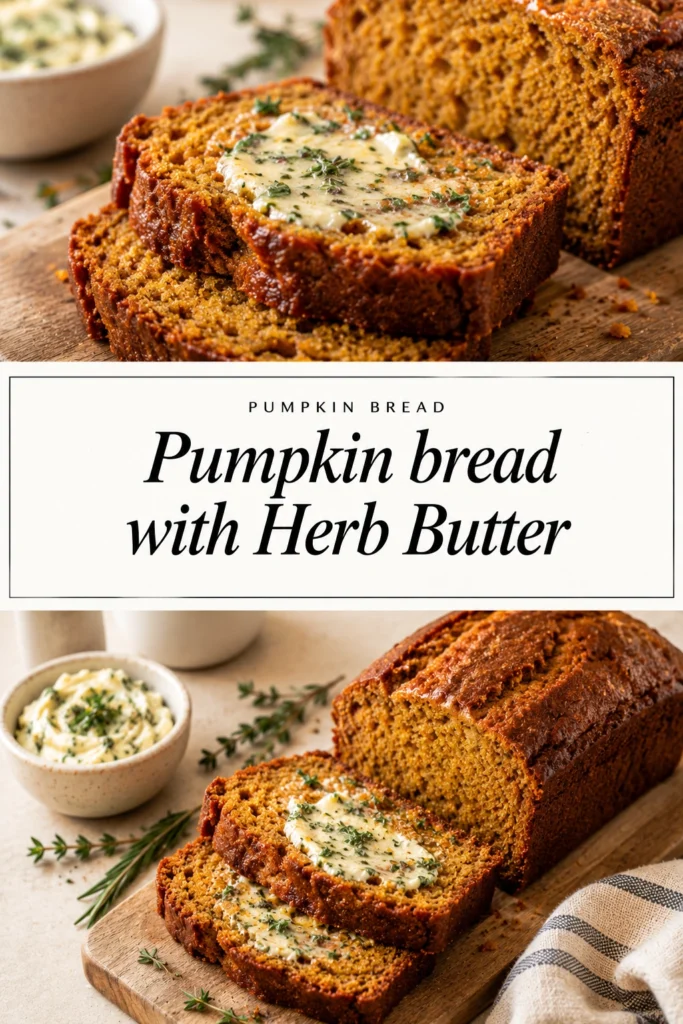
Most pumpkin breads rely on heavy sugar and cinnamon to create a dessert-like experience. This version pivots toward a savory profile, blending the earthy depth of pumpkin with a salted, aromatic butter finish.
It is a dense, moist loaf that functions more like a sophisticated dinner roll than a cake. The result is a complex balance of sweetness from the squash and salt from the herbs.
Readers appreciate this recipe because it fills a gap in seasonal baking. It provides a hearty option for those who find traditional fall treats too cloying.
The bread stands out due to its contrast in temperatures and flavors. A warm slice of bread melts the compound butter, releasing a fragrance of fresh rosemary and thyme.
Compared to store-bought savory breads, this homemade version avoids preservatives and allows you to control the salt levels. It uses real pumpkin puree for a more authentic texture.
This recipe is suited for hosts looking for a unique appetizer or anyone wanting a substantial side for a autumn soup. It pairs well with a Creamy Slow Cooker Pumpkin Butter Recipe Easy Fall Breakfast Spread for a sweet and salty board.
Follow the guide below to master this savory autumn staple.
- ●Why You’ll Love This Recipe
- ●A Brief Background on Savory Pumpkin Baking
- ●Perfect For Autumn Entertaining and Brunch
- ●Pumpkin Ingredient Spotlight
- ●Herb Butter Ingredient Spotlight
- ●Key Ingredients
- ●How to Make It
- ●Pro Tips
- ●Savory Variations
- ●Best Ways to Serve
- ●Storage and Leftovers
- ●Frequently Asked Questions
- ●Why This Recipe Belongs in Your Weekly Rotation
- ●Final Thoughts
This bread offers a departure from the usual sugar-laden autumn bakes, providing a sophisticated flavor profile that appeals to a wide range of palates.
- ●Balances natural pumpkin sweetness with salty herbs.
- ●Provides a moist, tender crumb that stays fresh for days.
- ●Uses simple pantry staples available in most kitchens.
- ●Creates an impressive presentation for guests.
- ●Works as both a breakfast side and a dinner accompaniment.
- ●Avoids the overwhelming sugar content of typical pumpkin loaves.
- ●The herb butter adds a layer of richness that enhances the squash.
- ●Requires no complex kneading or rising time.
- ●Pairs exceptionally well with roasted vegetables or creamy soups.
- ●Fragrant aroma fills the home during the baking process.
It is a versatile addition to any seasonal menu, bridging the gap between a snack and a meal.
A Brief Background on Savory Pumpkin Baking |
Pumpkin is naturally versatile, containing a mild sweetness and a creamy consistency. While most modern recipes lean toward pies and cookies, savory pumpkin preparations are common in various global cuisines where squash is treated as a vegetable rather than a dessert base.
Integrating herbs like sage, rosemary, and thyme helps ground the flavor of the pumpkin. These herbs contain aromatic compounds that cut through the density of the puree, preventing the bread from feeling too heavy.
The addition of a compound butter allows the bread to remain lean while providing a burst of fat and salt upon serving. This technique transforms a simple loaf into a gourmet experience.
This approach to baking highlights the nutritional profile of the pumpkin while maintaining a comforting, hearth-baked feel.
Perfect For Autumn Entertaining and Brunch |
This bread is an ideal choice for holiday brunch spreads. It complements poached eggs or smoked salmon, providing a hearty base that feels celebratory yet grounded.
For dinner parties, serve this as a starter. Thinly sliced and toasted, it acts as a sturdy vessel for dips or as a side for a bowl of butternut squash soup.
It also works well for meal prep. You can bake the loaf in advance, slice it, and freeze the portions, making it a quick addition to a busy weekday breakfast.
Pumpkin Ingredient Spotlight |
Pumpkin puree acts as the structural and flavor foundation of the loaf. Because it contains a high amount of moisture and natural sugars, it keeps the bread tender and prevents it from drying out during the bake. Unlike flour-heavy breads, the pumpkin ensures a tight, moist crumb that feels substantial.
Herb Butter Ingredient Spotlight |
The herb butter is the primary seasoning agent. Unsalted butter provides a creamy vehicle for the herbs, while the addition of fresh rosemary and thyme introduces woody, citrusy notes. The salt in the butter is critical; it activates the sweetness of the pumpkin, creating a balanced flavor profile.
Key Ingredients |
Each component of this recipe serves a specific purpose in balancing the savory and sweet elements of the bread.
- ●Pumpkin Puree — provides moisture, color, and the primary earthy flavor; without it, the bread loses its signature density.
- ●All-Purpose Flour — creates the necessary structure and gluten network to hold the loaf together.
- ●Baking Powder — acts as the leavening agent to ensure the bread isn’t too dense.
- ●Eggs — bind the ingredients and provide a slight lift and richness to the crumb.
- ●Salt — enhances all the other flavors and prevents the pumpkin from tasting bland.
- ●Butter — used in both the batter for tenderness and the topping for flavor.
- ●Fresh Rosemary — adds a pungent, pine-like aroma to the compound butter.
- ●Fresh Thyme — contributes a subtle, lemony earthiness to the spread.
- ●Garlic Powder — adds a hint of savory depth to the bread batter.
How to Make It |
Prepare your workspace and preheat your oven to ensure the bread begins rising the moment it hits the heat.
- Prepare the pan: Grease a 9×5 inch loaf pan with butter or line it with parchment paper. This prevents the dense pumpkin batter from sticking to the sides, which could cause the loaf to break during removal.
- Mix dry ingredients: Whisk together the flour, baking powder, salt, and garlic powder in a medium bowl. Sifting these ensures there are no clumps of leavening agent, which would otherwise create uneven holes in the bread.
- Combine wet ingredients: In a larger bowl, beat the eggs and then stir in the pumpkin puree and melted butter. Ensure the pumpkin is fully incorporated and smooth, as lumps of puree can lead to inconsistent textures in the final slice.
- Fold in flour: Gradually add the dry flour mixture to the wet ingredients. Stir with a spatula only until the white streaks of flour disappear. Over-mixing develops too much gluten, which makes the bread tough rather than tender.
- Bake the loaf: Pour the batter into the prepared pan and smooth the top. Bake until a toothpick inserted into the center comes out clean. Look for the edges to slightly pull away from the pan, indicating the structure has set.
- Cool the bread: Let the loaf rest in the pan for ten minutes before transferring it to a wire rack. Cooling completely prevents the bread from squashing under its own weight when sliced.
- Compound the butter: Mash softened butter with finely chopped rosemary, thyme, and a pinch of salt. Use a fork to ensure the herbs are evenly distributed so every bite of the bread has a consistent flavor.
- Finish and serve: Slice the bread into thick pieces and spread a generous layer of herb butter on each slice while the bread is still warm.
1Follow these adjustments to ensure the best possible outcome for your savory loaf.
- ●2Room temperature eggs: Use eggs that have sat out for 30 minutes to ensure they emulsify better with the pumpkin puree.
- ●3Measure flour by weight: Use a kitchen scale to avoid packing too much flour into the measuring cup, which prevents the bread from becoming dry.
- ●4Fresh vs Dried Herbs: If using dried herbs for the butter, use only one-third of the amount called for, as dried herbs are more concentrated.
- ●5Avoid over-baking: Start checking the bread five minutes before the timer goes off to prevent the edges from becoming too dark.
- ●6Use a serrated knife: Slice the finished loaf with a saw-like motion to keep the moist crumb intact.
Savory Variations |
You can customize this recipe to fit different dietary needs or flavor preferences.
- ●Cheese Addition: Fold in half a cup of shredded sharp cheddar or gruyere for a salty, nutty twist.
- ●Gluten-Free Option: Replace the all-purpose flour with a 1:1 gluten-free baking blend.
- ●Maple Hint: Add a tablespoon of maple syrup to the batter to enhance the pumpkin’s natural sweetness.
- ●Sage Butter: Substitute the rosemary with fried sage leaves for a more traditional autumn flavor.
- ●Seed Crunch: Sprinkle pumpkin seeds (pepitas) on top of the batter before baking for added texture.
These changes allow the recipe to evolve based on what you have in your pantry.
Best Ways to Serve |
Presentation enhances the experience of this savory bread. Consider these serving methods to make the most of the flavor profile.
- ●Toasted slices served alongside a bowl of creamy tomato or butternut squash soup.
- ●As a base for a savory tartine topped with goat cheese, honey, and walnuts.
- ●Warmed in the oven and served as part of a charcuterie board with olives and cured meats.
- ●Sliced thin and used as a side for a roast chicken dinner.
For a refined touch, serve the herb butter in a small ramekin on the side, allowing guests to apply as much as they prefer. This keeps the bread from becoming soggy if served on a platter.
If you enjoy other pumpkin-based treats, you might also like the Irresistible Brown Butter Pumpkin Snickerdoodle Cookies for a sweet contrast to this savory loaf.
Storage and Leftovers |
Refrigerating
Store the sliced bread in an airtight container in the refrigerator for up to five days. Keep the herb butter in a separate sealed container to maintain its freshness.
Reheating
Warm individual slices in a toaster or oven at 350F for 3 to 5 minutes. Apply the herb butter immediately after heating so it melts into the crumb.
Freezing
Wrap the entire loaf or individual slices in foil and then place them in a freezer bag for up to three months. Thaw in the refrigerator overnight before reheating.
Frequently Asked Questions |
- ●Q: Can I use fresh pumpkin instead of canned puree?A: Yes, you can use fresh pumpkin. Roast a sugar pumpkin until tender, scoop out the flesh, and process it in a food processor until smooth. Be sure to strain any excess liquid, as too much moisture can make the bread collapse during baking.
- ●Q: Why did my pumpkin bread sink in the middle?A: This usually happens if the oven door is opened too early or if the leavening agents are expired. Ensure your baking powder is fresh and avoid opening the oven until the bread has had at least 40 minutes to set its structure.
- ●Q: Can I make the herb butter in advance?A: Absolutely. You can prepare the compound butter up to a week in advance. Keep it chilled in the refrigerator in a small jar or rolled into a log using parchment paper for easy slicing.
- ●Q: What if I don’t have fresh rosemary or thyme?A: Dried herbs are a viable substitute. Use about one teaspoon of dried herbs for every tablespoon of fresh herbs. For the best results, rub the dried herbs between your palms to release the aromatic oils before mixing them into the butter.
- ●Q: How do I know when the bread is fully cooked?A: The most reliable method is the toothpick test. Insert a wooden skewer into the center of the loaf; it should come out clean or with just a few moist crumbs. If there is wet batter on the toothpick, bake for another five minutes.
Why This Recipe Belongs in Your Weekly Rotation |
Adding a savory bake to your routine provides a healthy alternative to traditional sweets. This bread uses the nutrient-dense qualities of pumpkin while delivering a comforting, warm experience that fits any time of day.
It is a reliable recipe that requires minimal cleanup and utilizes basic tools. Whether you are preparing for a crowd or simply want a more interesting side for your dinner, this loaf delivers a high-impact flavor with low effort.
Final Thoughts |
This savory pumpkin bread with herb butter offers a refined balance of earthy squash and aromatic greenery. It transforms a simple loaf into a gourmet accompaniment that works for any occasion.
Switching from sweet to savory allows you to enjoy the essence of pumpkin without the sugar overload. It is an inviting, hearty option for those who crave the warmth of fall baking with a sophisticated twist.
Bring the scents of the autumn harvest into your kitchen and try this aromatic loaf today.
Savory Pumpkin Bread with Herb Butter
- Total Time: 1 hour 20 minutes
- Yield: 1 loaf (10 slices) 1x
Description
A savory, moist pumpkin loaf paired with a fragrant compound butter made of fresh rosemary and thyme. An ideal autumn alternative to sweet pumpkin breads.
Ingredients
- 1.5 cups all-purpose flour
- 1 teaspoon baking powder
- 1/2 teaspoon salt
- 1/2 teaspoon garlic powder
- 1 cup pumpkin puree
- 2 large eggs
- 1/2 cup unsalted butter, melted
- 1/2 cup unsalted butter, softened (for herb butter)
- 1 tablespoon fresh rosemary, finely chopped
- 1 tablespoon fresh thyme, finely chopped
- 1/4 teaspoon salt (for herb butter)
Instructions
- Preheat your oven to 350F (175C) and grease a 9×5 inch loaf pan.
- In a medium bowl, whisk together the flour, baking powder, salt, and garlic powder.
- In a large bowl, beat the eggs and then stir in the pumpkin puree and melted butter until smooth.
- Fold the dry ingredients into the wet ingredients using a spatula until just combined.
- Pour the batter into the pan and bake for 55-65 minutes, or until a toothpick inserted in the center comes out clean.
- Cool the loaf in the pan for 10 minutes, then transfer to a wire rack to cool completely.
- In a small bowl, mash the softened butter with chopped rosemary, thyme, and salt until well combined.
- Slice the bread and spread the herb butter on each piece while warm.
- Prep Time: 20 minutes
- Cook Time: 60 minutes
- Category: Baking
- Method: Oven
- Cuisine: American
