

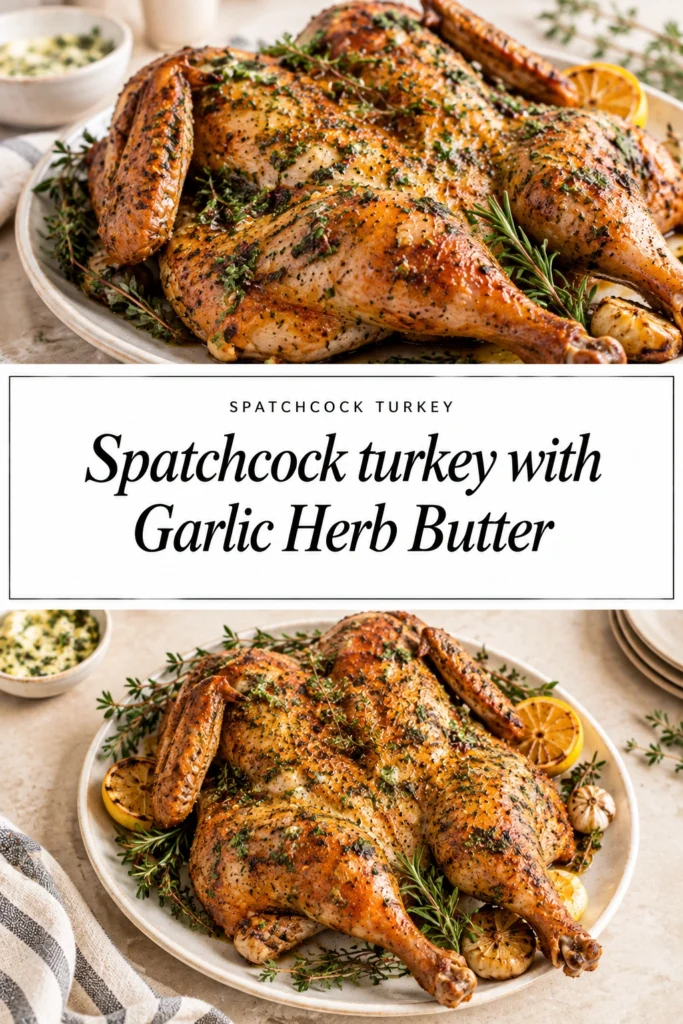
A golden-brown turkey with skin that crackles upon the first cut reveals succulent, aromatic meat beneath. This dish transforms the centerpiece of a holiday feast into a manageable, high-reward meal.
This recipe uses the spatchcock method, which involves removing the backbone to flatten the bird. It allows for a faster cook time and more consistent heat distribution across the breast and legs.
The standout feature of this version is the compound garlic herb butter tucked beneath the skin, which bastes the meat from the inside out.
Unlike a traditional whole-roasted turkey that often results in dry breasts and undercooked thighs, this flattened approach solves the timing dilemma.
Home cooks who want a professional result without the stress of a twelve-hour kitchen marathon will find this method ideal.
The following guide covers everything from the initial cut to the final rest, ensuring a moist and flavorful result.
- ●Why You’ll Love This Recipe
- ●A Brief Background / Why This Recipe Works
- ●Perfect For Holiday Feasts and Large Gatherings
- ●Main Ingredient Spotlight: Turkey
- ●Secondary Ingredient Spotlight: Garlic Herb Butter
- ●Key Ingredients
- ●How to Make It
- ●Pro Tips
- ●Delicious Variations
- ●Best Ways to Serve
- ●Storage and Leftovers
- ●Frequently Asked Questions
- ●Why This Recipe Belongs in Your Weekly Rotation
- ●Final Thoughts
Choosing a spatchcocked method changes the dynamics of the kitchen, allowing for a more relaxed preparation and a better-tasting bird.
- ●The cooking time is reduced compared to a traditional roast.
- ●Flattening the bird exposes more surface area to the heat for superior skin crisping.
- ●The garlic herb butter penetrates deep into the meat rather than just sitting on top.
- ●Consistent internal temperatures mean no more choosing between dry breasts or raw thighs.
- ●It leaves more room in the oven for side dishes like roasted root vegetables.
- ●The process of removing the backbone is a simple skill that improves every future roast.
- ●Less time in the oven prevents the meat from losing its natural juices.
- ●The flavor profile is elevated that complement the richness of the turkey.
This approach provides a reliable path to a centerpiece that tastes as good as it looks on the platter.
A Brief Background / Why This Recipe Works |
Spatchcocking, also known as butterflying, is a technique that removes the structural barrier of the ribcage. bird flat, the legs and breasts are placed on the same horizontal plane, ensuring they reach their target temperatures simultaneously.
The use of a compound butter acting as an insulator and flavor agent prevents the lean breast meat from drying out. The fat in the butter conducts heat efficiently while delivering garlic and herb notes directly to the muscle fibers.
Because the turkey is not enclosed in a cavity, steam escapes more easily, which prevents the skin from becoming soggy. This results in a mahogany-colored finish that provides a textural contrast to the tender meat.
Combining this technique with a high-heat start and a steady finish creates a balanced roast that retains its moisture.
Perfect For Holiday Feasts and Large Gatherings |
This method is ideal for Thanksgiving or Christmas when oven space is at a premium. Because the turkey sits low in a roasting pan, you can often fit additional trays of vegetables or casseroles on the racks above it.
It is also a great option for those hosting larger groups who cannot afford the uncertainty of a traditional roast. The predictability of the cook time allows for better scheduling of the rest of the meal.
For those who enjoy hosting informal autumn dinner parties, a spatchcocked turkey feels slightly less formal but tastes more refined than a standard roast.
Main Ingredient Spotlight: Turkey |
Turkey provides a mild, savory canvas that absorbs the bold flavors of garlic and fresh herbs. Its lean nature makes it susceptible to drying out, which is why the spatchcock method is so effective for maintaining juiciness. The skin is rich in collagen, which, when rendered properly, creates a deep, savory glaze that enhances the overall eating experience.
Secondary Ingredient Spotlight: Garlic Herb Butter |
The butter serves as the primary flavor delivery system, combining the creamy richness of dairy with the pungent aroma of fresh garlic. When blended with herbs, it creates a fragrant paste that seeps into the meat during the roasting process.
This combination mirrors the flavor profile found in The Ultimate Basil Pesto Butter A Culinary Adventure Easy Garlic Herb Butter, emphasizing how fat carries fat-soluble flavors into the protein.
The garlic provides a sharp contrast to the sweetness of the turkey, while the herbs add earthy, woody notes that ground the dish.
Key Ingredients |
Each component of this recipe is chosen to maximize the natural flavors of the bird while adding layers of aromatic depth.
- ●Whole Turkey — The central protein that provides a hearty, savory base for the meal.
- ●Unsalted Butter — A rich fat that moisturizes the meat and helps the skin brown.
- ●Fresh Garlic — Pungent cloves that add a bold, aromatic punch to the butter mixture.
- ●Fresh Sage — An earthy, slightly peppery herb that is a classic pairing for poultry.
- ●Fresh Thyme — A lemony, woody herb that adds a subtle brightness to the roast.
- ●Fresh Rosemary — A piney, aromatic herb that provides a deep, forest-like fragrance.
- ●Kosher Salt — Coarse crystals that draw out moisture from the skin for better crisping.
- ●Black Pepper — A sharp, spicy element that balances the richness of the butter.
How to Make It |
Following these steps precisely will result in a perfectly roasted bird with an even golden hue and juicy meat throughout.
- Prepare the turkey: Remove the giblets and pat the skin completely dry with paper towels. Any remaining moisture on the skin will steam the bird rather than roast it, preventing that desired crispiness.
- Spatchcock the bird: Use heavy-duty kitchen shears to cut along both sides of the backbone, removing it entirely. Carefully flip the turkey breast-side down and press firmly on the breastbone until you hear a crack and the bird lies flat.
- Create the compound butter: Mash softened butter with minced garlic, chopped sage, thyme, and rosemary. Mix until the herbs are evenly distributed and the butter is a pale green color; avoid over-mixing to the point where the butter separates.
- Apply the butter: Gently lift the skin over the breast and thighs using your fingers, being careful not to tear it. Stuff a generous amount of the garlic herb butter directly onto the meat beneath the skin, spreading it evenly to avoid large clumps.
- Season the exterior: Rub the remaining butter over the outside of the skin and season generously with salt and black pepper. Ensure the salt reaches every crevice, as this is what triggers the Maillard reaction for a dark golden color.
- Roast the turkey: Place the bird breast-side up on a rack in a roasting pan and cook at 425°F (218°C). Watch for the skin to turn a deep golden brown and the juices to run clear, which usually happens faster than with a whole bird.
- Check for doneness: Use an instant-read thermometer to check the thickest part of the breast and the inner thigh. Remove the turkey when the breast reaches 160°F (71°C), as carry-over cooking will bring it to the safe 165°F mark.
- Rest the meat: Transfer the turkey to a carving board and let it sit undisturbed for at least 20 to 30 minutes. Cutting into the bird too early allows the juices to escape, which leads to dry meat.
1These refinements can elevate the dish from a standard roast to a professional-level feast.
- ●2Dry brine the skin: Salt the turkey 24 hours in advance and leave it uncovered in the fridge to dehydrate the skin for maximum crunch.
- ●3Use a roasting rack: Elevating the bird prevents the bottom from simmering in its own juices, which would otherwise lead to soggy skin.
- ●4Avoid overstuffing: While the butter is essential, stuffing too much under the skin can create a gap that lets heat escape too quickly.
- ●5Temperature accuracy: Always use a digital thermometer; relying on the plastic pop-up timer provided with the turkey is often inaccurate.
- ●6Butter temperature: Use butter that is soft but not melted, as melted butter will run off the meat instead of sticking.
Delicious Variations |
While the garlic herb combination is a classic, you can adapt the flavor profile to suit different seasonal preferences.
- ●Citrus Twist: Add lemon zest and a pinch of orange zest to the compound butter for a brighter, more acidic flavor.
- ●Spicy Roast: Incorporate smoked paprika and a hint of cayenne pepper for a subtle warmth and a deeper red color.
- ●Maple Glaze: Brush the skin with a mixture of maple syrup and melted butter during the last 20 minutes of roasting for a sweet finish.
- ●Mediterranean Style: Swap the sage and rosemary for oregano and dried coriander, and add a touch of lemon juice.
- ●Brown Butter Version: Brown the butter in a pan before mixing with herbs to add a nutty, toasted dimension to the taste.
These adjustments allow the recipe to transition from a traditional holiday dish to a more contemporary dinner option.
Best Ways to Serve |
Presenting the turkey as part of a cohesive meal enhances the overall dining experience.
- ●Classic Pairings: Serve alongside mashed potatoes, stuffing, and a tart cranberry sauce to balance the richness.
- ●Roasted Vegetables: Pair with honey-glazed carrots or Brussels sprouts for a cohesive earthy flavor profile.
- ●Fresh Greens: A crisp arugula salad with a lemon vinaigrette provides a necessary acidic contrast to the buttery meat.
For a more modern presentation, carve the turkey into thick slices and arrange them on a platter with a drizzle of the pan drippings.
If you are looking for other ways to use garlic butter in your meals, consider trying Zesty Lemon Garlic Butter Cod Bowls With Brussels Sprouts for a lighter seafood alternative.
Storage and Leftovers |
Refrigerating
Store leftover turkey in airtight containers in the refrigerator for 3 to 4 days. Keep the meat in its own juices to prevent it from drying out during storage.
Reheating
Reheat slices slowly in a pan with a splash of broth or in the oven at 300°F (150°C) covered in foil for 15 to 20 minutes to maintain moisture.
Freezing
Freeze cooked turkey in vacuum-sealed bags or heavy-duty freezer wrap for up to 3 months. Thaw completely in the refrigerator before reheating.
Frequently Asked Questions |
- ●Q: What is the best way to spatchcock a turkey if I am intimidated ?A: Take your time and use a pair of heavy-duty kitchen shears rather than a knife. Start the spine from the tail toward the neck on both sides. Once the backbone is removed, place your palms on the breastbone and press down firmly. This removes the risk of slipping and ensures the bird is flattened evenly.
- ●Q: Can I use dried herbs instead of fresh for the garlic butter?A: You can use dried herbs, but you must reduce the quantity -third because dried herbs are more concentrated. Fresh herbs provide a brighter, more vibrant aroma and a better visual appearance in the butter. If using dried, let the butter sit for 30 minutes before applying to allow the herbs to rehydrate.
- ●Q: Why is my turkey skin not getting crispy?A: This is usually caused on the skin or overcrowding the pan. Ensure the bird is patted completely dry and cooked on a rack so air can circulate underneath. Avoid basting the turkey too frequently with liquids, as this can introduce moisture that prevents the skin from reaching a high enough temperature to crisp.
- ●Q: Do I need to brine the turkey if I am using herb butter?A: A brine is not strictly necessary because the salt in the compound butter and the exterior seasoning penetrates the meat. However, a dry brine (salting the bird 24 hours early) is highly recommended. It helps the skin dry out and ensures the interior is seasoned deeply, complementing the flavors of the butter.
- ●Q: How do I know when the turkey is actually done?A: The only reliable method is using a meat thermometer. Insert it into the thickest part of the breast and the innermost part of the thigh. The breast should read 160°F (71°C) and the thigh 170°F (77°C). Remember that the temperature will rise about 5 degrees while the meat rests, bringing it to the safe target.
Why This Recipe Belongs in Your Weekly Rotation |
While turkey is often reserved for once-a-year celebrations, the spatchcock method makes it practical for more frequent use. The reduced cook time turns a daunting task into a manageable Sunday dinner that provides high-quality protein for the entire week.
The versatility of the garlic herb butter means you can easily tweak the seasonings to prevent flavor fatigue. It offers a healthier alternative to processed meats while maintaining a luxurious, indulgent feel.
Incorporating this technique into your repertoire removes the fear associated with roasting large birds, giving you the confidence to host dinner parties year-round.
Final Thoughts |
This spatchcocked turkey combines a strategic preparation method with a rich, aromatic herb butter to deliver a moist and flavorful result. bird, you achieve a level of consistency and skin crispiness that is nearly impossible with traditional roasting.
Whether you are hosting a formal holiday gathering or simply want to elevate your weekend meal, this recipe provides a reliable and efficient path to success. It replaces the stress of long cook times with the reward of a perfectly executed roast.
Gather your ingredients and bring this fragrant, golden centerpiece to your table for a meal your guests will remember.
Spatchcock Turkey with Garlic Herb Butter
- Total Time: 0 hours
- Yield: 8 servings 1x
Description
A flattened turkey roasted with a compound garlic herb butter tucked under the skin for maximum moisture and flavor. This method ensures even cooking and crispy skin in significantly less time than traditional roasting.
Ingredients
- 12–14 lb whole turkey
- 1 cup unsalted butter, softened
- 6 cloves garlic, minced
- 1 tablespoon fresh sage, chopped
- 1 tablespoon fresh thyme, chopped
- 1 tablespoon fresh rosemary, chopped
- 2 tablespoons kosher salt
- 1 tablespoon black pepper
Instructions
- Preheat your oven to 425°F (218°C).
- Remove giblets from the turkey and pat the skin thoroughly dry with paper towels.
- Using kitchen shears, cut along both sides of the backbone to remove it. Flip the bird breast-side down and press firmly on the breastbone until it cracks and the bird lies flat.
- In a small bowl, mix the softened butter, minced garlic, sage, thyme, and rosemary until combined.
- Gently lift the skin over the breast and thighs. Spread about two-thirds of the herb butter directly onto the meat beneath the skin.
- Rub the remaining butter over the exterior of the skin and season generously with salt and black pepper.
- Place the turkey breast-side up on a roasting rack set inside a roasting pan.
- Roast for 80 to 100 minutes, or until a meat thermometer reads 160°F in the breast and 170°F in the thigh.
- Remove from the oven and let the turkey rest on a carving board for 20-30 minutes before slicing.
- Prep Time: 30 minutes
- Cook Time: 80-100 minutes
- Category: Main Course
- Method: Roasting
- Cuisine: American
