

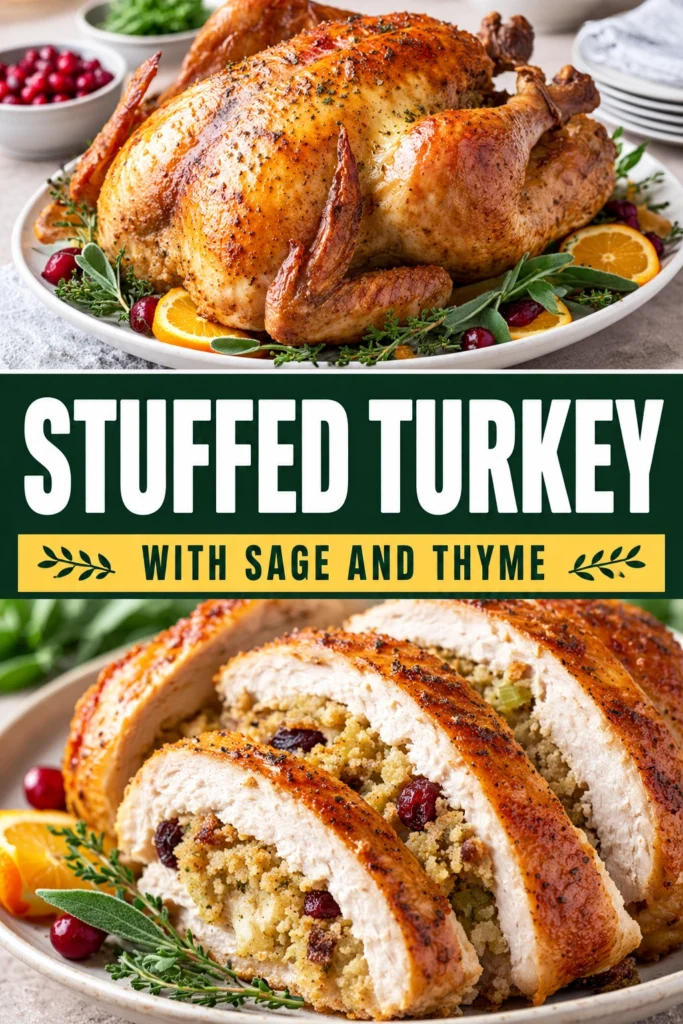
The smell of roasting poultry mixed with earthy herbs defines the atmosphere of a festive kitchen. This approach to turkey focuses on deep, aromatic infusion rather than simple surface seasoning.
This recipe is a classic stuffed turkey, utilizing a blend of sage and thyme to penetrate the meat. It creates a cohesive flavor profile that ties the bird and the filling together.
Home cooks appreciate this version because it eliminates the need for separate side-stuffing pans, keeping the oven organized. It provides a centralized focal point for the dinner table.
What makes this specific preparation stand out is the ratio of fresh herbs to butter, which prevents the bird from tasting overly medicinal while remaining fragrant.
Compared to store-bought pre-marinated birds, this homemade version allows you to control the salt levels and the quality of the fats used.
This method suits anyone looking to host a traditional gathering without spending the entire day managing multiple small dishes.
The following sections detail the specific ingredients and techniques required to achieve a moist, well-seasoned roast.
- ●Why You’ll Love This Recipe
- ●A Brief Background / Why This Recipe Works
- ●Perfect For Large Family Gatherings
- ●Main Ingredient Spotlight
- ●Secondary Ingredient Spotlight
- ●Key Ingredients
- ●How to Make It
- ●Pro Tips
- ●Delicious Variations
- ●Best Ways to Serve
- ●Storage and Leftovers
- ●Frequently Asked Questions
- ●Why This Recipe Belongs in Your Weekly Rotation
- ●Final Thoughts
This preparation simplifies the roasting process aromatic elements directly into the cavity and the skin.
- ●Concentrated herb flavors that penetrate the breast and thighs.
- ●Reduced oven clutter stuffing inside the bird.
- ●A golden-brown skin resulting from the butter-herb rub.
- ●Balanced seasoning that complements traditional side dishes.
- ●Consistent moisture levels thanks to the internal stuffing buffer.
- ●High versatility for different bird weights.
- ●Natural aromas that fill the home during the cooking process.
- ●A presentation that feels professional and celebratory.
The result is a centerpiece that tastes balanced and smells like a traditional autumn harvest.
A Brief Background / Why This Recipe Works |
Sage and thyme are the foundational herbs for poultry because they cut through the richness of the fat. Sage provides a bold, slightly peppery note, while thyme adds a subtle lemony brightness.
Using a stuffing inside the bird acts as an insulator, helping the interior meat retain moisture while the exterior skin crisps. The butter rub serves as a conductor, pulling the herb oils into the skin as the temperature rises.
This combination works because it avoids overwhelming the natural taste of the turkey. these two specific herbs, the flavor remains clean and traditional.
Perfect For Large Family Gatherings |
This recipe is designed for events where a single, impressive main course is required. It removes the stress of managing multiple roasting pans, allowing the cook to focus on other appetizers.
For those who enjoy meal prepping for holidays, the herb butter can be made days in advance. This reduces the workload on the actual day of the feast.
It is a reliable choice for traditional dinners where guests expect the classic taste of a roasted bird but want a more refined, herb-forward profile.
Main Ingredient Spotlight |
Turkey serves as the lean, protein-rich canvas for this dish. Its mild flavor allows the sage and thyme to take center stage without competing with strong meat notes. The size of the turkey allows for a significant amount of stuffing, which contributes to the overall humidity of the roasting environment.
Secondary Ingredient Spotlight |
Fresh sage and thyme provide the essential aromatic bridge. Fresh herbs contain volatile oils that release more effectively under heat than dried versions, providing a brighter, more authentic taste.
Butter acts as the primary fat source, ensuring the skin browns evenly and the herbs adhere to the meat. Unsalted butter is preferred here to allow for precise control over the total sodium content of the bird.
Key Ingredients |
These components work together to build layers of flavor from the inside out.
- ●Turkey — The primary protein and vessel for the stuffing.
- ●Fresh Sage — An earthy herb that provides the signature autumn flavor.
- ●Fresh Thyme — A woody herb that adds a light, floral aroma.
- ●Unsalted Butter — The fat used for the rub and the stuffing base.
- ●Onion — A foundational aromatic that adds sweetness and depth to the stuffing.
- ●Celery — Provides a salty, crisp contrast within the filling.
- ●Bread Cubes — The absorbent base for the herb-infused butter.
- ●Garlic — Adds a pungent, savory layer to the overall flavor profile.
- ●Kosher Salt — Used to draw out moisture for a crisper skin.
- ●Black Pepper — Adds a mild heat to balance the richness of the butter.
How to Make It |
Achieving a juicy bird requires attention to temperature and timing. Follow these steps to avoid common pitfalls like dry breast meat or undercooked stuffing.
- Prepare the bird: Remove the giblets and pat the turkey completely dry with paper towels. Any moisture left on the skin will create steam, preventing the skin from browning. This is a critical step for achieving a crisp exterior.
- Create the herb butter: Mash softened butter with minced sage, thyme, salt, and pepper. Ensure the herbs are evenly distributed so no single area of the bird becomes overly salty. This compound butter will be used both under the skin and in the stuffing.
- Sauté the stuffing base: Cook diced onion and celery in butter until translucent. Avoid browning the vegetables too much, as you want them to soften further inside the turkey without becoming bitter. If you enjoy other stuffed options, you might like Cozy Pumpkin Stuffed With Wild Rice And Sausage Delight for a different twist.
- Assemble the filling: Toss the sautéed vegetables with bread cubes, minced garlic, and a portion of the herb butter. The mixture should be moist but not soggy; if it is too wet, the stuffing will become mushy rather than fluffy.
- Stuff and Truss: Loosely fill the turkey cavity with the bread mixture. Do not pack the stuffing too tightly, as it needs room to expand and allow heat to circulate. Tie the legs with kitchen twine to ensure the bird cooks evenly and holds its shape.
- Apply the rub: Gently lift the skin over the breast and slide herb butter underneath. Rub the remaining butter over the entire exterior. This protects the breast meat from drying out while the legs finish cooking.
- Roast the turkey: Place the bird in a roasting pan at 325°F (165°C). Roast until a meat thermometer reads 165°F (74°C) in the thickest part of the thigh and the stuffing reaches 165°F. A common mistake is pulling the bird too early; the stuffing must reach a safe temperature to be consumed.
- Rest the meat: Move the turkey to a carving board and let it sit for at least 30 minutes. This allows the juices to redistribute. Cutting into the meat immediately causes the moisture to run out, leaving the meat dry.
1Small adjustments in technique can lead to significant improvements in the final result.
- ●2Room Temperature Meat: Let the turkey sit out for 30 to 60 minutes before roasting to ensure more even heat penetration.
- ●3Tenting with Foil: If the skin browns too quickly before the internal temperature is reached, cover the breast with aluminum foil.
- ●4Stuffing Density: Leave small gaps in the stuffing to let hot air move, which helps the center cook faster.
- ●5Digital Thermometer: Use a probe thermometer to monitor the internal temperature without opening the oven door.
- ●6Dry Brining: Salt the bird 24 hours in advance to improve moisture retention and skin texture.
Delicious Variations |
While the sage and thyme combination is classic, you can adapt the recipe to suit different tastes.
- ●Citrus Twist: Add lemon zest to the herb butter for a brighter, more acidic profile.
- ●Apple Stuffing: Incorporate diced Granny Smith apples into the stuffing for a sweet-and-savory balance.
- ●Cranberry Infusion: Mix dried cranberries into the bread cubes for bursts of tartness.
- ●Chestnut Addition: Add roasted chestnuts to the filling for a deeper, nuttier flavor.
- ●Smoked Paprika: Add a pinch of smoked paprika to the exterior rub for a hint of wood-fired taste.
These changes allow you to customize the bird based on the specific sides you are serving.
Best Ways to Serve |
Presenting the turkey correctly enhances the overall dining experience. Carve the bird on a large platter to keep the meat warm.
- ●With a Pan Gravy: Use the drippings from the roasting pan to create a thick, savory sauce.
- ●Alongside Root Vegetables: Roasted carrots and parsnips mirror the earthiness of the sage.
- ●With Fresh Cranberry Sauce: The acidity of the berries cuts through the richness of the herb butter.
For a lighter alternative to the full roast, you could try Zesty Ground Turkey Stuffed Sweet Potatoes For Dinner during the week.
Arrange the sliced breast and drumsticks around the mound of stuffing. This ensures every guest gets a portion of the aromatic filling.
Storage and Leftovers |
Refrigerating
Store carved meat and stuffing in airtight containers for up to 3 to 4 days. Keep them in the coldest part of the refrigerator to maintain freshness.
Reheating
Warm the meat in a baking dish with a splash of broth, covered with foil, at 325°F until warmed through. This prevents the turkey from drying out during the second heating.
Freezing
Wrap portions of meat tightly in foil and then plastic wrap. They can be frozen for up to 3 months, though quality is best within the first 30 days.
Frequently Asked Questions |
- ●Q: How do I know when the stuffing is fully cooked?A: You must use a meat thermometer to check the center of the stuffing. It must reach 165°F (74°C) to be safe for consumption. Because the stuffing is insulated , it often takes longer to heat than the exterior skin.
- ●Q: Can I use dried herbs instead of fresh?A: You can use dried herbs, but you must reduce the quantity. Dried herbs are more concentrated; generally, one tablespoon of fresh equals one teaspoon of dried. However, the flavor is less vibrant and lacks the floral notes of fresh sage and thyme.
- ●Q: What should I do if the skin is too dark but the meat is raw?A: Immediately cover the bird loosely with a sheet of aluminum foil. This blocks the direct heat from browning the skin further while allowing the internal temperature to continue rising. Check the temperature every 15 minutes until it reaches 165°F.
- ●Q: How do I prevent the stuffing from becoming soggy?A: Use slightly stale bread or toast your bread cubes in the oven before adding them to the mixture. This creates a structure that absorbs the butter and vegetable juices without collapsing into a paste.
- ●Q: Should I brine the turkey before stuffing it?A: A dry brine is highly recommended. Salt the skin and the cavity 24 hours before cooking. This breaks down the muscle fibers and allows the salt to penetrate deeply, which results in a juicier bird and a more seasoned stuffing.
Why This Recipe Belongs in Your Weekly Rotation |
While turkey is often reserved for holidays, this herb-forward approach makes it a viable option for larger Sunday dinners. The focus on sage and thyme creates a sophisticated flavor that feels special without requiring exotic ingredients.
Integrating the stuffing into the bird simplifies the cooking process, making it a more manageable meal for those who want a hearty centerpiece without multiple side pans. It provides a complete meal in one roasting vessel.
Ultimately, this method provides a reliable way to produce a high-quality roast every time. It removes the guesswork from seasoning and ensures the meat remains succulent.
Final Thoughts |
This stuffed turkey combines the earthy depth of sage and thyme with a classic roasting technique. the herb butter rub and the internal stuffing, the bird remains moist and fragrant.
Whether you are hosting a formal holiday event or a large family gathering, this recipe offers a balanced flavor profile and a simplified workflow. It is a dependable way to deliver a traditional roast.
Gather your fresh herbs and prepare your kitchen for a meal that brings warmth and aroma to your home.
Stuffed Turkey with Sage and Thyme
- Total Time: 0 hours
- Yield: 12 servings 1x
Description
A traditional roasted turkey filled with a savory sage and thyme bread stuffing and rubbed with compound herb butter for a golden, fragrant finish.
Ingredients
- 12–14 lb whole turkey
- 1 cup unsalted butter, softened
- 2 tablespoons fresh sage, minced
- 2 tablespoons fresh thyme, minced
- 1 tablespoon kosher salt
- 1 teaspoon black pepper
- 1 cup unsalted butter for stuffing
- 1 onion, finely diced
- 2 celery stalks, finely diced
- 4 cloves garlic, minced
- 6 cups dried bread cubes
- 1/2 cup chicken broth
Instructions
- Remove giblets and pat the turkey completely dry with paper towels.
- Mix softened butter with sage, thyme, salt, and pepper to create a compound butter.
- Sauté diced onion and celery in butter over medium heat until translucent.
- In a large bowl, combine sautéed vegetables, bread cubes, minced garlic, and a portion of the herb butter. Stir in chicken broth until moistened.
- Loosely fill the turkey cavity with the stuffing mixture and tie the legs with kitchen twine.
- Carefully loosen the breast skin and spread herb butter underneath. Rub the remaining butter over the entire exterior of the bird.
- Roast at 325°F (165°C) until a meat thermometer reads 165°F in the thigh and the stuffing center reaches 165°F.
- Transfer to a carving board and let the turkey rest for 30 minutes before carving.
- Prep Time: 45 minutes
- Cook Time: 3.5 hours
- Category: Main Course
- Method: Roasting
- Cuisine: American
