

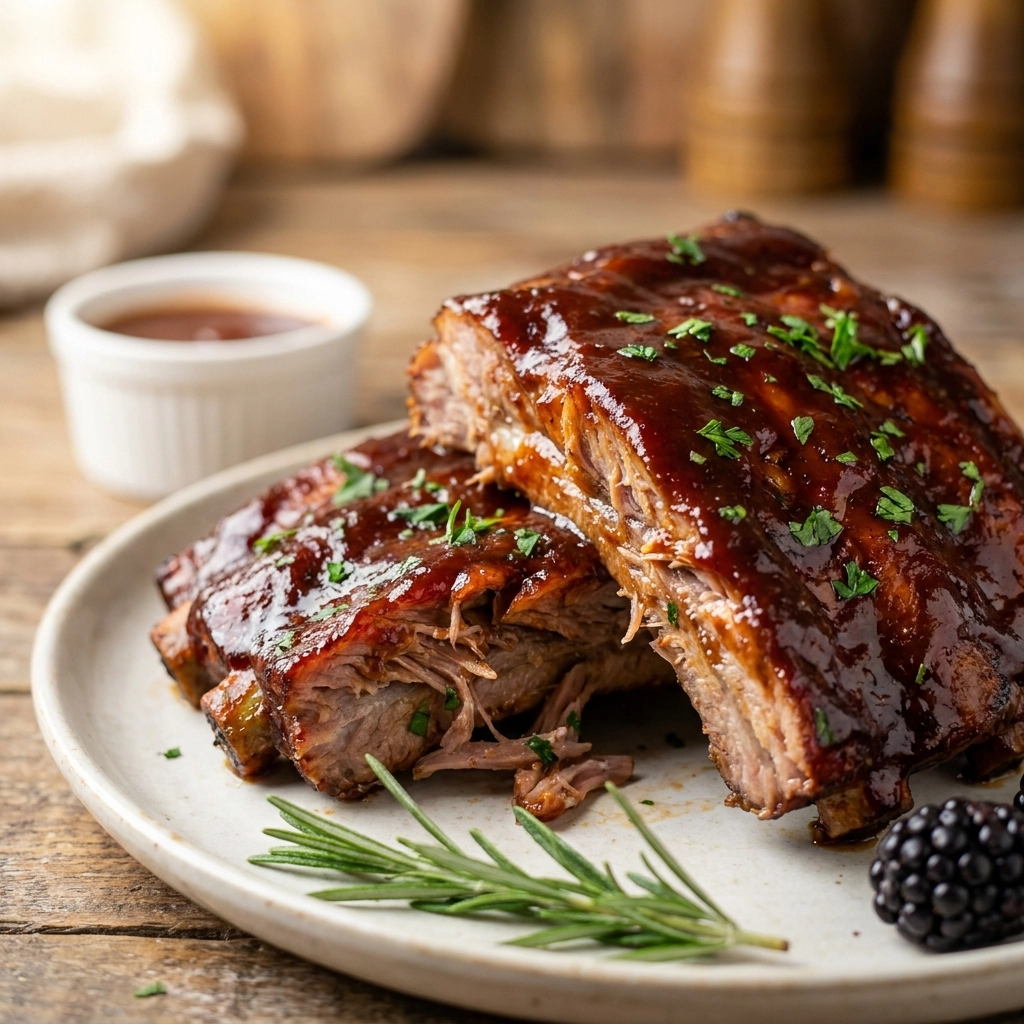
Do you believe that achieving restaurant-quality, fall-off-the-bone ribs requires a professional smoker or a backyard pit?
The truth is that a controlled oven environment can produce a result that is technically superior in tenderness and flavor consistency.
Listen for the faint, rhythmic sizzling of rendered fat as the meat hits the heat; that sound is the signal that the Maillard reaction is beginning to transform your dinner.
This recipe focuses on the scientific breakdown of collagen into gelatin, ensuring a luxurious mouthfeel in every bite.
Unlike store-bought pre-cooked ribs, which often feel processed and overly salty, these are crafted from raw cuts and balanced seasonings.
This approach is ideal for the home cook who values precision over the unpredictability of outdoor grilling.
Let us examine the technical steps to achieve this culinary standard. Crockpot Ground Beef Pasta With Roasted Red Pepper Cashew Cream Swirl Easy Slow Cooker Meal
- ●Why You’ll Love This Recipe
- ●A Brief Background / Why This Recipe Works
- ●Perfect For Family Gatherings and Lazy Sundays
- ●Main Ingredient Spotlight: Pork Ribs
- ●Secondary Ingredient Spotlight: Brown Sugar
- ●Key Ingredients
- ●How to Make It
- ●Pro Tips
- ●Delicious Variations
- ●Best Ways to Serve
- ●Storage and Leftovers
- ●Frequently Asked Questions
- ●Why This Recipe Belongs in Your Weekly Rotation
- ●Final Thoughts
There are several technical and sensory reasons why this specific method outperforms the competition.
- ●Consistent internal temperature prevents the meat from drying out.
- ●The low heat allows connective tissues to dissolve completely.
- ●A homemade rub provides a complex layer of flavor without artificial additives.
- ●The glazing process creates a sticky, caramelized exterior.
- ●It requires very little active monitoring once it is in the oven.
- ●The result is a uniform tenderness across the entire rack.
- ●It scales easily for large groups or intimate dinners.
- ●The aromatic profile fills the home with a comforting, savory scent.
- ●You avoid the mess and smoke of an outdoor grill.
- ●The depth of flavor rivals professional smokehouse standards.
This recipe transforms a humble cut of meat into a center-piece dish. Scrumptious Roasted Asparagus Recipe 1.Png
A Brief Background / Why This Recipe Works |
The physics of slow-roasting relies on a low temperature to target the collagen in the ribs. At high heats, muscle fibers contract quickly and squeeze out moisture, leading to tough meat. temperature low, we allow the heat to penetrate slowly.
This gradual increase in internal temperature converts tough collagen into silky gelatin. This is the secret to that “melt-in-your-mouth” texture that defines a great rib.
The use of a foil wrap creates a makeshift pressure chamber. This traps steam, which further accelerates the tenderizing process while keeping the meat hydrated.
Could any other method truly match this level of precision and reliability?
Ultimately, this method balances the slow breakdown of protein with a final high-heat sear for textural contrast.
Perfect For Family Gatherings and Lazy Sundays |
This dish is a staple for busy family dinners because it allows the oven to do the heavy lifting. You can prepare the ribs in the morning and let them roast while you attend to other tasks.
For holiday gatherings, these ribs serve as an impressive main course that feeds a crowd without requiring you to stand over a hot grill in the cold.
Meal prepping is also remarkably simple with this recipe. Large batches can be cooked and then portioned out for high-protein lunches throughout the week.
Because the meat is so tender, it is a crowd-pleaser for all ages, from children to adults who appreciate a refined BBQ flavor.
Main Ingredient Spotlight: Pork Ribs |
Pork ribs are a structural marvel of the animal, consisting of alternating layers of muscle and connective tissue. This specific anatomy makes them the perfect candidate for slow-cooking, as the high fat content bastes the meat from within.
Choosing a high-quality rack with good marbling ensures that the ribs remain juicy even after hours of roasting. The balance of sweetness from the glaze and the saltiness of the pork creates a classic culinary harmony.
Secondary Ingredient Spotlight: Brown Sugar |
Brown sugar is essentially granulated sugar with a thin film of molasses. This molasses is critical because it provides a deep, earthy undertone that white sugar lacks.
In the context of ribs, brown sugar performs two roles: it balances the heat of the paprika and cayenne, and it facilitates the caramelization process during the final broiling stage.
Without this ingredient, the glaze would lack the viscosity needed to cling to the meat. Irresistible Delectable Roasted Cauliflower Steak Bites
Key Ingredients |
Quality ingredients are the foundation of a professional result.
- ●Pork Ribs — The primary protein providing texture and richness.
- ●Brown Sugar — Adds sweetness and creates a sticky glaze.
- ●Paprika — Provides a smoky depth and vibrant red color.
- ●Garlic Powder — Adds an aromatic, savory punch to the rub.
- ●Onion Powder — Complements the garlic for a well-rounded base.
- ●Salt — Enhances all other flavors and helps break down proteins.
- ●Black Pepper — Adds a subtle, sharp heat to cut through the richness.
- ●BBQ Sauce — The final coating for acidity and sweetness.
 How to Make It |
Follow these technical steps to ensure a perfect result every time.
- Prepare the surface: To ensure the seasoning adheres and the meat cooks evenly, remove the thin membrane from the back of the ribs using a paper towel for grip. This membrane is inedible and blocks flavor from penetrating the meat.
- Apply the dry rub: To build a flavor crust, generously coat all sides of the ribs with the spice mixture, pressing it firmly into the meat. Avoid over-salting, as the BBQ sauce will add its own sodium later.
- Seal for moisture: To prevent the ribs from drying out during the long roast, wrap the seasoned racks tightly in heavy-duty aluminum foil. This creates a steam environment that forces the collagen to break down.
- Slow-roast the meat: To achieve maximum tenderness without burning, place the ribs in a low-temperature oven for several hours. You are looking for the meat to pull back slightly from the bone ends.
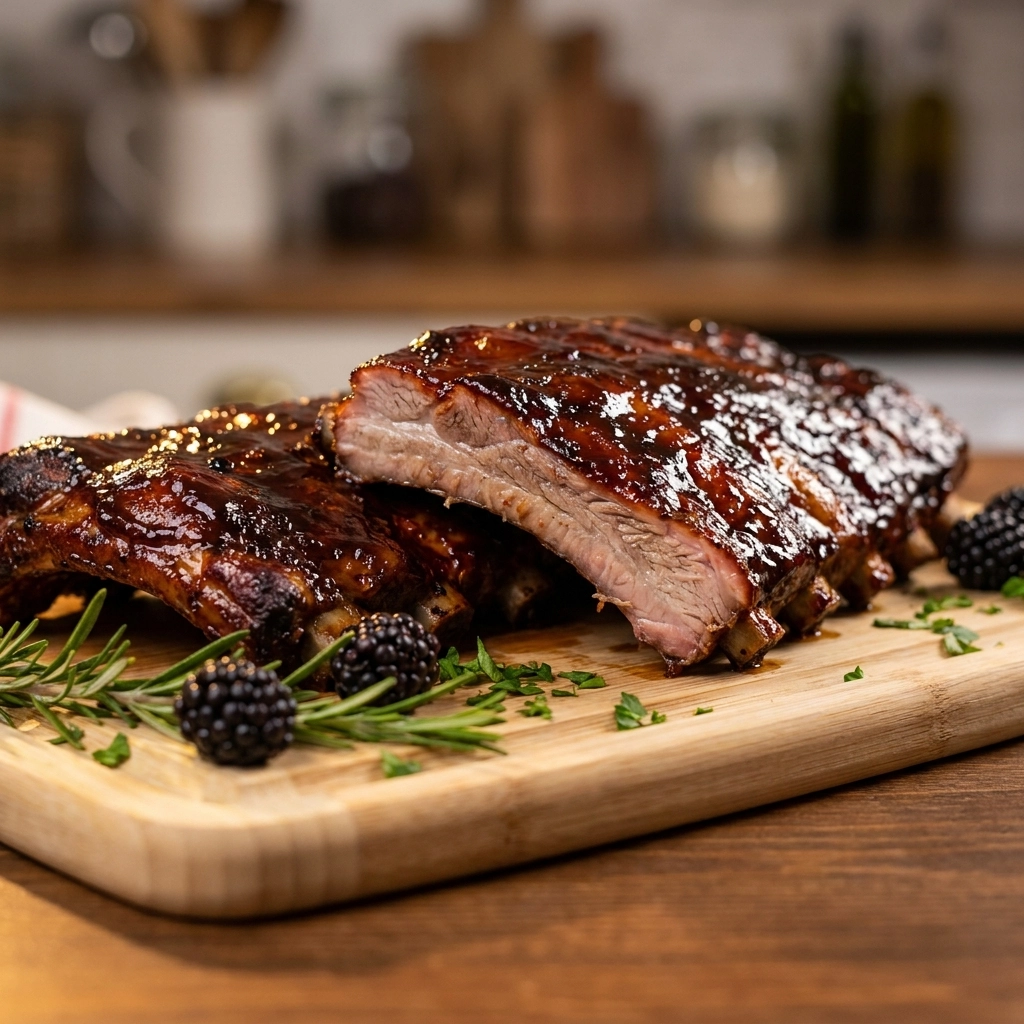
- Apply the glaze: To create a professional finish, unwrap the ribs and brush a thick layer of BBQ sauce over the top. This layer needs to be applied now so it can caramelize without burning the meat underneath.
- Broil for caramelization: To achieve those charred, sticky edges, place the ribs under the broiler for a few minutes. Watch them closely; the sugar in the sauce can go from caramelized to burnt in seconds.
Is there anything more satisfying than the sight of glaze bubbling under the heat? Scrumptious Roasted Asparagus Recipe 2.Png
1Refine your technique with these professional suggestions.
- ●2Use a meat thermometer: To avoid guesswork, pull the ribs when they reach an internal temperature of 195-203 degrees Fahrenheit.
- ●3Rest the meat: To keep the juices inside the muscle fibers, let the ribs rest for 10 minutes before slicing.
- ●4Avoid thin foil: To prevent leaks and steam loss, use heavy-duty aluminum foil or double-wrap the ribs.
- ●5Balance your sauce: To cut through the richness, add a teaspoon of apple cider vinegar to your store-bought BBQ sauce.
- ●6Room temperature meat: To ensure even cooking, let the ribs sit out for 30 minutes before they go into the oven.
7Precision in temperature is the key to success. Holiday Roasted Chicken Mouthwatering 1.Png
Delicious Variations |
Adjust the flavor profile to suit your specific palate.
- ●Asian Fusion: Swap the BBQ sauce for a mixture of hoisin, soy sauce, ginger, and honey.
- ●Spicy Chipotle: Add chipotle powder to the dry rub and use a spicy habanero glaze.
- ●Applewood Style: Add a few drops of liquid smoke to the rub for a traditional pit-master flavor.
- ●Honey Mustard: Replace the BBQ sauce with a blend of honey and Dijon mustard for a tangier finish.
- ●Maple Bourbon: Stir a splash of bourbon and real maple syrup into the glaze for a rich, autumnal taste.
These variations allow you to experiment with different cultural flavor palettes while keeping the same technical process.
Best Ways to Serve |
Present your ribs with complementary sides that balance the richness of the pork.
- ●Classic coleslaw for a cool, acidic contrast.
- ●Cornbread with honey butter for a sweet, bready accompaniment.
- ●Grilled corn on the cob with lime and salt.
- ●A crisp garden salad with a vinaigrette to cleanse the palate.
Serve the ribs on a large wooden platter to lean into the rustic, BBQ aesthetic. This keeps the meat warm and allows guests to help themselves.
For a more formal presentation, slice the ribs into individual bones and stack them in a pyramid shape on a white ceramic plate. Holiday Roasted Chicken Mouthwatering 2.Png
Storage and Leftovers |
Refrigerating
Store the ribs in an airtight container for up to 4 days. Ensure they are completely cooled before sealing to avoid condensation, which can make the glaze soggy.
Reheating
To maintain the texture, reheat the ribs in the oven at 300 degrees Fahrenheit for 15 minutes. Avoid the microwave, as it can make the pork rubbery and the glaze separate.
Freezing
Wrap the ribs in foil and then place them in a freezer bag for up to 3 months. Thaw them slowly in the refrigerator for 24 hours before reheating in the oven.
Frequently Asked Questions |
- ●Q: How do I know when the ribs are perfectly done?A: The most reliable indicator is the “bend test.” When you lift the rack with tongs from one end, the meat should crack slightly and the rack should bend easily without snapping. Internally, you are aiming for 203 degrees Fahrenheit for maximum tenderness.
- ●Q: Can I use a different type of rib, like ba?A: Yes, ba work beautifully with this method. However, because they are leaner and smaller than spare ribs, you should reduce the roasting time hour to prevent them from overcooking and becoming dry.
- ●Q: Why did my ribs turn out tough despite the slow roast?A: Toughness usually occurs if the oven temperature was too high or if the ribs were not wrapped tightly. Without the steam trap created , the moisture evaporates, and the collagen does not break down into gelatin.
- ●Q: Do I really need to remove the membrane?A: Yes, removing the silver skin is highly recommended. This membrane is a tough layer of connective tissue that does not break down during cooking. Removing it allows the rub to penetrate the meat and ensures a better mouthfeel.
- ●Q: Can I make these in a slow cooker instead of the oven?A: While a slow cooker can make them tender, you lose the ability to control the surface caramelization. If you use a slow cooker, you must transfer the ribs to the oven or a grill at the end to glaze and sear them.
Why This Recipe Belongs in Your Weekly Rotation |
Integrating a slow-roast technique into your repertoire reduces the stress of dinner preparation. The ability to set a timer and walk away while a gourmet meal develops is an invaluable asset for any home cook.
Beyond the convenience, the nutritional profile of homemade ribs is far superior to processed versions. You control the sugar content and the quality of the salt, making it a cleaner way to enjoy a decadent meal.
It is a dish that bridges the gap between a casual weeknight dinner and a celebratory feast. Once you master the physics of the slow-roast, you will never return to the unpredictable nature of high-heat grilling.
Final Thoughts |
This recipe provides a technical roadmap to achieving perfectly tender, glazed ribs using only your home oven. the slow breakdown of collagen and a final high-heat sear, you achieve a professional result.
You should make this dish because it removes the intimidation factor of BBQ and delivers consistent, mouth-watering results every time. It is a reliable way to impress guests or treat your family.
Gather your ingredients and let your oven transform these ribs into a masterpiece of flavor and texture.
Tender Slow-Roasted Ribs with Signature Glaze
- Total Time: 4 hours 50 minutes
- Yield: 4 servings 1x
Description
Professional-grade slow-roasted ribs with a deep, caramelized glaze. These ribs use a low-and-slow oven technique to ensure the meat is tender and falls easily off the bone.
Ingredients
- 1 rack pork spare ribs
- 1/4 cup brown sugar
- 1 tbsp paprika
- 1 tbsp garlic powder
- 1 tbsp onion powder
- 1 tsp salt
- 1 tsp black pepper
- 1 cup high-quality BBQ sauce
Instructions
- Preheat oven to 275F (135C).
- Remove the membrane from the back of the ribs using a paper towel.
- Combine brown sugar, paprika, garlic powder, onion powder, salt, and pepper in a small bowl.
- Rub the spice mixture generously over all sides of the ribs.
- Wrap the ribs tightly in heavy-duty aluminum foil.
- Bake for 3.5 to 4 hours until the meat is tender.
- Unwrap the ribs and brush liberally with BBQ sauce.
- Broil on high for 3-5 minutes until the sauce is bubbling and charred.
- Let the ribs rest for 10 minutes before slicing.
- Prep Time: 20 minutes
- Cook Time: 4 hours 30 minutes
- Category: Dinner
- Method: Baking
- Cuisine: American


