

A Symphony of Summer Freshness |
Imagine a late Tuesday afternoon in July, where the humidity of the day begins to yield to a cool, golden breeze. The dining table is set outdoors under a sprawling oak tree, and the air is thick with the scent of blooming jasmine and damp earth. This is the precise moment when a dish needs to be both grounding and ethereal, bridging the gap between the hearty soil and the lightness of the season.
Consider someone like Julian, a dedicated home cook who thrives on the intersection of rustic textures and refined flavors. He would adore this salad because it transforms the humble, dirt-kissed beet into something sophisticated, balancing the deep sweetness of the root with the sharp, briney punch of Mediterranean feta. It is a plate that feels like a curated gallery of tastes, designed to awaken a palate tired of heavy summer grills.
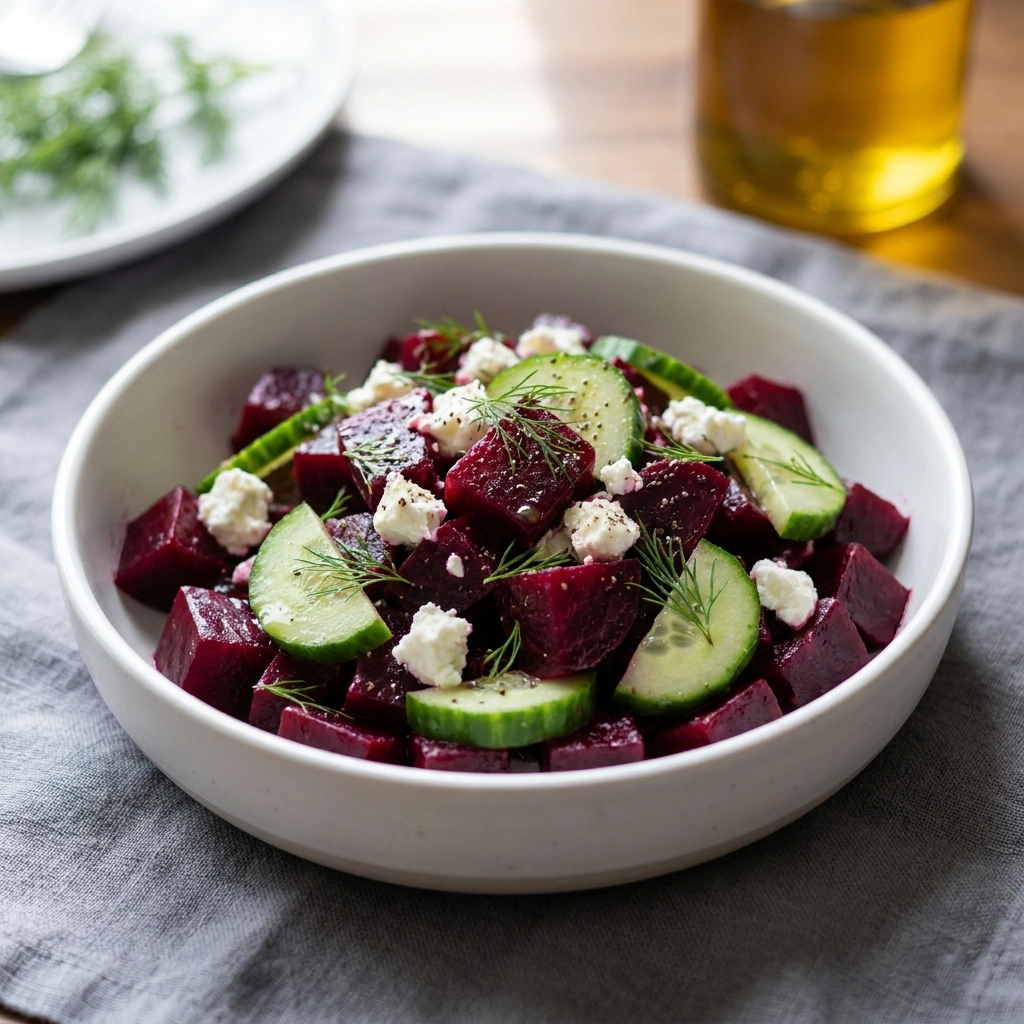
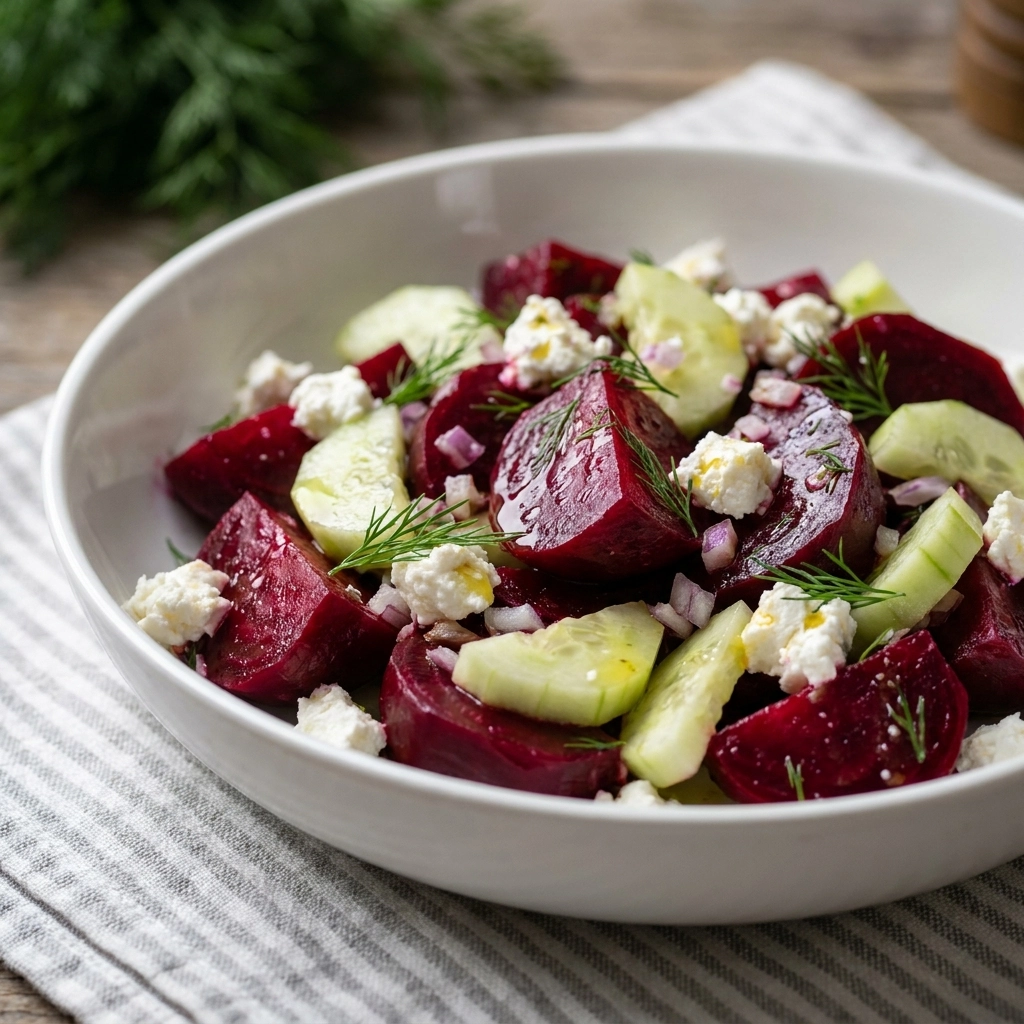
- ●The striking visual contrast of deep magenta beets against snow-white feta and emerald cucumbers.
- ●A sophisticated balance of five primary tastes: sweet, salty, sour, bitter, and umami.
- ●High nutritional density, offering a boost of nitrates for blood flow and probiotics from the feta.
- ●An incredibly versatile base that transitions seamlessly from a light lunch to a formal dinner side.
- ●The use of fresh dill provides an aromatic lift that cuts through the density of the roasted root.
Essential Ingredients |
Beets are technically a root vegetable but were historically used as medicinal dyes before they became culinary staples; here, they provide the earthy, sweet foundation of the dish.
Feta Cheese originates from the sheep and goat milk of Greece and is preserved in brine to maintain its signature tang, acting as the salty foil to the beet’s sugar.
English Cucumbers have a thinner skin and fewer seeds than standard varieties, ensuring a crisp, watery crunch that cleanses the palate between bites.
Fresh Dill belongs to the same family as carrots and parsley and possesses a unique, anise-like aroma that transforms the salad from simple to gourmet.
Lemon Juice is a concentrated source of citric acid that prevents the vegetables from oxidizing while brightening the overall flavor profile.
Extra Virgin Olive Oil is essentially a fruit juice pressed from olives, providing the necessary lipids to help the body absorb the fat-soluble vitamins in the beets.
 Let’s Make it Together |
- To prevent the beets from losing their nutrients and flavor, wrap them in foil and roast at 400°F for 45-60 minutes until a knife slides in easily.
- To ensure the skin slides off without effort, plunge the hot beets into an ice-water bath for five minutes before peeling them by hand.
- To maintain a consistent texture and prevent soggy bites, dice the cucumbers into uniform half-inch cubes and pat them dry with a paper towel.
- To allow the dressing to penetrate the vegetables evenly, whisk together the olive oil, lemon juice, salt, and pepper in a small bowl until emulsified.
- To avoid bruising the delicate beet flesh, gently fold the roasted beets and cucumbers together in a large bowl using a silicone spatula.
- To keep the feta from dissolving into a paste, crumble the cheese sprinkle it over the top only right before serving.
Beet juice stains porous surfaces instantly, so use a plastic cutting board instead of wood.
Using pre-boiled beets from a vacuum pack saves time but often lacks the concentrated sweetness of roasted ones.
Avoid over-salting the dressing since feta cheese carries a significant amount of sodium on its own.
The cucumbers should be added last to prevent them from releasing too much water into the salad.
Fresh dill loses its potency quickly, so chop it immediately before adding it to the mix.
Perfecting the Cooking Process |
You’ll notice that the secret to a professional result lies in the roasting temperature. If the oven is too low, the beets will steam and become mushy; if too high, the natural sugars will burn before the center is tender. Aim for a steady 400°F to achieve that caramelized exterior while keeping the heart succulent.
Trust your nose here when determining if the beets are done. The kitchen should smell like toasted sugar and earth. Once that aroma peaks and the skin begins to shrivel slightly, they are ready for the cooling bath, which halts the cooking process and locks in the vibrant color.
Add Your Touch |
Your palate may crave more complexity, and that is where variation comes in. For a nutty crunch, swap the feta for toasted walnuts and a drizzle of honey, creating a classic pairing that leans into the sweetness. If you are following a vegan lifestyle, replace the cheese with cubed avocado and a squeeze of lime for a creamy, plant-based richness.
You can also pivot the seasonal vibe seeds and mint for a Middle Eastern twist. In the colder months, try adding roasted carrots and parsnips to the mix for a heartier root vegetable medley. Finally, a sprinkle of sumac or za’atar over the finished dish adds a smokey, citrusy depth that elevates the salad to a restaurant-quality appetizer.
Storing & Reheating |
This salad is designed to be eaten cold, so reheating is strictly discouraged. Warming the cucumbers would destroy their crispness, and the feta would lose its structural integrity and become oily. Keep the components chilled in the refrigerator to preserve the fresh, garden-like essence of the dish.
To store, place the salad in an airtight glass container. If you plan to eat it over several days, store the dressing separately and toss it in just before consumption; this prevents the beets from bleeding too much into the cucumbers and keeps the textures distinct.
1Always use a sharp chef’s knife for the cucumbers to avoid crushing the cell walls, which prevents weeping.
2Rub a small amount of olive oil on your hands before tossing the beets to minimize purple staining.
3Squeeze the lemon juice through a fine-mesh strainer to remove any stray seeds or pulp.
4Sourcing organic beets is preferable as the skin is often thinner and the flavor more intense.
5Let the salad rest for ten minutes after dressing to allow the flavors to marry and deepen.
FAQ |
- ●Q: Can I use raw beets instead of roasted ones?A: While raw beets are possible, they have a much harder texture and a more aggressive, earthy taste. Roasting them mellows the flavor, enhances the natural sugars, and makes the salad far more cohesive and palatable for most guests.
- ●Q: What is the best substitute for feta cheese?A: If you dislike feta, goat cheese is the closest alternative in terms of tang and creaminess. Alternatively, you can use a salty vegan almond-based feta or simply omit the cheese and add toasted pine nuts for a similar savory contrast.
- ●Q: How do I stop the beets from turning everything pink?A: To minimize bleeding, ensure the beets are fully cooled before mixing. Additionally, tossing the beets in a small amount of oil first creates a slight barrier, and adding the feta and cucumbers at the very end keeps the colors more distinct.
- ●Q: Can I use dried dill instead of fresh?A: Fresh dill is highly recommended because its volatile oils provide a bright, lemony scent that dried dill lacks. If you must use dried, use only a third of the amount specified and let the salad sit longer so the dried herbs can rehydrate.
The Art of the Summer Garden: Beet Salad with Feta, Cucumbers, and Dill
- Total Time: 1 hour 20 minutes
- Yield: 4 servings 1x
Description
A vibrant, refreshing summer salad combining the earthy sweetness of roasted beets with salty feta, crisp cucumbers, and aromatic fresh dill.
Ingredients
- 4 medium beets, scrubbed
- 1 cup feta cheese, crumbled
- 1 English cucumber, diced
- 1/4 cup fresh dill, chopped
- 3 tbsp extra virgin olive oil
- 2 tbsp fresh lemon juice
- Salt and black pepper to taste
Instructions
- Preheat oven to 400°F. Wrap beets in foil and roast for 45-60 minutes.
- Cool beets in an ice bath and peel skins off.
- Dice beets and cucumbers into half-inch pieces.
- Whisk olive oil, lemon juice, salt, and pepper together.
- Toss beets and cucumbers with the dressing.
- Fold in fresh dill and topped with crumbled feta.
- Prep Time: 20 minutes
- Cook Time: 60 minutes
- Category: Salad
- Method: Roasting
- Cuisine: Mediterranean
