

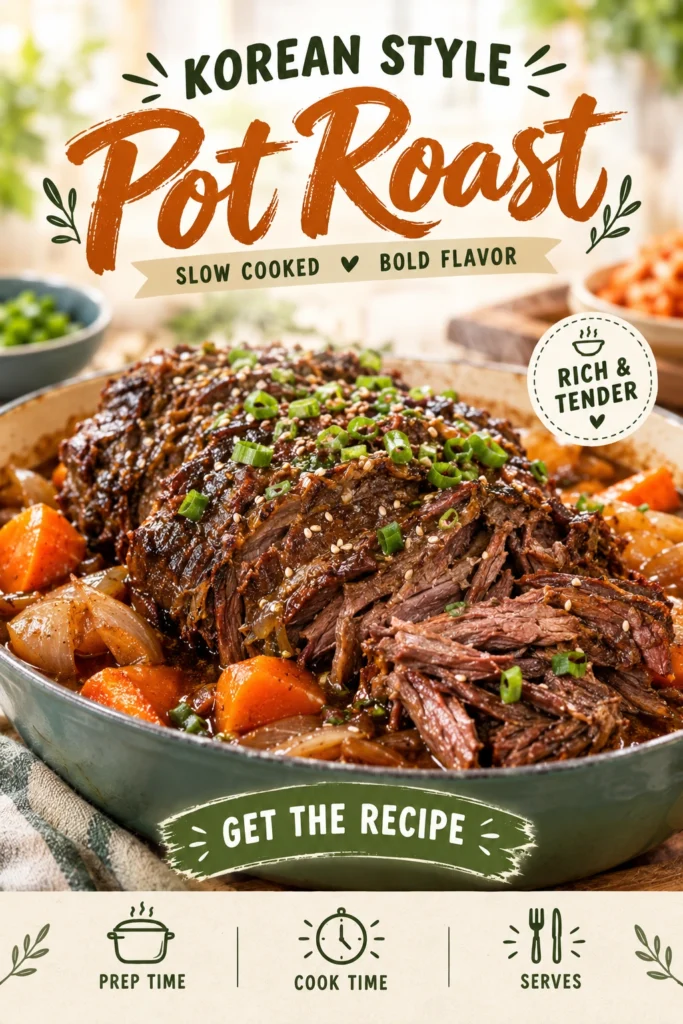
The moment the seared beef hits the soy-based braising liquid, the kitchen fills with a deep, caramelized aroma. This chemical reaction transforms a standard roast into a rich, mahogany-colored centerpiece.
This Korean Style Pot Roast is a fusion dish that applies slow-cooking techniques to a palette of bold, East Asian flavors. It swaps traditional root vegetables for aromatics like ginger and garlic.
Many cooks appreciate this version because it avoids the blandness sometimes found in western roasts. The saltiness of the soy sauce balances with the sweetness of brown sugar and the heat of black pepper.
Unlike a store-bought pre-marinated roast, this recipe allows you to control the sodium levels and the intensity of the ginger.
This dish suits anyone who enjoys the tenderness of an Ultimate Savory Slow Cooker Pot Roast Recipe For Comfort but wants a more vibrant, savory profile.
Preparing the aromatics in a single bowl before starting the stove makes the process move faster and reduces cleanup time.
The following guide covers everything needed to achieve a melt-in-the-mouth texture with a glossy, reduced sauce.
- ●Why You’ll Love This Recipe
- ●A Brief Background / Why This Recipe Works
- ●Perfect For Family Dinners and Meal Prep
- ●Main Ingredient Spotlight: Beef Chuck
- ●Secondary Ingredient Spotlight: Soy Sauce and Ginger
- ●Key Ingredients
- ●How to Make It
- ●Pro Tips
- ●Delicious Variations
- ●Best Ways to Serve
- ●Storage and Leftovers
- ●Frequently Asked Questions
- ●Why This Recipe Belongs in Your Weekly Rotation
- ●Final Thoughts
This roast offers a sophisticated flavor profile while remaining accessible for home cooks of all skill levels.
- ●The beef becomes tender enough to pull apart with a fork.
- ●The sauce reduces into a thick, savory glaze that coats the meat.
- ●It uses common pantry staples like soy sauce and brown sugar.
- ●The preparation is minimal once the meat is in the pot.
- ●It provides a healthy balance of protein and aromatics.
- ●The flavor improves significantly when made a day in advance.
- ●It transforms a tough cut of meat into a luxury meal.
- ●The ginger adds a brightness that cuts through the richness of the beef.
This recipe bridges the gap between traditional comfort food and international cuisine.
A Brief Background / Why This Recipe Works |
Traditional Korean beef dishes often utilize soy, sesame oil, and pear or sugar to tenderize the meat and create a savory-sweet contrast. This pot roast adapts those flavors into a long-braising format, which is more common in Western cooking.
The combination of acid from the soy sauce and the slow breakdown of collagen in the beef creates a succulent texture. Because the meat is submerged in a flavored liquid, it stays moist even during several hours of cooking.
The addition of garlic and ginger creates a fragrant base that permeates the meat. This ensures the flavor is not just on the surface but integrated into every fiber of the roast.
Perfect For Family Dinners and Meal Prep |
This roast is a strong candidate for family dinners because it can be prepared in a large batch. The large size of the beef roast makes it easy to feed a crowd without needing multiple pans.
For meal prep, this recipe is highly efficient. The meat holds its structure when sliced and the sauce prevents it from drying out during reheating, unlike a Rotisserie Style Chicken With Rosemary And Garlic Easy Roast Chicken Dinner which may require more moisture during reheating.
It also works well for holidays or special gatherings where you want a centerpiece that feels elevated but doesn’t require constant attention once it’s in the oven or slow cooker.
Main Ingredient Spotlight: Beef Chuck |
Beef chuck is the ideal choice for this roast because of its high fat content and connective tissue. As it cooks slowly, the collagen melts into gelatin, which provides the characteristic “melt-in-your-mouth” feel.
Leaner cuts like sirloin or tenderloin would dry out under these cooking conditions. The chuck roast can withstand the long braise while absorbing the salty and sweet notes of the Korean-inspired glaze.
Secondary Ingredient Spotlight: Soy Sauce and Ginger |
Soy sauce provides the essential salt and umami base. It acts as the primary seasoning and contributes the dark, rich color to the finished roast.
Fresh ginger adds a sharp, peppery heat and a citrusy note. This prevents the dish from feeling too heavy or overly salty, providing a necessary counterpoint to the beef fat.
Together, these two ingredients create the signature profile of Korean braised meats, mimicking the depth found in dishes like Galbi-jim.
Key Ingredients |
These components work together to create a balance of salty, sweet, and aromatic notes.
- ●Beef Chuck Roast — Provides the hearty structure and richness required for slow cooking.
- ●Soy Sauce — Delivers umami depth and the primary salty element.
- ●Brown Sugar — Balances the salt and helps the sauce caramelize.
- ●Fresh Ginger — Adds a pungent, zesty heat that brightens the beef.
- ●Garlic — Provides a savory, aromatic foundation.
- ●Sesame Oil — Adds a toasted, nutty finish to the glaze.
- ●Black Pepper — Introduces a subtle warmth and spice.
- ●Beef Broth — Supplies the necessary liquid for braising and adds body to the sauce.
How to Make It |
Follow these steps to ensure the meat is tender and the sauce is properly reduced.
- Sear the beef: Heat oil in a heavy pot over medium-high heat. Brown the meat on all sides until a dark crust forms. This creates a layer of flavor called the Maillard reaction, which prevents the roast from tasting boiled.
- Sauté the aromatics: Remove the meat and add the minced garlic and grated ginger to the pot. Stir for about 60 seconds until fragrant. Avoid burning the garlic, as it will turn bitter and ruin the sauce.
- Deglaze the pot: Pour in a small amount of beef broth and scrape the bottom of the pot with a wooden spoon. Those brown bits are concentrated flavor that must be incorporated into the braising liquid.
- Whisk the sauce: Combine the soy sauce, brown sugar, sesame oil, and remaining broth in a bowl. Stir until the sugar has mostly dissolved. Pour this mixture over the seared beef.
- Braise the meat: Cover the pot with a tight-fitting lid and transfer to a low-heat oven or slow cooker. Cook until the internal temperature reaches 200°F or the meat pulls apart with a fork. Overcooking is rarely an issue here, but undercooking will result in chewy meat.
- Reduce the glaze: Remove the cooked roast to a platter and strain the liquid into a saucepan. Simmer over medium-high heat until the liquid thickens into a glossy syrup. This concentrates the flavors and ensures the sauce clings to the beef.
- Rest and slice: Let the meat rest for 15 minutes before slicing or shredding. This allows the juices to redistribute, ensuring the meat remains moist.
1Use these techniques to refine the texture and taste of your roast.
- ●2Use a meat thermometer: Check the center of the roast to ensure it has reached the shredding point, usually around 200°F to 205°F.
- ●3Grate the ginger: Use a microplane rather than chopping the ginger. This releases more juice and ensures there are no woody chunks in the sauce.
- ●4Choose a heavy pot: A Dutch oven is best because it distributes heat evenly and maintains a steady temperature.
- ●5Skim the fat: Use a spoon to remove excess oil from the surface of the sauce before reducing it to avoid a greasy finish.
- ●6Add a splash of rice vinegar: If the sauce feels too heavy, a teaspoon of vinegar added at the end adds a brightness that cuts through the fat.
Delicious Variations |
You can adapt this recipe to suit different dietary needs or flavor preferences.
- ●Spicy Version: Stir in two tablespoons of Gochujang (Korean chili paste) into the braising liquid for a spicy, fermented kick.
- ●Vegetable Addition: Add large chunks of carrots, daikon radish, and shiitake mushrooms during the last two hours of cooking for a complete meal.
- ●Honey Swap: Replace brown sugar with honey or maple syrup for a different type of sweetness and a shinier glaze.
- ●Pressure Cooker Method: Use an Instant Pot to reduce cooking time from eight hours to about 90 minutes while maintaining tenderness.
- ●Pear Puree: Blend a small piece of Asian pear into the sauce to provide natural enzymes that further tenderize the beef.
These adjustments allow you to pivot the flavor profile without losing the core essence of the dish.
Best Ways to Serve |
The richness of this roast requires sides that can either absorb the sauce or provide a fresh contrast.
- ●Over steamed short-grain white rice to soak up the glaze.
- ●With a side of quick-pickled cucumbers and carrots for acidity.
- ●Alongside steamed bok choy or sautéed spinach.
- ●On a bed of creamy mashed potatoes for a fusion twist.
For a more traditional experience, serve the roast with a bowl of steamed rice and a side of kimchi. The fermented spice of the kimchi balances the sweetness of the soy-ginger glaze.
If you are serving this for a dinner party, platter the sliced beef and pour the reduced glaze over the top just before bringing it to the table to maintain the shine.
Storage and Leftovers |
Refrigerating
Store the sliced beef and sauce in an airtight container for up to 4 days. Keep the sauce separate from the meat if possible to maintain the texture of the beef.
Reheating
Warm the beef in a covered skillet over low heat with a splash of beef broth or water for 5-10 minutes. Avoid the microwave on high power, as it can toughen the meat.
Freezing
Freeze the cooked roast in its sauce for up to 3 months. Thaw in the refrigerator overnight before reheating slowly on the stove.
Frequently Asked Questions |
- ●Q: Can I use a different cut of beef?A: While chuck is recommended, you can use bottom round or brisket. However, these cuts have less fat, so you may need to increase the braising liquid slightly and cook them longer to achieve the same tenderness.
- ●Q: Is this recipe suitable for a slow cooker?A: Yes, after searing the meat and sautéing the aromatics in a pan, transfer everything to a slow cooker. Cook on low for 8 hours or high for 4 to 6 hours until the meat is tender.
- ●Q: How do I stop the sauce from being too salty?A: If the reduced sauce is too salty, stir in a tablespoon of water or a small amount of brown sugar. Adding a side of unsalted steamed vegetables also helps balance the palate.
- ●Q: Do I have to sear the meat first?A: Searing is not strictly required for the meat to cook, but it is essential for the flavor. The browned exterior adds a depth of taste that cannot be replicated .
- ●Q: What if I don’t have fresh ginger?A: You can use ground ginger powder as a substitute. Use about one teaspoon of powder for every tablespoon of fresh ginger, though the flavor will be less bright and more earthy.
Why This Recipe Belongs in Your Weekly Rotation |
Integrating this roast into your routine introduces a variety of flavors that break the monotony of standard dinner options. It offers the same comfort as a traditional beef roast but with a profile that feels more global and exciting.
Because it is slow-cooked, it allows you to handle your daily tasks while the oven does the work. It transforms a budget-friendly cut of beef into a meal that tastes like it came from a high-end restaurant.
The versatility of the leftovers makes it a practical choice for anyone managing a busy schedule. Whether it is sliced over rice or shredded into tacos, the flavor remains consistent and satisfying.
Final Thoughts |
This Korean Style Pot Roast combines the reliability of slow-cooking with a vibrant blend of soy, ginger, and garlic. The result is a tender, aromatic meal with a professional-grade glaze.
Gather your ingredients and start the braise today to experience this savory fusion of comfort and bold flavor.
Korean Style Pot Roast with Savory Soy-Ginger Glaze
- Total Time: 8 hours 20 minutes
- Yield: 6 servings 1x
Description
A tender, slow-cooked beef chuck roast infused with soy sauce, ginger, and garlic, finished with a glossy reduced glaze.
Ingredients
- 3–4 lb Beef Chuck Roast
- 1/2 cup Soy Sauce
- 1/4 cup Brown Sugar
- 2 tbsp Fresh Ginger, grated
- 4 cloves Garlic, minced
- 1 tbsp Sesame Oil
- 2 cups Beef Broth
- 1 tsp Black Pepper
- 2 tbsp Vegetable Oil
Instructions
- Preheat oven to 300°F (or prepare slow cooker).
- Heat vegetable oil in a Dutch oven over medium-high heat and sear the beef on all sides until browned.
- Remove beef from the pot. Add minced garlic and grated ginger, sautéing for 1 minute.
- Pour in 1/2 cup of beef broth and scrape the bottom of the pot to release browned bits.
- Whisk together soy sauce, brown sugar, sesame oil, remaining beef broth, and black pepper.
- Place the beef back into the pot and pour the sauce mixture over the top.
- Cover with a tight lid and cook in the oven for 6-8 hours (or 8 hours on low in a slow cooker) until the meat is fork-tender.
- Remove the beef to a platter. Strain the cooking liquid into a saucepan and simmer over medium-high heat until thickened into a glaze.
- Slice or shred the beef and pour the reduced glaze over the top before serving.
- Prep Time: 20 minutes
- Cook Time: 8 hours
- Category: Dinner
- Method: Braising
- Cuisine: Korean-Fusion
